May Fit After Inspection
- Existing roof or deck is structurally secure
- Substrate is dry and free of wet insulation
- Surface can be cleaned without damaging the roof
- Details and penetrations can be prepared
- HVAC and overspray controls can be staged
Commercial Roofing · Arizona
We coat commercial roofs with spray foam when the existing assembly is dry, secure, and suitable for controlled application.
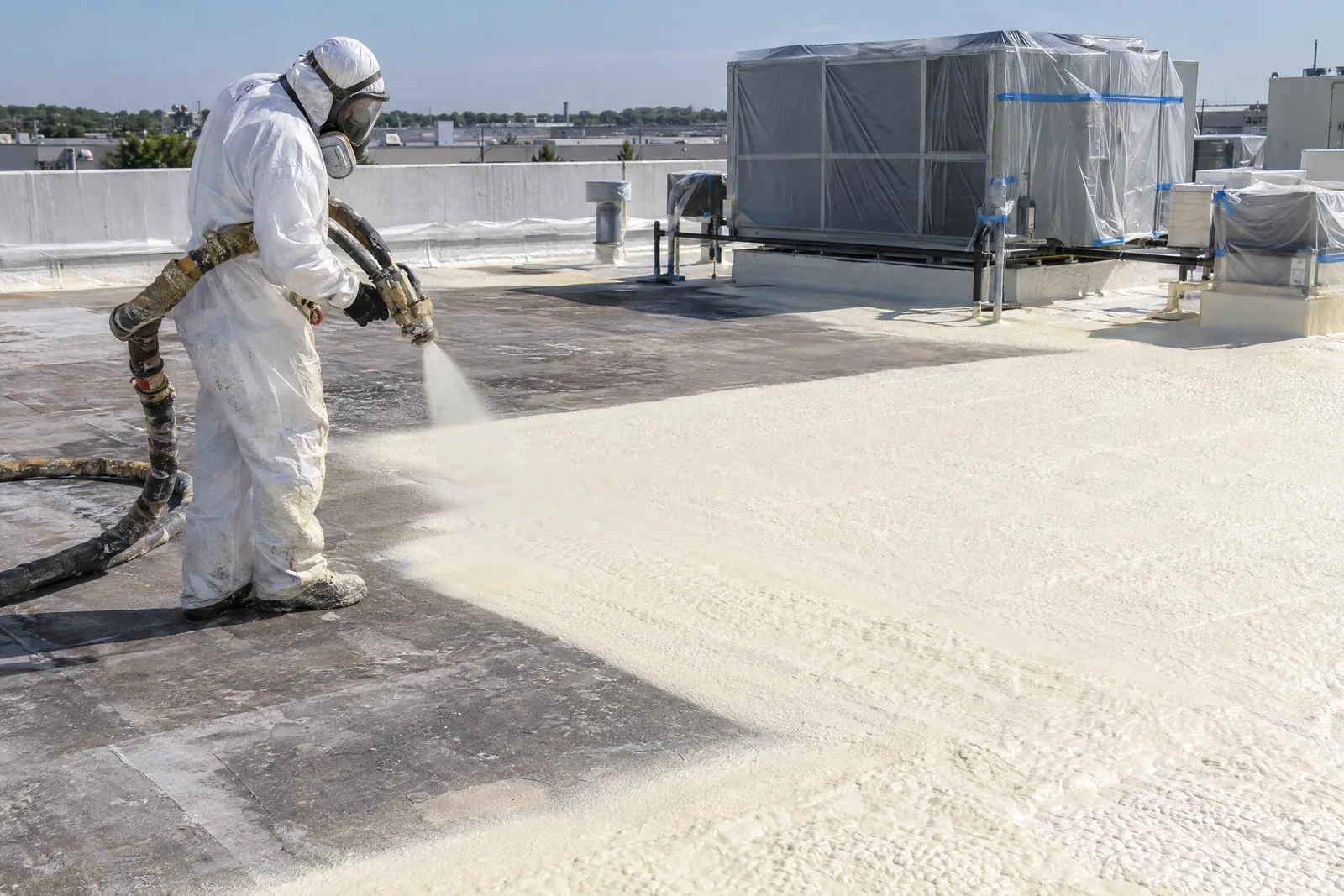
Spray foam can recover a sound commercial roof, but only after checking moisture, attachment, contamination, drainage, and the building controls needed for spraying.
The same spray foam system can behave differently on a secure deck, an old membrane, or a roof with wet insulation. These conditions decide whether recovery is sensible.
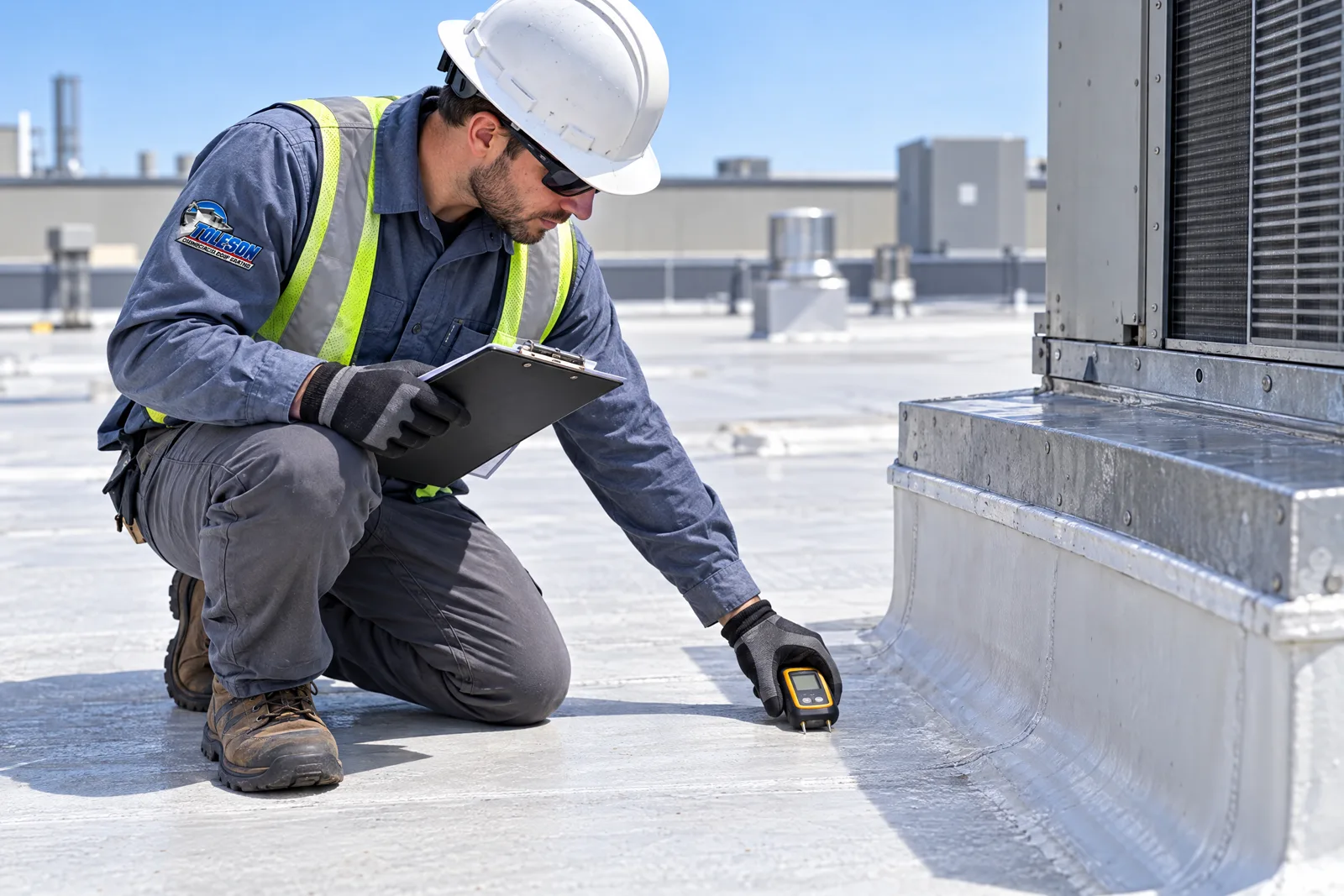
Foam needs a dry surface to bond. A roof that looks dry can still hold moisture in insulation or lower layers, so suspected wet materials need testing and correction before spraying.
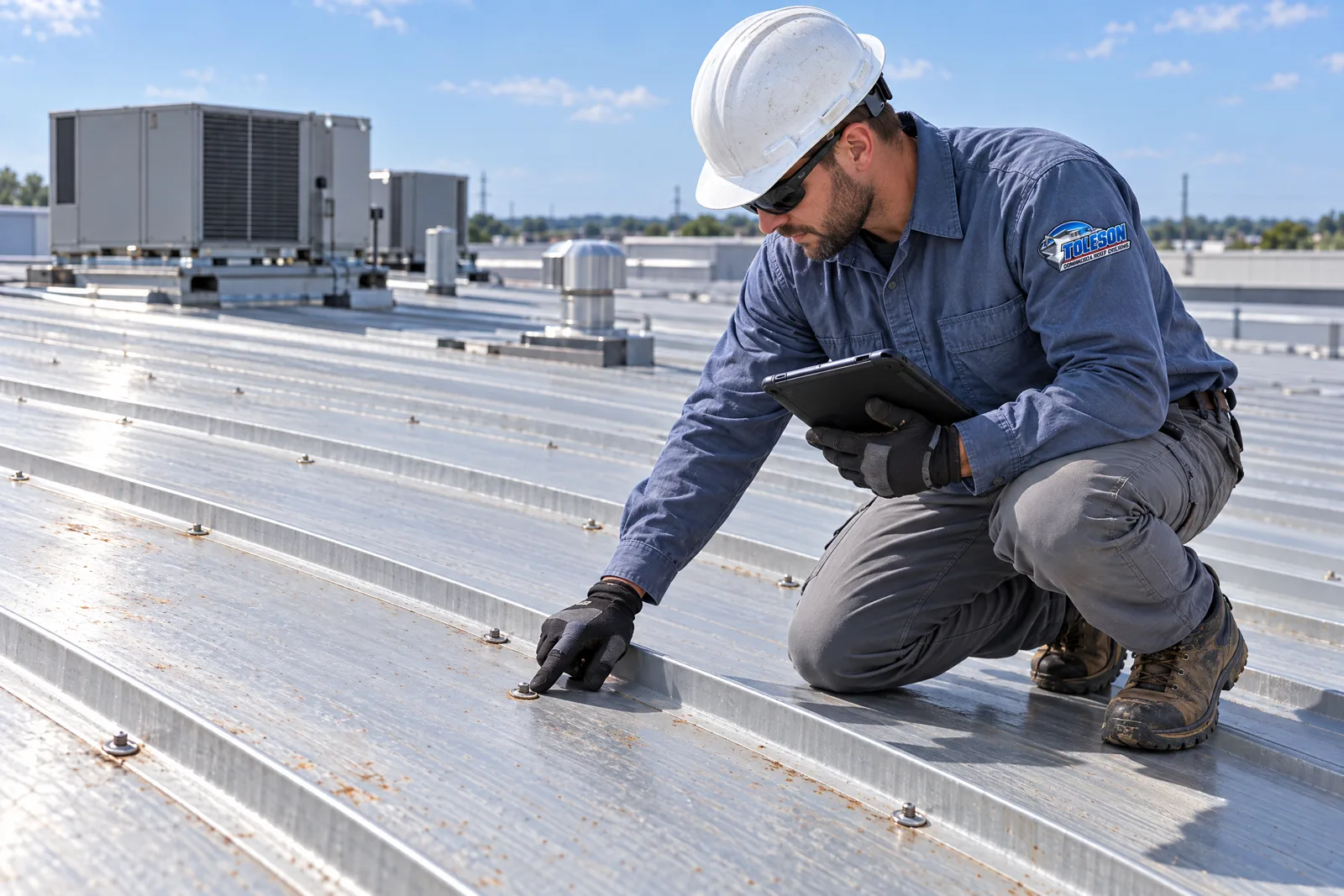
A recover scope starts with attachment and stability. Loose panels, failing fasteners, soft areas, or movement need repair or replacement before foam covers the roof and hides the condition.
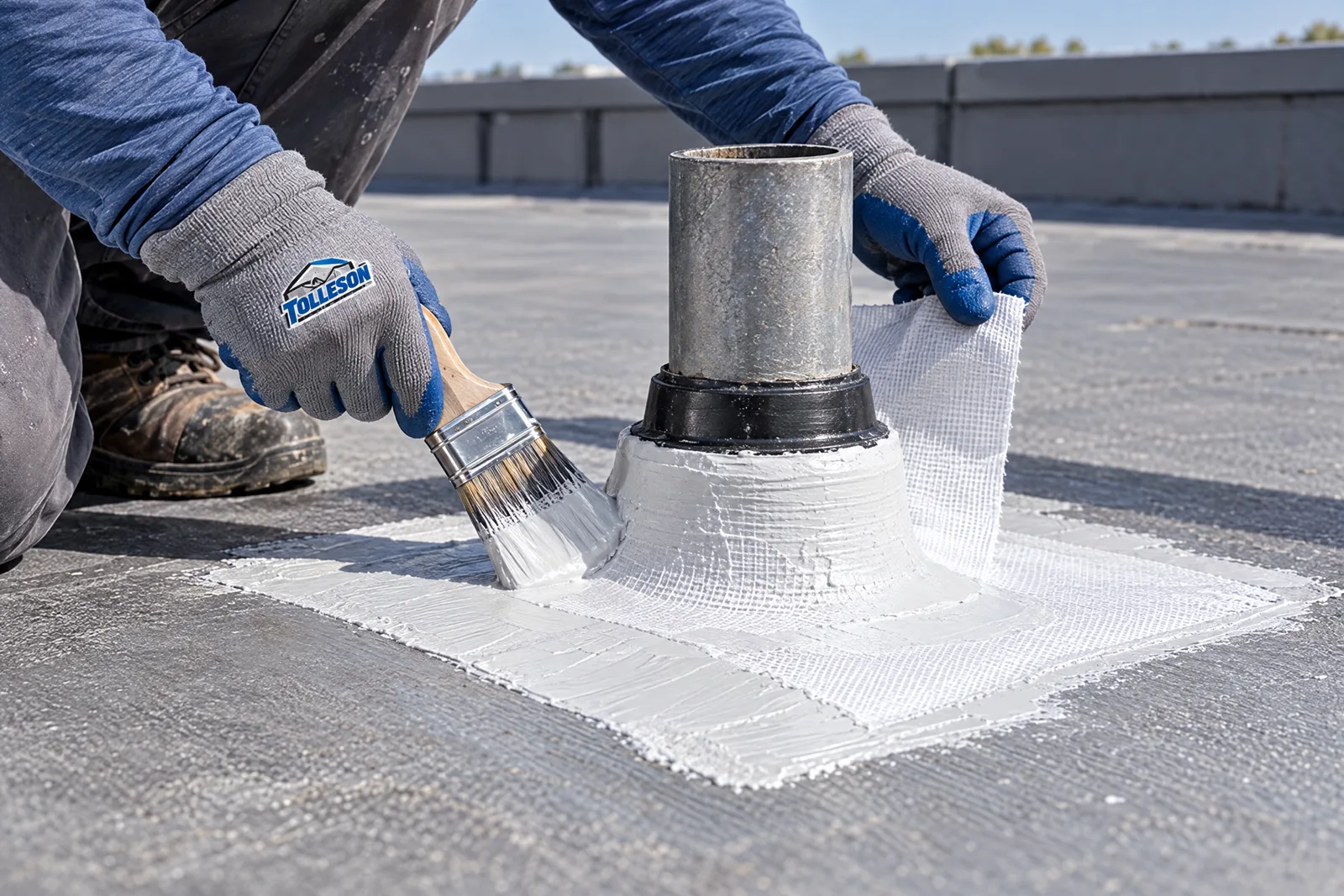
Surface inspection alone may miss water below the membrane. Wet insulation can reduce adhesion and leave damage under a new system, so those areas must be located and addressed instead of sealed in.
Dust, loose granules, oil, grease, and other residue interfere with bonding. Cleaning must suit the existing roof, and the surface must dry fully before primer, foam, or protective coating is applied.
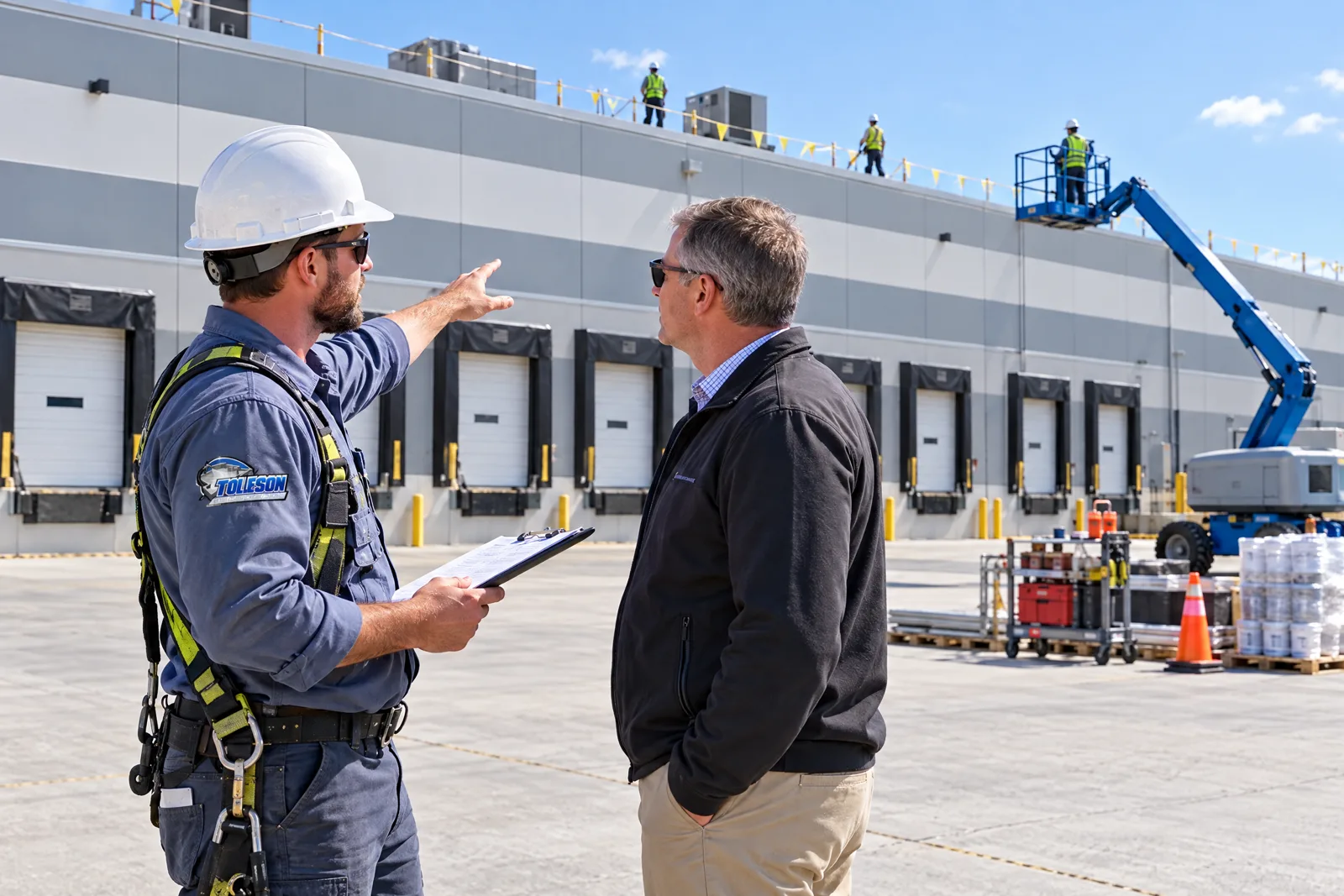
Tolleson describes its commercial and industrial employment center as a distribution hub. Rooftop air intakes, equipment access, product areas, and staging need a written control plan before spraying begins.
A sunny forecast does not settle application conditions. Roof temperature, air temperature, humidity, wind, and cure time affect foam texture, overspray, adhesion, and the protective topcoat window.
Spray foam is one route, not a default material. We compare the existing roof, drainage, details, and operating controls before choosing a coating system.
Use SPF when a dry, secure substrate can support a shaped foam recover and the building can control spraying, curing, and protective topcoat work.
Review spray foam roofing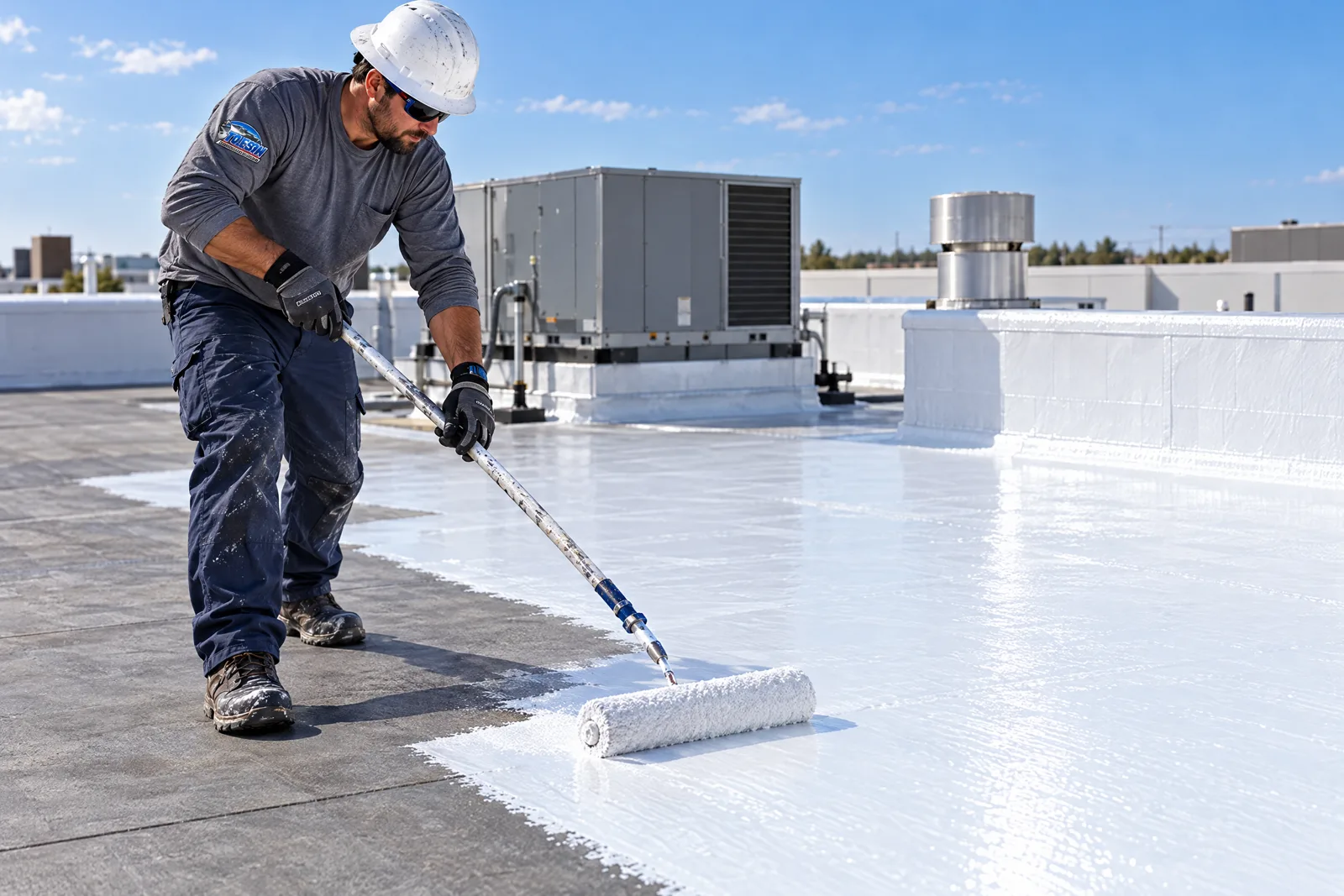
A compatible silicone system may suit a low-slope roof after moisture, seams, existing coating, and ponding conditions are checked.
Compare silicone roof coating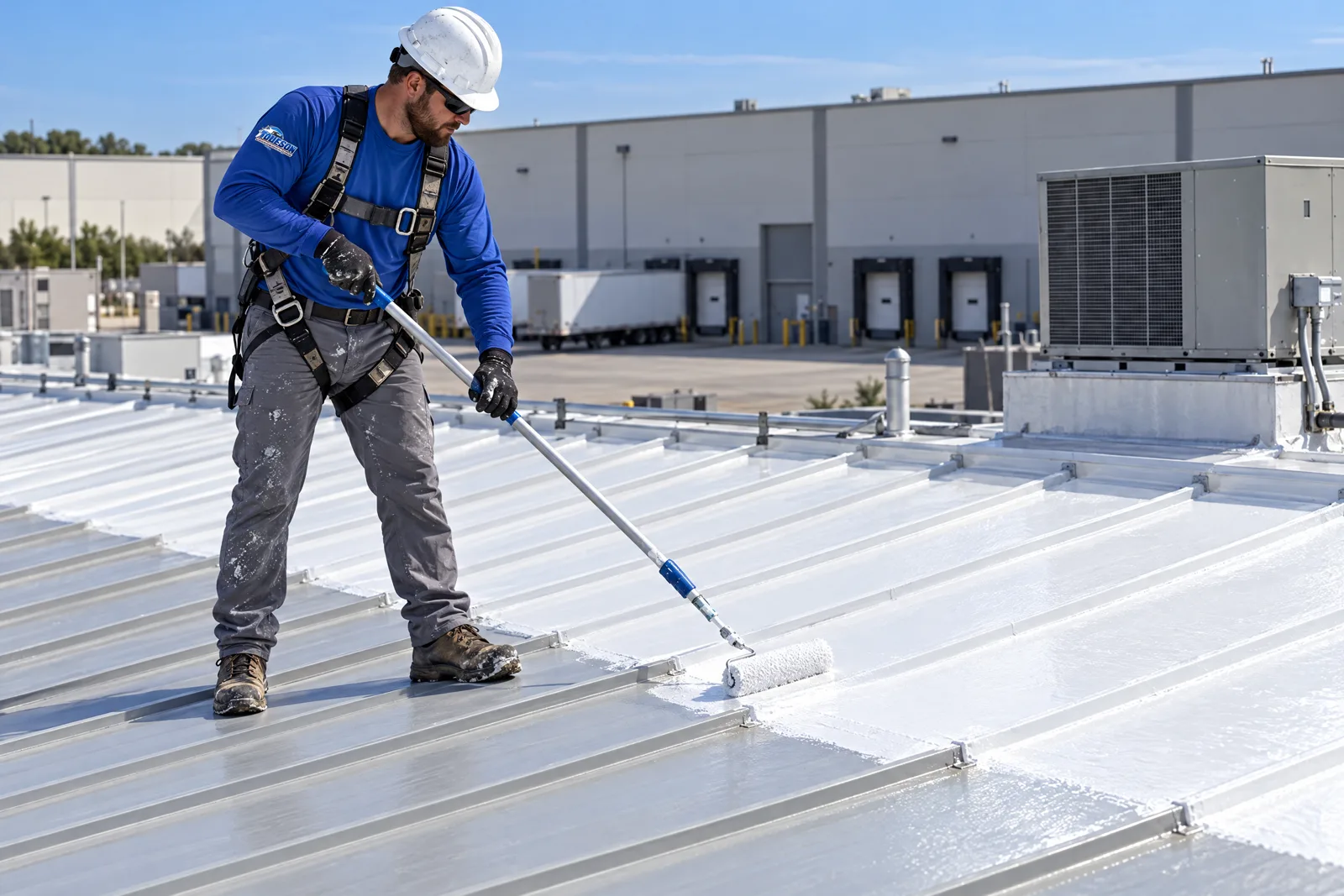
Acrylic can be considered where the roof drains reliably, the substrate accepts the product, and weather allows the water-based system to dry and cure.
Compare acrylic roof coatingMetal coating addresses panel seams, fasteners, corrosion, and movement when the panels remain repairable and compatible with restoration work.
Review metal roof coatingCoating benefits depend on a roof that is worth recovering. The inspection separates qualified advantages from problems that coating cannot correct.
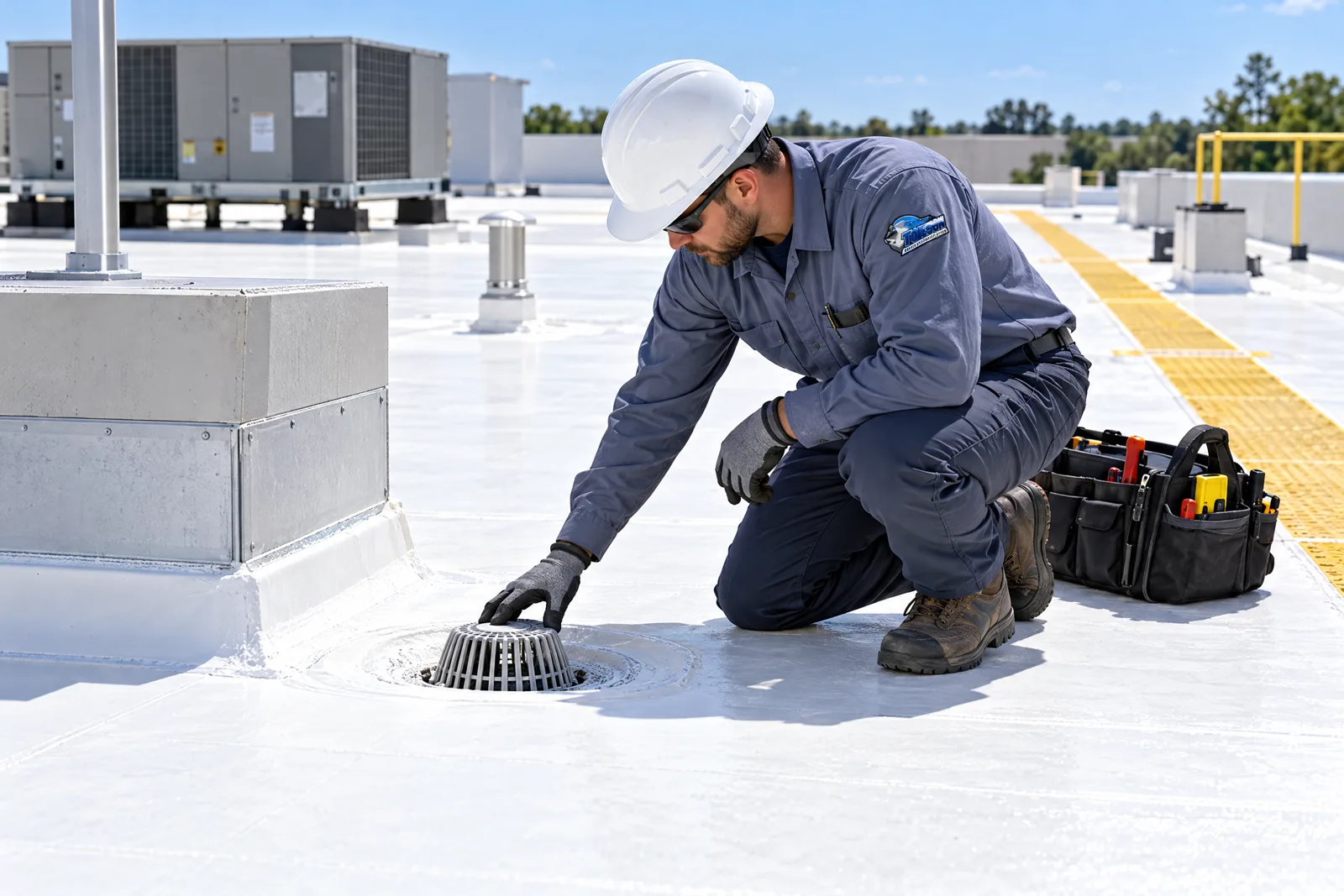
When the existing assembly is sound, a recover can keep suitable roofing in place instead of removing the entire roof. Damaged or wet areas still need proper correction.
SPF can be shaped to improve drainage intent around selected details, curbs, and transitions. It does not make blocked drains or structural drainage defects disappear.
A suitable recover may reduce removal and disposal compared with replacing a roof assembly. The advantage narrows when extensive demolition or substrate repair is required.
A protected foam surface can be inspected, repaired, and recoated according to the selected system. Walk paths, penetrations, drains, and equipment areas still need scheduled care.
SPF work moves from recover decision to dry, prepared substrate, controlled spraying, protective coating, and maintenance access. Each stage protects the next one.
We inspect the roof, deck or membrane condition, attachment, moisture indicators, drains, penetrations, curbs, HVAC equipment, and access routes. The findings determine whether recovery, repair, removal, or another system is appropriate.
Loose materials, wet areas, damaged details, contaminants, and unstable sections are addressed before application. Cleaning, drying, repairs, and any required primer or adhesion testing follow the selected system requirements.
Before spraying, we identify HVAC intakes, sensitive indoor operations, equipment service paths, loading activity, occupied areas, and surfaces that need masking. Wind direction and staging affect how controls are set.
Foam is applied in the specified passes and shaped for the approved roof design. The cured surface is checked, then the selected protective coating is applied at the required coverage and thickness.
We check coating coverage, transitions, drains, penetrations, curbs, and service paths before turnover. The maintenance plan should keep foot traffic controlled and report damage, wear, or new leaks promptly.
Another roof system may fit better when moisture, drainage, substrate condition, or access rules limit SPF.
Compare approved coating systems when the roof condition does not point to one clear material.
Compare commercial roofing servicesReview a low-slope coating route when silicone compatibility and ponding resistance matter.
Review silicone roof coatingStart with panel, fastener, corrosion, and movement checks when the roof is metal.
Review metal roof coatingThese answers address recover decisions, moisture, adhesion, application controls, and the conditions that affect spray foam roofing in Tolleson.
We do not continue across the roof after a failed adhesion test. The preparation, primer, or product choice must be reviewed. Additional cleaning or an approved primer may help, but the selected coating still needs to pass the required adhesion check before full application.
A failed test can change the recover decision. If the existing surface cannot be prepared into a bondable, secure substrate, repair, removal, or another roof system may be more appropriate.
Tell us about exposed products, food handling, temperature-controlled areas, strict site rules, nearby air intakes, and equipment that cannot be interrupted. Those details affect the application method, masking, ventilation controls, access plan, and work area boundaries.
Share the building schedule before spraying is planned. We need to know which operations must continue so controls can be discussed with the facility team instead of assumed on the roof.
Spray foam may recover an existing commercial roof when the roof or deck is secure, the substrate is dry and clean, and the remaining assembly can accept the system. Loose areas, extensive damage, trapped moisture, or failed adhesion can move the scope toward repair, removal, or replacement.
It depends on why the water remains. SPF can be shaped within an approved design to guide drainage around some roof conditions, but it cannot replace blocked drains, correct a structural slope problem, or hide wet materials. Drainage and condensate paths need inspection before the recover system is selected.
Existing foam is checked for dry, sound surfaces, damage, contamination, exposed areas, and loss of protective coating. Loose or degraded material is repaired or removed, then the surface is cleaned and tested for compatibility. A new protective coat should not be applied just because the old surface looks uniform.
The protective topcoat depends on the foam system, roof exposure, existing materials, and manufacturer requirements. The foam needs a compatible coating applied at the specified coverage and thickness. We check adhesion, details, and cure conditions rather than choosing a topcoat by color or appearance alone.
Weather affects whether foam and its protective coating can be applied correctly. Roof and air temperature, humidity, wind, dust, dew, rain, and cure time all matter. A dry roof and sunny sky do not guarantee a suitable work window, so product limits and approaching conditions are checked before spraying.
Get a commercial roof coating estimate after we check substrate dryness, recover conditions, and the controls needed around your Tolleson building.
Before You Go
Share your name and phone number and we will call about your commercial roof.
Prefer to call directly? Call Us Privacy Policy