Manufacturer approval comes firstLoose shingles need repairMoisture needs investigationReplacement may be more appropriate
Is Your Shingle Roof A Fit?
Commercial shingle coating is a narrow decision. The exact roof assembly, manufacturer instructions, condition, and local requirements must support the proposed treatment.
Can Be Considered
Manufacturer identifies the installed shingle and field treatment
Written approval covers the exact shingle product
Shingles are secure, flat, and serviceable
Moisture and ventilation concerns are resolved
Local code review does not prohibit treatment
Needs Repair, Replacement, Or Another System
Manufacturer advises against field treatment
Curling, cupping, cracking, or widespread granule loss exists
Loose or missing shingles leave the roof unsecured
Wet layers or ventilation problems remain
The assembly needs a different approved roofing approach
Roof Conditions We Check
A roof can look serviceable from the ground and still fail the coating gate. We inspect the details that affect attachment, moisture movement, and manufacturer compatibility.
Shingle Curling Or Cupping
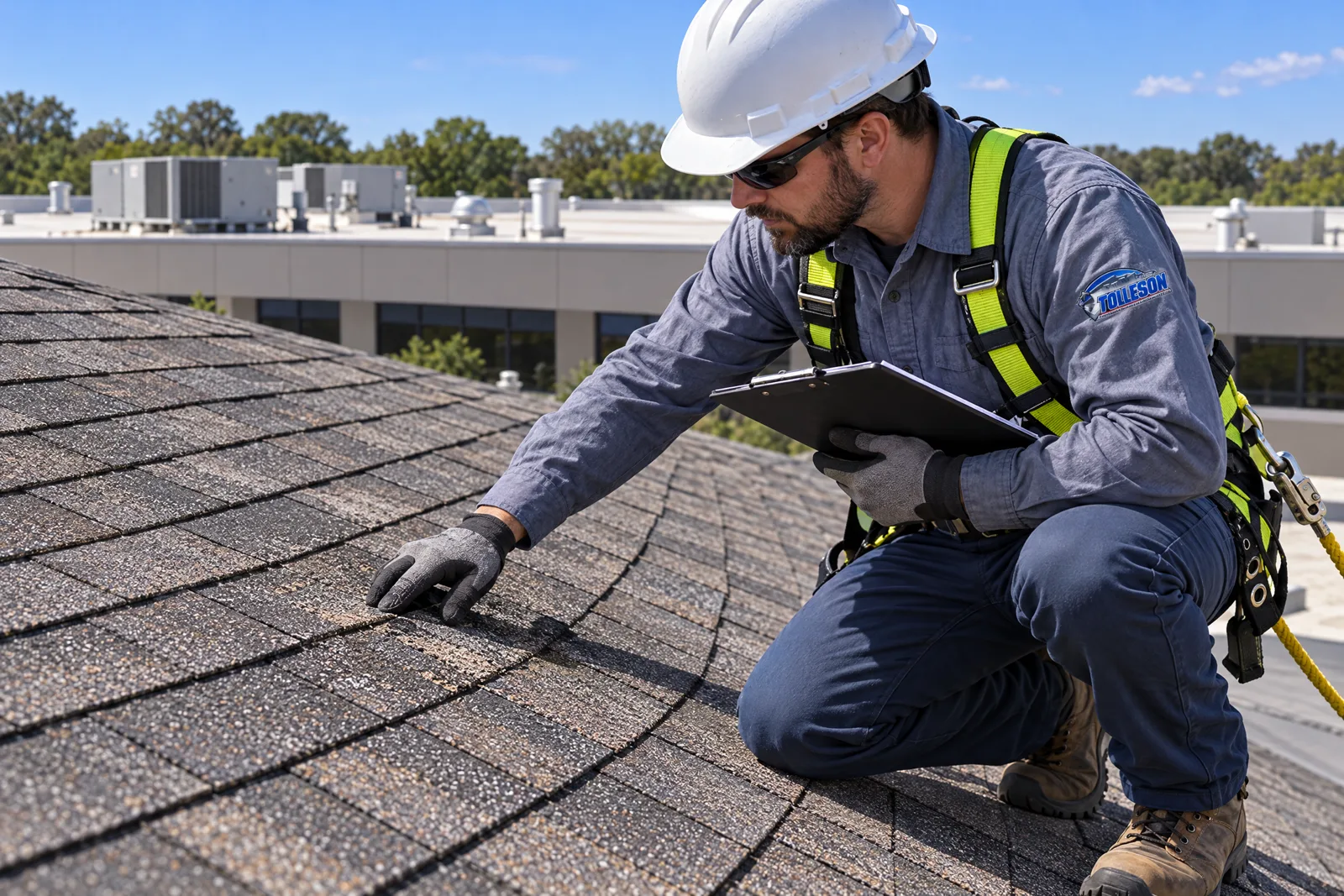
Edges that curl or surfaces that cup can signal aging or movement. A field treatment should not be used to flatten, hide, or bind shingles that no longer hold their intended shape. The affected area may need repair or replacement instead.
Loose Or Missing Shingles
Coating does not secure a loose shingle or replace a missing one. We look for lifted courses, exposed underlayment, open fasteners, and wind-damaged sections. Those conditions require proper repair before any compatible treatment is considered.
Granule Loss And Exposed Asphalt
Worn shingle surfaces can lose granules and expose asphalt. We document whether wear is isolated or widespread, then compare the condition with the manufacturer’s instructions. A coating is not a substitute for a roof covering that has reached replacement condition.
Flashing And Penetrations
Wall flashing, valleys, vents, curbs, and other penetrations can be the real leak path. We inspect those transitions separately from the shingle field. Damaged details need repair, sealant, or replacement as directed by the roof assembly before surface treatment.
Moisture And Ventilation
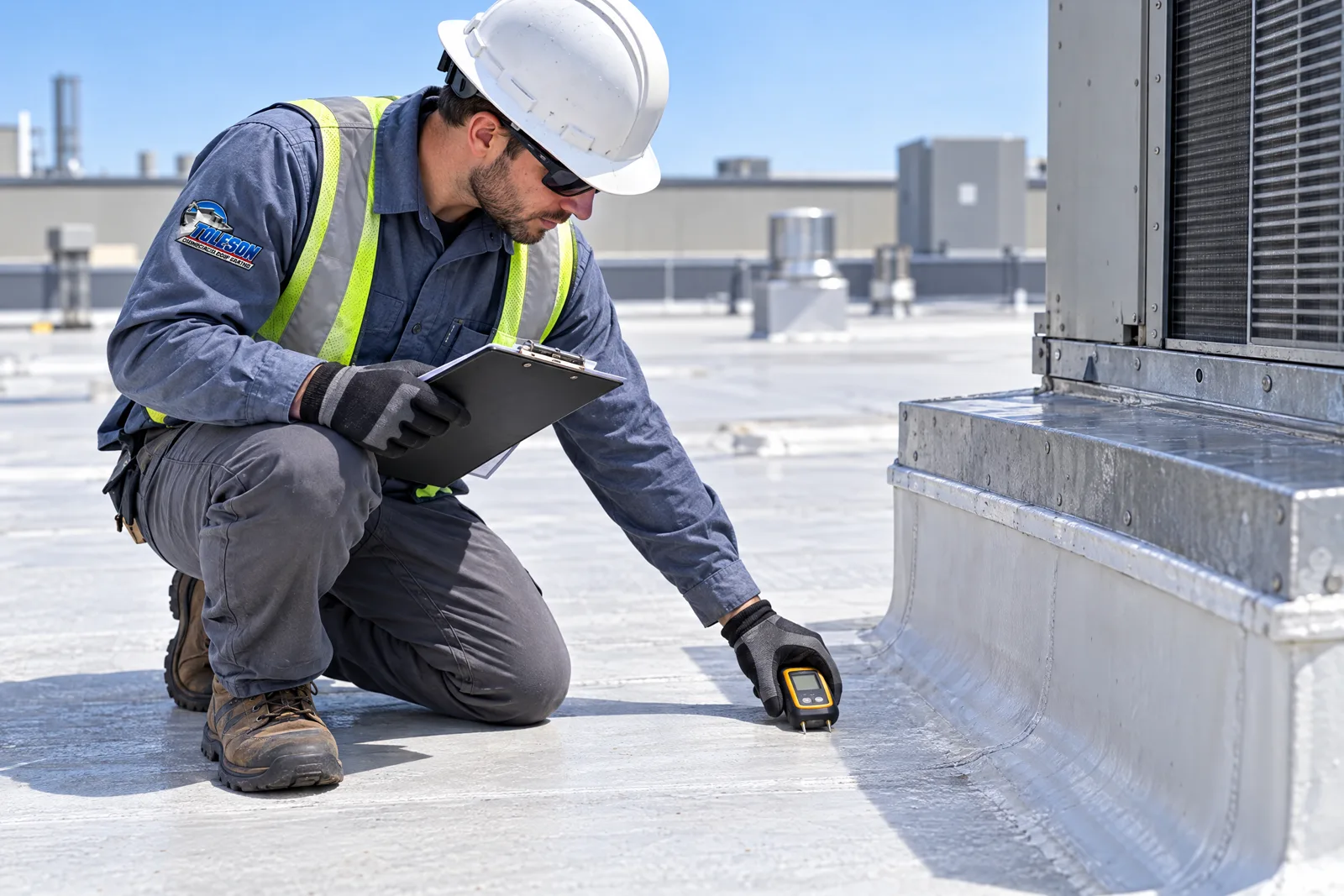
A dry top surface does not prove that the roof assembly is dry. We look for signs of trapped moisture and ventilation concerns because sealing the wrong areas can worsen moisture movement. Suspect wet materials need further investigation before coating.
Dirt, Oil, And Other Residue
Dust, grease, biological growth, and other residue can prevent a treatment from bonding. We identify the contamination and its source before selecting a cleaning method. Cleaning must protect the shingle surface rather than damage granules or disturb courses.
Commercial Roof Coating Options for Tolleson
There is no universal white coating for commercial shingles. These options describe the decision paths we can examine after confirming the substrate and written system requirements.
Manufacturer-Approved Field Treatment
This path is considered only when the shingle manufacturer identifies an acceptable treatment for the exact product and the roof passes condition, moisture, ventilation, and code checks.
Acrylic Over Compatible Asphaltic Roofs
Acrylic systems may fit some structurally sound asphaltic low-slope roofs when the product system allows it. That guidance does not automatically approve acrylic over installed asphalt shingles.
Silicone Over Compatible Asphaltic Roofs
Silicone may be evaluated on an approved asphaltic roof assembly where its system requirements fit. It is not a blanket solution for installed shingles, and ponding or wet materials still require attention.
Benefits of Coating Your Roof
When the roof passes the compatibility gate, coating can offer practical benefits. Each one depends on the existing assembly, required preparation, and the selected manufacturer system.
Keep Suitable Roofing In Place
If the existing roof is sound and the manufacturer permits treatment, a compatible coating may preserve usable roofing rather than remove it automatically. The inspection still separates sound areas from shingles that need repair or replacement.
Reduce Unnecessary Tear-Off
An approved restoration can avoid full tear-off where the roof assembly remains suitable. That can mean less removal and disposal around the building, but it never justifies coating over damaged, wet, or unapproved shingles.
Plan Work Around Building Use
Commercial roof work affects access, rooftop equipment, air intakes, deliveries, and tenant activity. A narrow approval decision makes it easier to identify the actual work area and discuss controls before application is scheduled.
Create A Maintainable Roof Record
Recording the shingle product, approved materials, repairs, preparation, and application requirements gives facility staff a better reference for later inspections. Future repairs or recoating still require compatibility checks rather than guesswork.
Inspect Your Roof
The work starts with a roof inspection, not a product choice. We move from condition findings to manufacturer documentation, repair boundaries, and a treatment decision.
01
Inspect Your Roof
We inspect shingle courses, flashing, valleys, penetrations, roof edges, visible damage, and areas tied to reported leaks. We also note rooftop equipment, access limits, and any conditions that could affect a safe commercial work sequence.
02
Confirm The Shingle System
We identify the shingle manufacturer and product when records, labels, samples, or other documentation are available. Written manufacturer guidance controls the compatibility decision. If the exact product cannot be confirmed, the treatment remains unapproved until better evidence is found.
03
Repair And Prepare
Loose or missing shingles, damaged flashing, open details, contamination, and suspect wet materials are addressed within the recommended scope. Cleaning methods must protect the shingle surface. Preparation is not removed simply to lower the starting cost.
04
Test The Proposed Treatment
If the manufacturer’s system requires a test area or adhesion check, we follow that requirement before broader application. A failed test changes the preparation or product decision. We do not spread an unverified treatment across the roof.
05
Apply, Protect, And Maintain
Only an approved, prepared roof proceeds to treatment, and application follows the selected system’s instructions for coverage and conditions. We discuss cure protection, service traffic, drains, equipment access, and future inspections with the facility team.
Related Commercial Roofing Services
If the building has more than one roof assembly, use the condition and substrate to route each area to the right service.
Tolleson Metal Roof Coating
For commercial metal panels where seams, fasteners, corrosion, and movement determine coating readiness.
Get direct answers about manufacturer compatibility, roof condition, and the limits of coating an existing commercial shingle assembly.
Roof Condition And Cost
Can any commercial asphalt shingle roof be coated?
No. Field-applied treatment is not a routine option for every commercial shingle roof. We first identify the exact shingle product and check the manufacturer’s written guidance. The roof also needs to be secure, sufficiently dry, properly ventilated, and acceptable under applicable local requirements before a treatment can be considered.
Why does the shingle manufacturer’s approval matter?
The shingle manufacturer sets requirements for how its roof covering is used. An unapproved coating can affect the shingle surface, ventilation, moisture movement, or other performance characteristics. We do not treat a generic coating label as approval for a specific installed shingle product.
Coating Choice And Details
What if the shingles are curled, loose, or missing?
Those conditions need repair or replacement decisions before coating. A liquid treatment cannot replace a missing shingle or reliably secure a loose course. We document the affected areas, check whether the remaining roof is serviceable, and separate repairable defects from widespread deterioration.
Can coating hide moisture or ventilation problems?
It can make the roof look finished without resolving what is below it. A dry surface does not prove that the roof assembly is dry, and a new layer can complicate moisture movement. We investigate suspected wet materials and ventilation concerns before recommending any treatment.
Work And Maintenance
Does a shingle treatment require a code review?
It may. Local building or zoning requirements can affect whether a field-applied treatment is allowed, and the applicable rules depend on the property and proposed work. We record the treatment being considered and leave the jurisdictional approval question open until the current authority and requirements are confirmed.
When is repair or replacement better than coating?
Repair or replacement is usually the better direction when the manufacturer does not approve field treatment, the roof has widespread damage, wet materials, serious ventilation concerns, or details that cannot be restored. Coating should preserve a suitable roof, not conceal a roof that is failing.
Get A Commercial Shingle Roof Fit Check
Tell us what the building roof is made of and what you are seeing. We will start with condition and compatibility before discussing coating.