Checking Whether the Roof Can Be Coated
Can You Coat a Roof That Has Loose Panels or Roofing Materials?
Not without addressing the loose areas first. Coating is not a replacement for secure roofing. On metal roofs, loose or missing fasteners need attention before application. We check whether the affected materials can be properly repaired or need replacement before any coating is applied. GAF
Can a Surface Inspection Miss Water Underneath the Roof?
Yes. The surface can look dry while insulation or other roofing layers remain wet. Where moisture is suspected, further testing may be needed. We need to identify and address wet materials before coating rather than seal them beneath a new finish. GAF
How Do You Decide Whether Another Patch Is Enough?
We check whether the problem is limited to one repairable area or reflects wider roof damage. A small repair may be enough for an isolated defect. Coating becomes worth considering when the remaining roof is sound but needs broader protection. GAF
Would You Recommend Coating Just Because It Is Cheaper?
No. A lower starting cost does not make coating suitable for a failing roof. Extensive damage, sagging areas, and problems that repairs cannot resolve may call for replacement. We need to establish that the roof is worth keeping before recommending a coating system. GAF
Commercial Roof Coating Options for Tolleson
Is Silicone Always Better Than Acrylic?
No. Silicone offers strong resistance to standing water, but that does not make it the best choice for every roof. Acrylic can work well where drainage is dependable. We consider the existing roof and its problems before choosing between them, rather than recommending one product for every building. GAF
Can Acrylic Be Used on a Sloped Commercial Metal Roof?
Yes, when the product is approved for the metal surface and the roof drains properly. Rust, damaged panels, and failing connections still need attention. We check those conditions before deciding whether an acrylic system is a good fit. GAF
Can You Coat an Older TPO or PVC Roof?
Some older TPO and PVC roofs can be coated with a compatible system. We check the membrane, its seams, and existing repairs before recommending that approach. The coating must be approved for the roofing material, and the surface needs the correct preparation. GAF
Can We Switch Coating Types When the Roof Is Recoated?
Not without checking compatibility. A different coating may not bond to the old one, even after cleaning. Existing silicone needs particular care when selecting repair or recoating materials. We identify what is already there and check the approved options before changing products. Polyglass U.S.A., Inc.
Leaks, Drains, and Roof Details
What if Water Is Entering Where the Roof Meets a Wall?
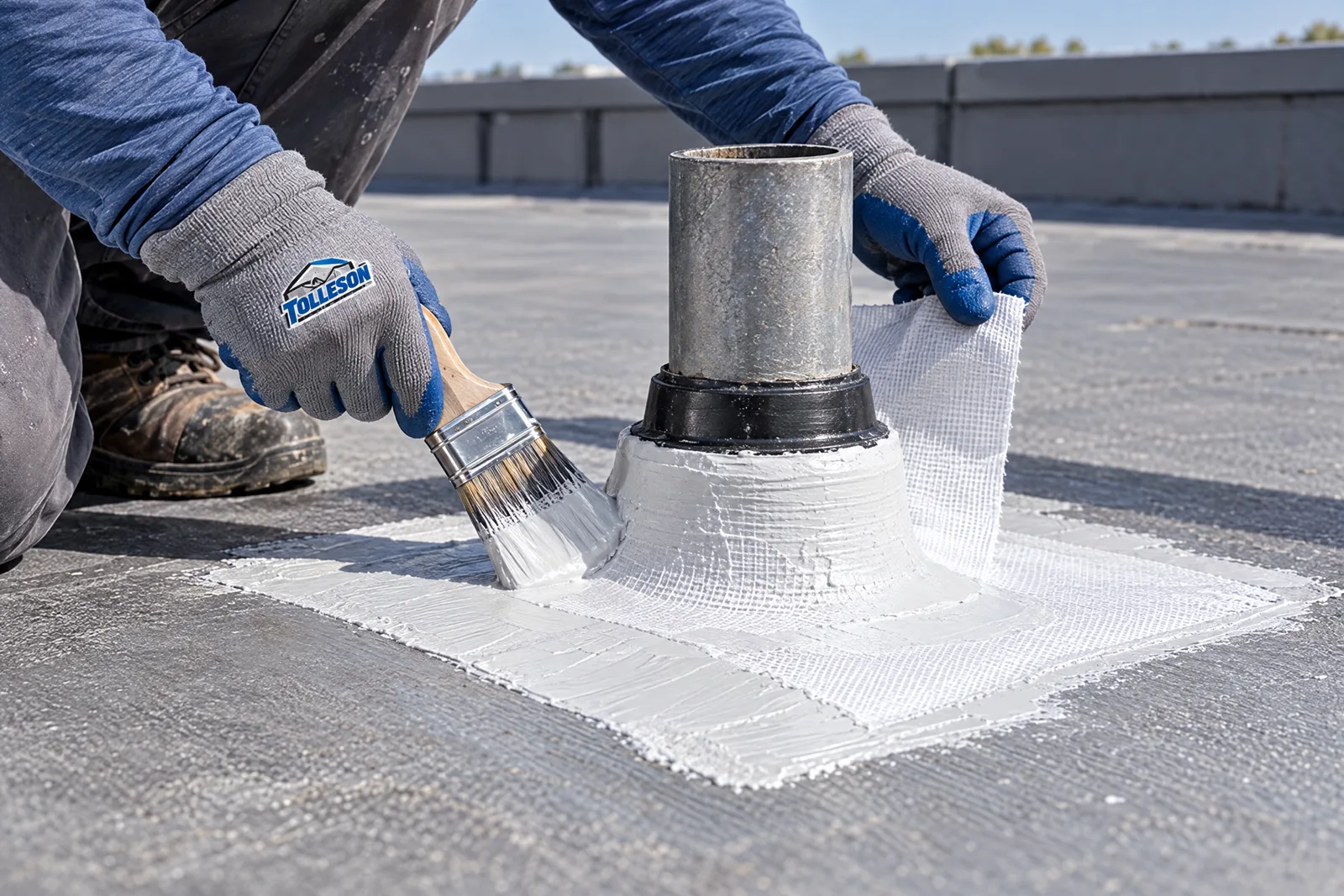
We inspect the flashing and connection at that wall, not just the open roof surface. Loose or damaged details need repair before coating. These connections may require sealant or reinforcement that differs from the material applied across the main roof. GAF
Are the Connections Around Roof Drains Included in the Work?
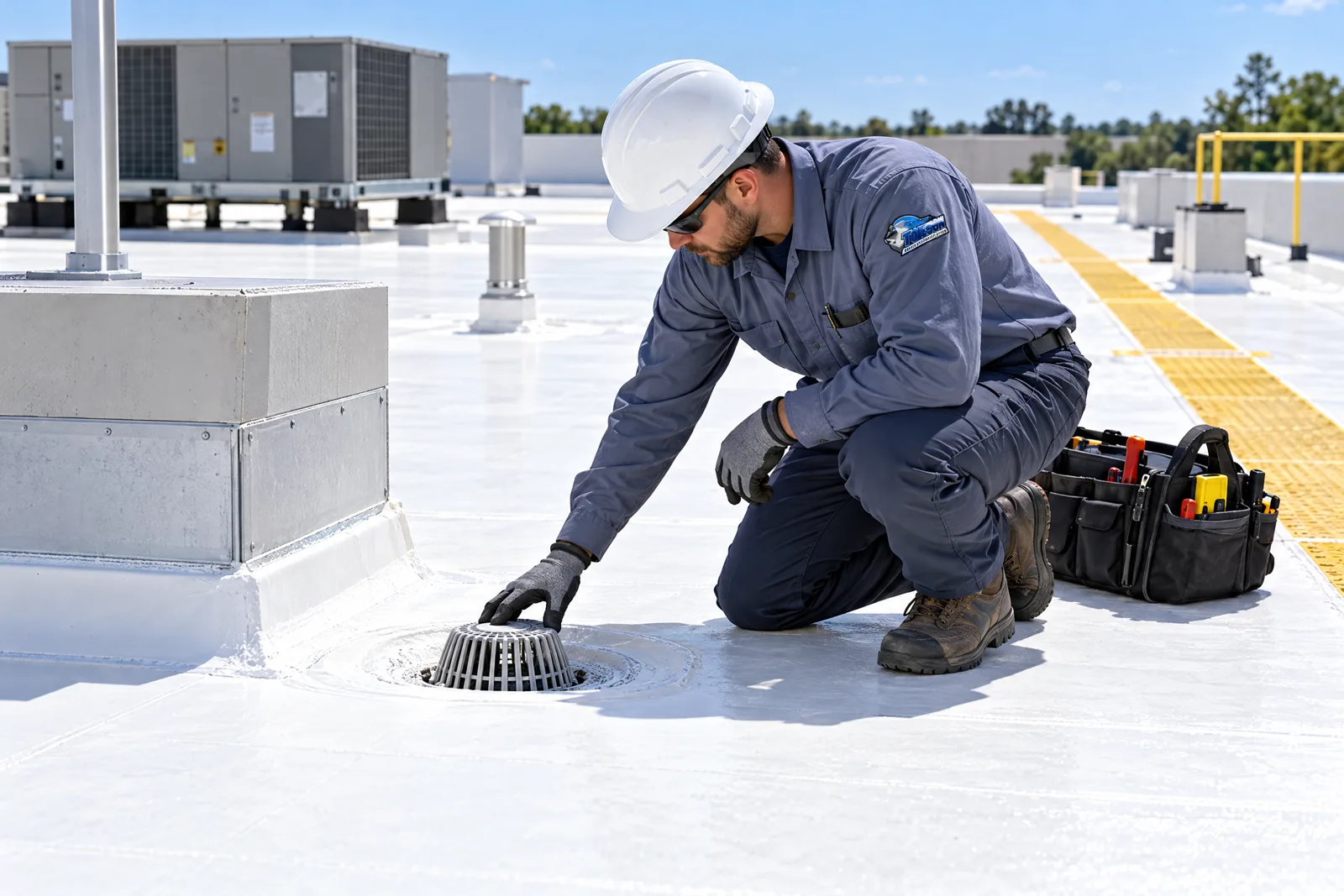
They need to be checked as part of preparing the roof. The area where a drain meets the roofing may require repairs, sealant, or reinforcement. We address those details using the selected system’s requirements rather than coating only the large, open areas. GAF
Our Upper Roof Drains Onto a Lower Roof. Does That Matter?
Yes. Drainage between roof levels needs review. Water should not simply discharge from a downspout onto an unprotected coated surface below. We check how runoff reaches the lower roof and whether changes are needed to direct it properly before restoration. GAF
Can Dried Oil or Grease Be Coated Over?
No. Being dry does not make a contaminated surface ready for coating. Oil, grease, and other residue need proper removal so the coating can bond to the roof. We also need to understand where the contamination is coming from before planning the work. GAF
Preparing and Applying the Coating
What Happens Between the First Inspection and Applying the Coating?
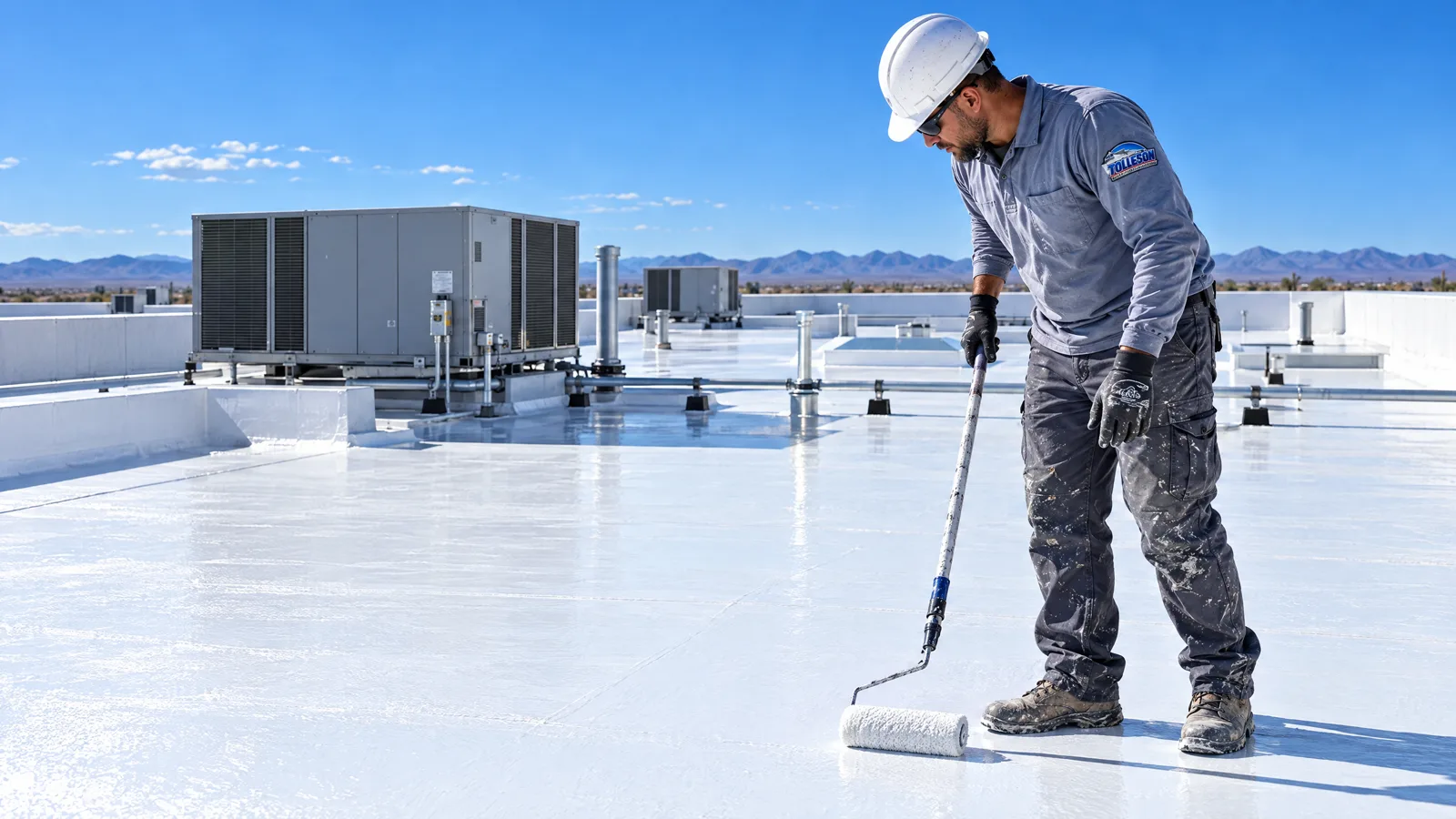
Our first step is Inspect Your Roof. We then identify repairs, address wet or damaged areas, and clean the surface. Seams and roof connections receive the required preparation. Primer is applied where needed before the main coating is installed. GAF
Could Pressure Washing Damage an Older Roof?
It can if the method is too aggressive. Cleaning should remove dirt without opening seams or damaging the roofing underneath. We choose the cleaning method for the existing roof and the coating manufacturer’s requirements. Roof Coatings Manufacturers Association
What Happens if the Coating Does Not Stick During a Test?
We do not proceed with the same application across the roof. A failed test means the preparation, primer, or product choice needs review. Further cleaning or an approved primer may help, but the coating still needs to pass the required adhesion checks. GAF
Is a Roof Fully Coated Once the Old Surface Is No Longer Visible?
Not necessarily. Appearance does not confirm the required thickness. We follow the selected system’s application requirements and check coverage during the work. A thin layer that hides the old roof may still fall short of the specified amount of coating. GAF
Working Around an Active Building
Can Roof Coating Be Planned for a Building That Runs Around the Clock?
A 24-hour operation does not automatically rule it out. We need to review roof access, shift changes, ventilation, and areas that must remain available. Tell us which activities cannot stop so we can discuss a workable schedule without promising that every area of the property will remain unaffected.
Will Our Loading Docks Need to Close?
That depends on where the work takes place and how crews and materials will reach the roof. We discuss truck routes, loading times, and staging areas before scheduling. Any temporary restrictions should be agreed on with your site manager, not left for drivers to discover when they arrive.
What Should We Tell You About Sensitive Indoor Operations?
Tell us about exposed products, food handling, temperature-controlled areas, or processes that have strict site rules. Identify nearby air intakes and any equipment that cannot be interrupted. We need those details before selecting the application method and discussing work-area controls with your facility team.
Can Other Contractors Keep Working on the Roof During Coating?
Their access needs coordination. We discuss where each trade will be working and when they need access to equipment. Fresh coating must have the required time to cure before it is exposed to traffic, so equipment servicing may need to be moved to another time. GAF
Benefits of Coating Your Roof
Where Does the Cost Advantage Over Replacement Come From?
Much of it comes from keeping roofing that is still usable instead of removing and rebuilding it. That can reduce material, labor, and disposal costs. The advantage becomes smaller when the roof needs extensive repairs before it can be coated. GAF
Can Coating Mean Less Demolition Around the Property?
Yes, when most of the existing roof can remain in place. Less tear-off can mean less debris handling and disruption around the building. Repairs and surface preparation still take work, so coating should not be treated as a disturbance-free project. GAF
Does Keeping the Existing Roof Reduce Waste?
It can. Roofing that remains in service does not need to be removed and discarded during the project. Wet or damaged materials still need appropriate removal, but a suitable restoration can avoid throwing away the entire roof assembly. GAF
Can Coating Make Future Roof Work Easier to Plan?
A suitable coating system may be renewed later rather than completely removed. That gives the owner another option to consider as the roof ages. Future recoating still requires checking the existing surface, repairing damage, and confirming that the new material will bond properly. Polyglass U.S.A., Inc.
Cost, Scheduling, and Coverage
Can We Reduce the Cost by Leaving Out Primer or Seam Repairs?
Required preparation should not be removed just to lower the price. Some roofs need primer, and damaged seams need the specified treatment. We explain which steps the roof requires rather than leaving out work that the coating system depends on. GAF
What Should We Allow for When Setting an Internal Deadline?
Leave time for the inspection and any required preparation before choosing a completion deadline. We also need to discuss access restrictions and other work at the property. Tell us about important delivery dates, tenant changes, or shutdown windows early so those needs can be considered in the schedule.
Does Every Roof Coating Come With the Same Warranty?
No. Available warranties differ by manufacturer and application. Before work starts, confirm which coverage applies, who provides it, and what responsibilities remain with the building owner. A warranty mentioned in product advertising does not establish coverage for every job. Roof Coatings Manufacturers Association
Can You Promise the Coating Will Last a Set Number of Years?
Not without accounting for the product, installed thickness, roof condition, and ongoing care. Those factors affect performance. We discuss expectations for the selected system rather than treating every coated commercial roof as having the same lifespan. Roof Coatings Manufacturers Association
Caring for the Finished Roof
What Should Be Included in Our Roof Maintenance Schedule?
Plan for inspections twice a year and additional checks after severe weather or rooftop work. Include drains, flashing, coating wear, and equipment areas. Follow any specific maintenance requirements for the installed system and keep track of problems that need repair. GAF
Should We Limit Where Technicians Walk on the Coated Roof?
Yes. Regular service routes deserve attention because repeated traffic can wear or damage the coating. Depending on the system, protected walk paths may be appropriate. Technicians should also avoid dragging equipment or leaving sharp parts on the roof. GAF
What Should We Check Before Buying Sealant for a Small Repair?
Identify the existing coating and its approved repair materials first. A sealant that works elsewhere may not bond properly to this roof. Silicone-coated surfaces, in particular, need compatible products and careful preparation before repairs are made. Polyglass U.S.A., Inc.
What Should We Tell You if a Leak Appears After the Roof Is Coated?
Contact us with the location of the leak, when you first noticed it, and any recent work on the roof. Share photos that can be taken safely from inside the building. Also provide any applicable warranty details so the problem can be reviewed through the appropriate process.