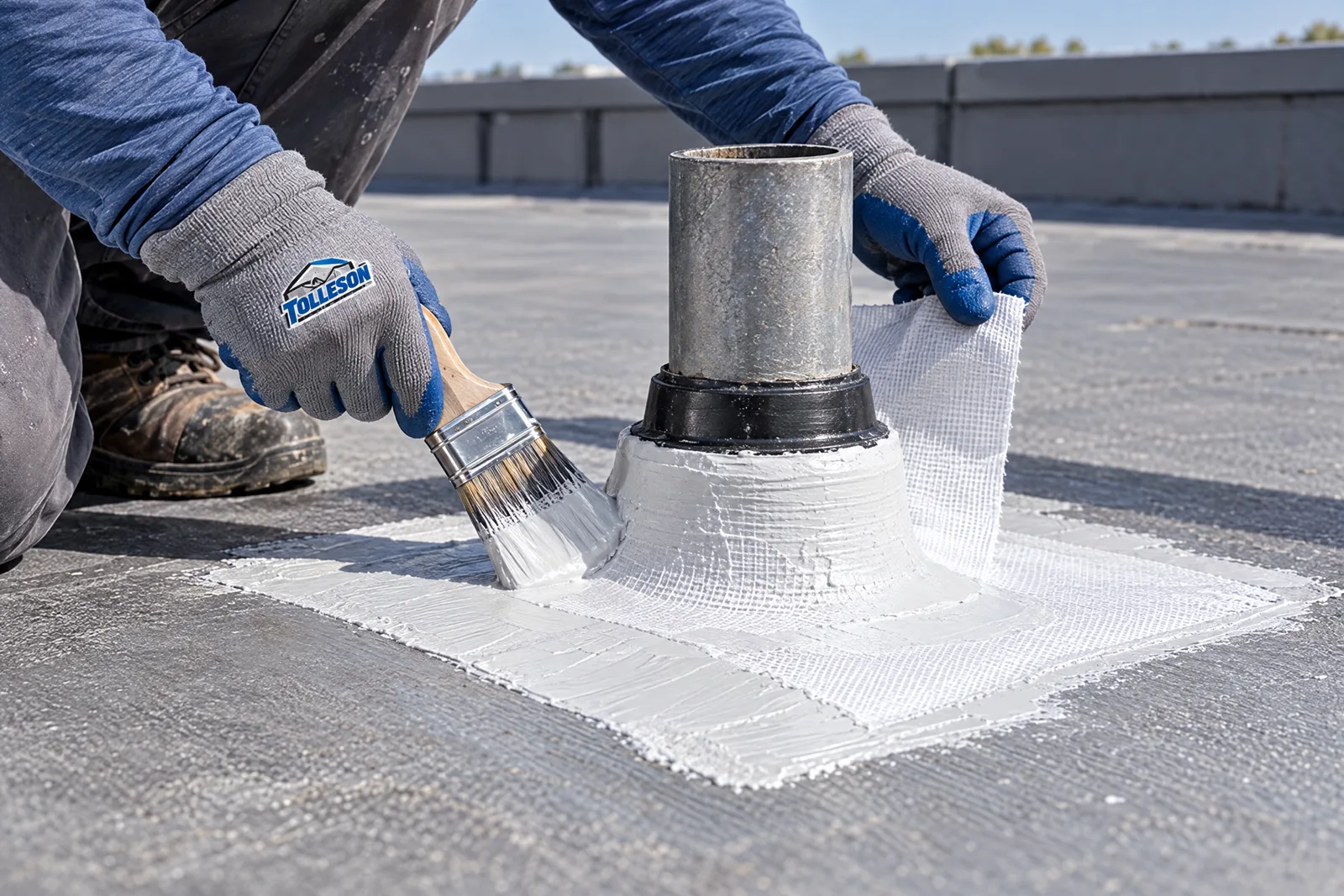
Dried Oil Or Grease
Dry residue can still prevent adhesion. Contaminated areas need suitable removal, complete drying, and attention to the source before a primer or coating is considered for reliable bond.
Commercial Roofing · Arizona
We coat commercial roofs in Estrella Village after checking contamination, drainage, roof condition, and ventilation around active buildings.
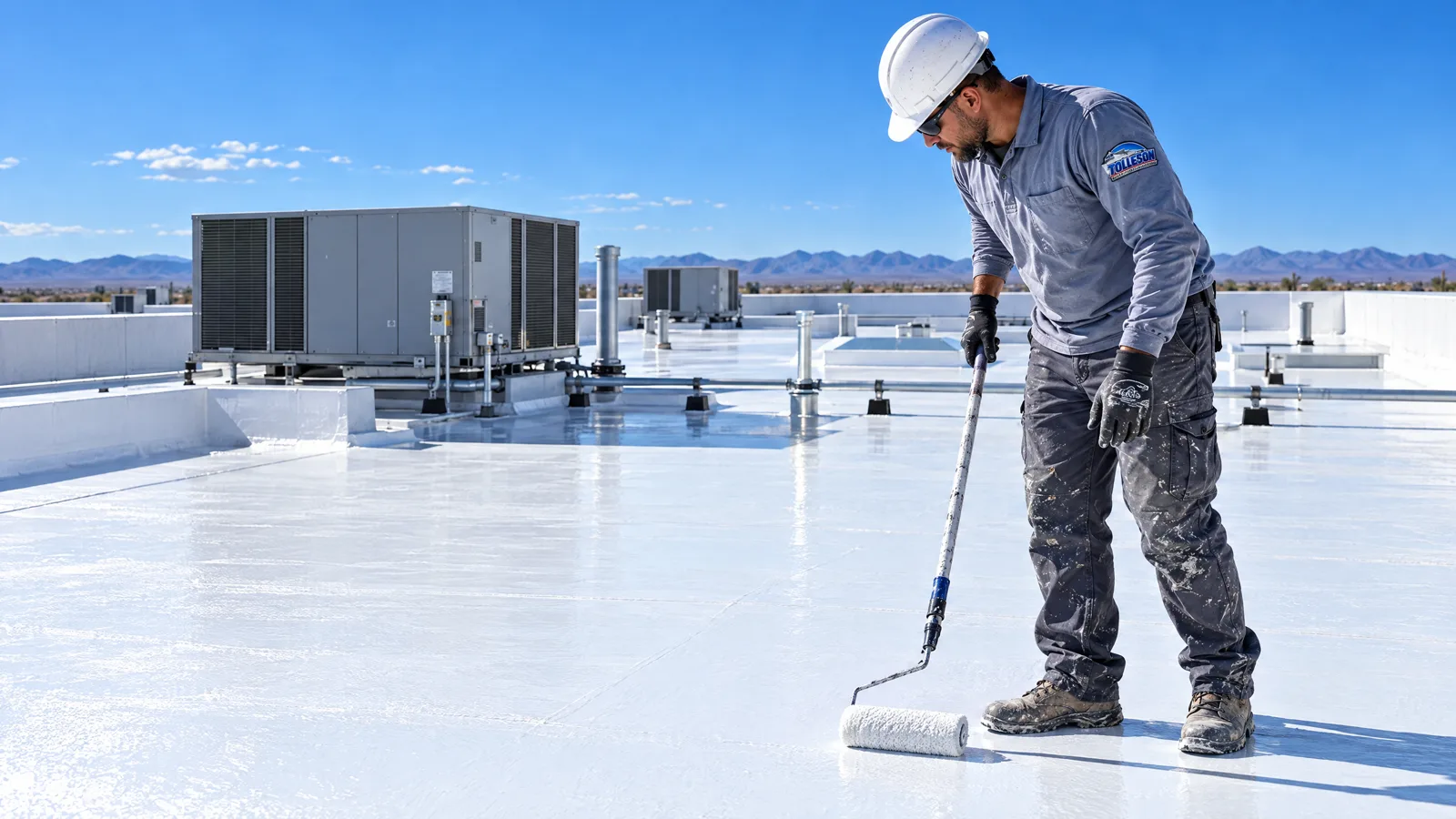
Estrella Village is within Phoenix and includes warehousing, transportation, logistics, shipping, and other industrial and commercial activity.
That operating environment makes roof preparation more than a wash-and-coat job. Grease or oil can collect near exhaust points, service areas, food-related operations, or equipment. Air intakes and ventilation equipment can also affect how work is staged. We identify contamination, its likely source, nearby intakes, access routes, and sensitive indoor areas before selecting a cleaning method or coating system.
A coating only makes sense when the existing roof is sound enough to keep. Loose materials, wet insulation, failed details, or unresolved drainage problems need correction before the roof is coated.
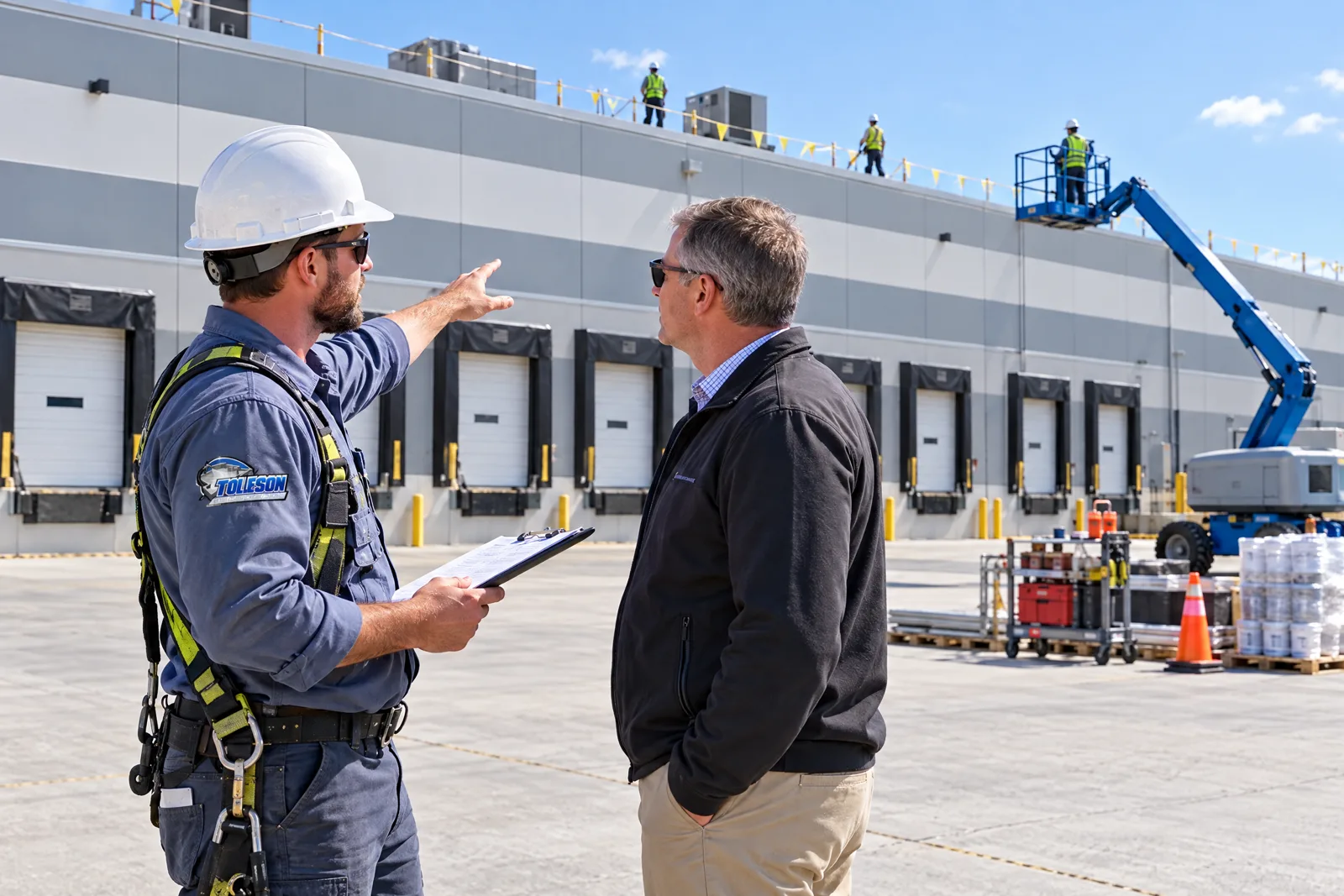
A roof symptom does not define the coating scope. These conditions tell us where inspection, repair, cleaning, or compatibility testing needs to start.
Dry residue can still prevent adhesion. Contaminated areas need suitable removal, complete drying, and attention to the source before a primer or coating is considered for reliable bond.
Roof areas near exhaust fans or fresh-air intakes need careful staging. We identify airflow paths, protect adjacent surfaces, and coordinate controls with the facility team to avoid unnecessary exposure.
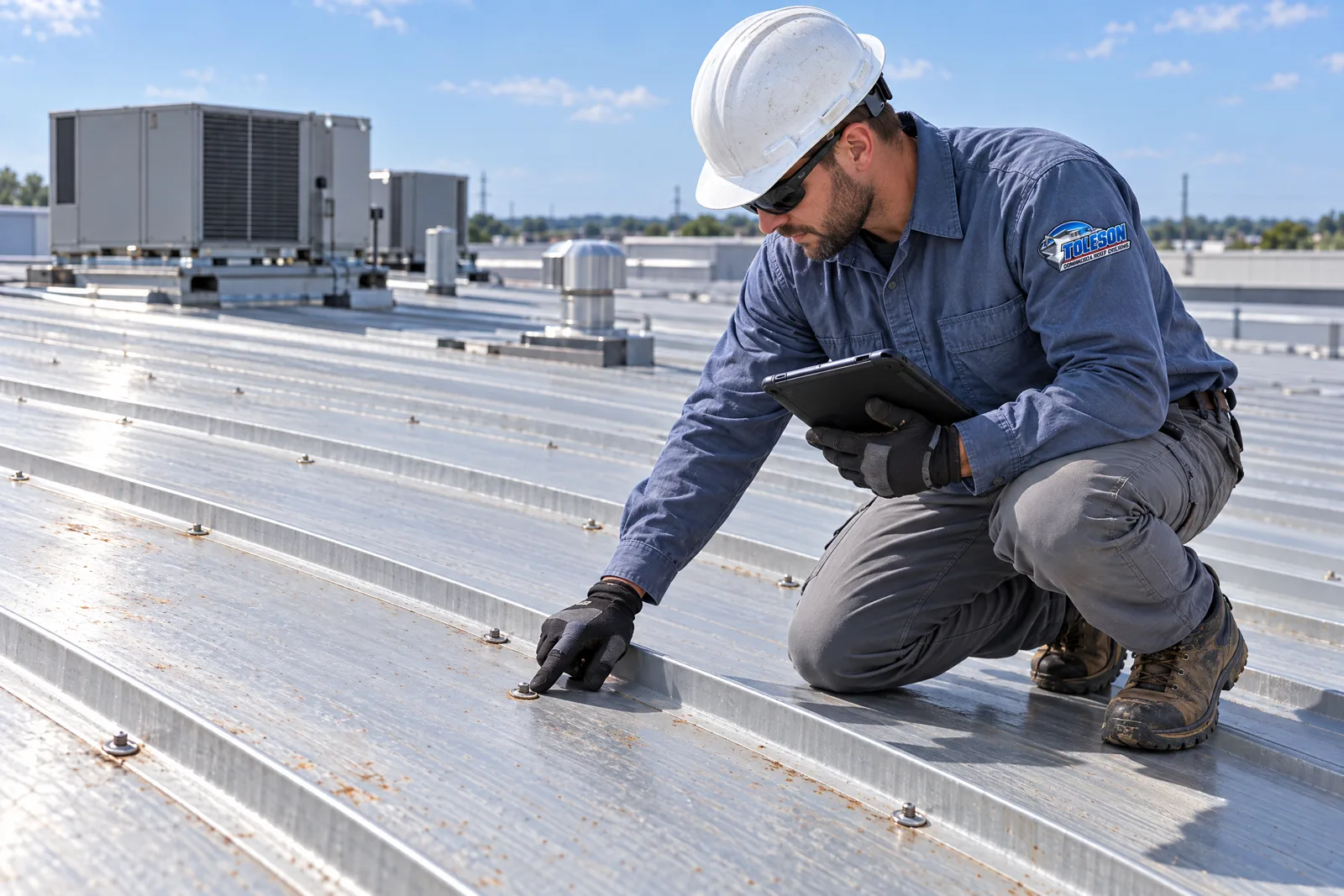
Coating cannot secure loose panels or replace missing fasteners. Metal connections and seams need repair or replacement where required before the surface is coated and restoration begins.
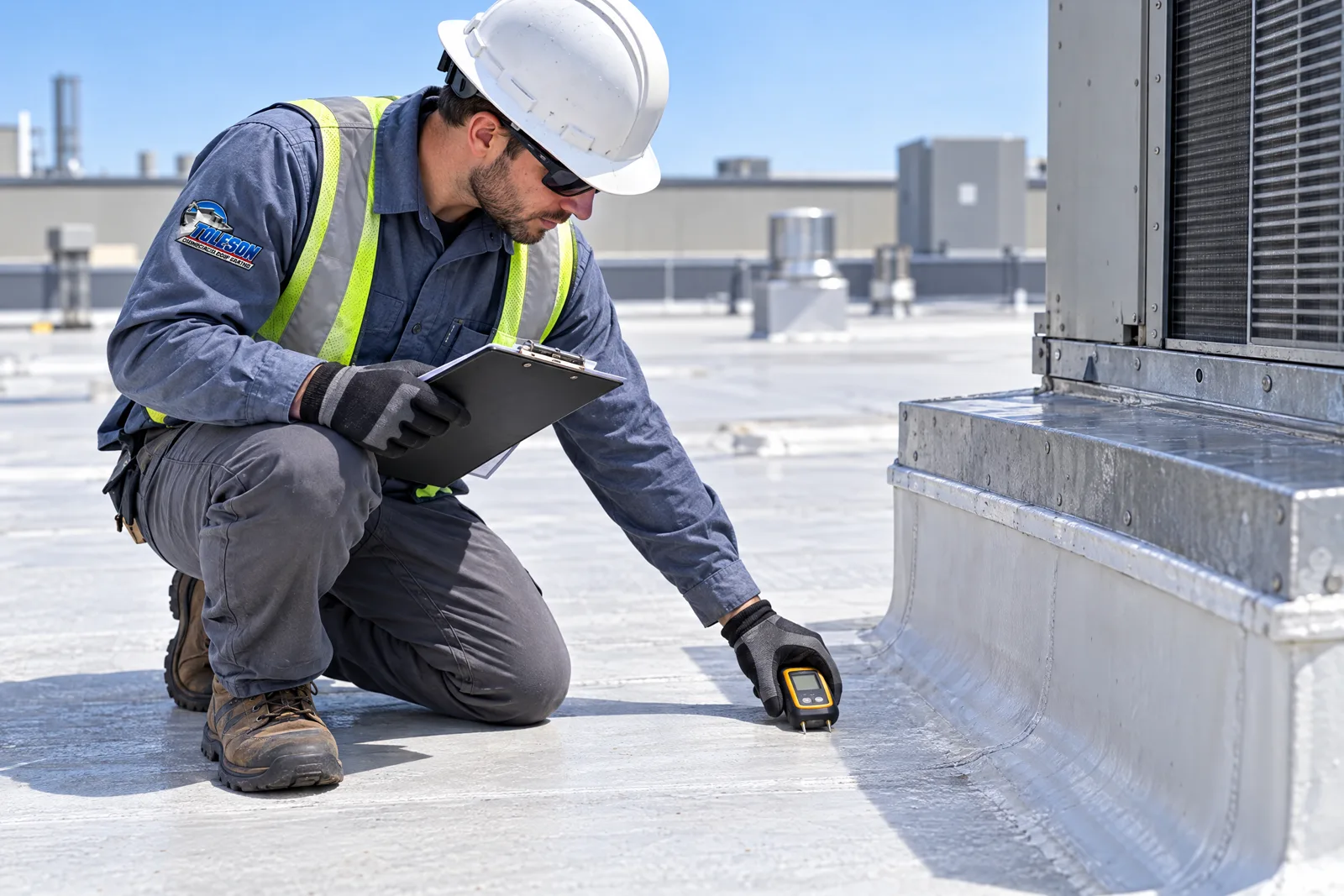
A dry-looking surface can hide wet insulation or damaged layers. Suspected moisture needs further testing, and wet materials need correction instead of being sealed below coating before restoration moves ahead.
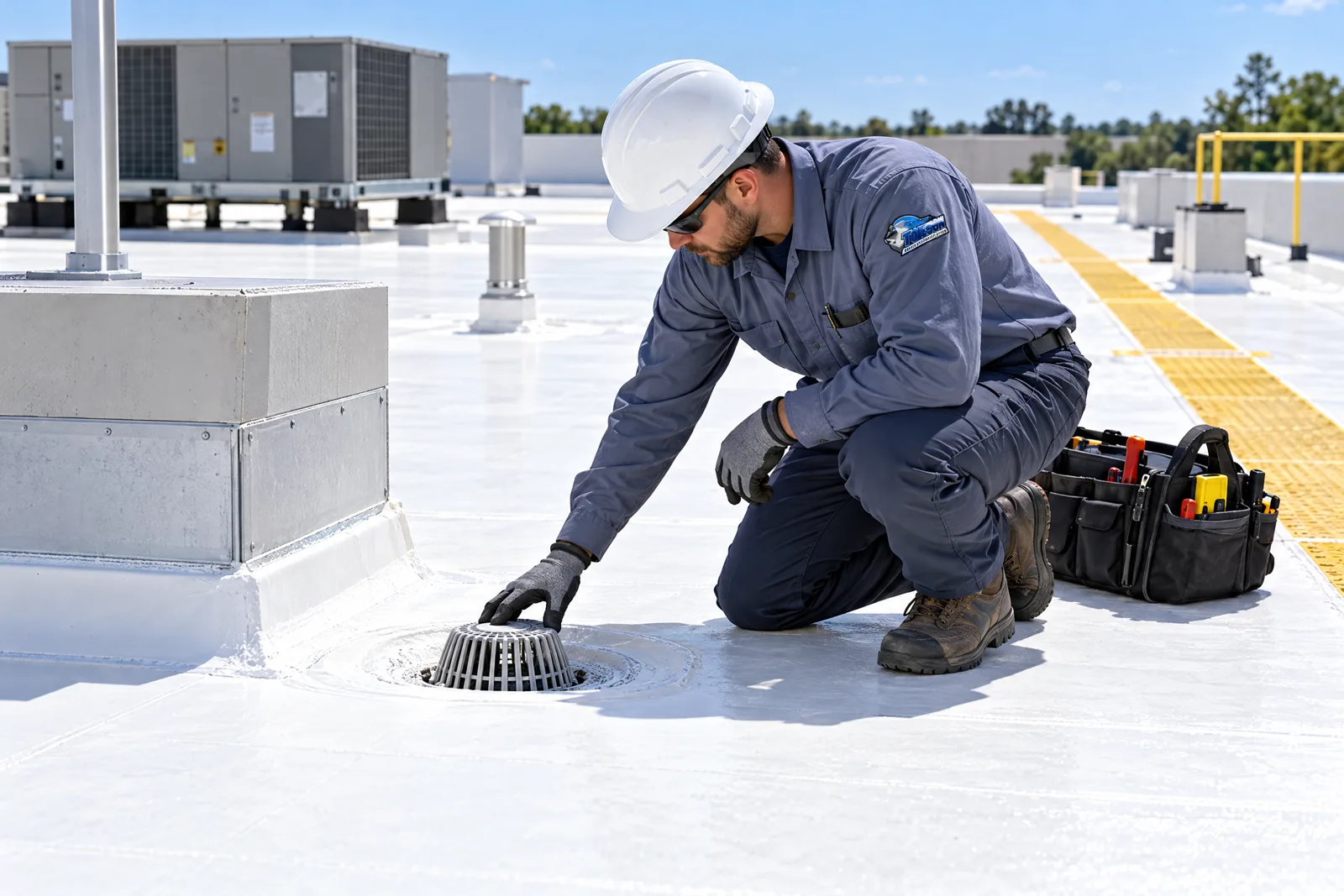
Drains, scuppers, and low areas need review before application. Coating does not correct blocked drainage or leave standing water problems unresolved before restoration work begins.
Loading areas, service routes, rooftop equipment, and indoor operations influence staging. The work plan needs agreed access controls before materials reach the roof and safe roof access.
Coating can be useful when the existing roof is repairable, compatible, and clean enough to accept the selected system.
When most of the assembly remains sound, a restoration may avoid removing the entire roof. Damaged or wet materials still need separate correction before coating work starts.
Leaving suitable roofing in place can reduce tear-off and disposal around an operating property. Preparation, repairs, and protection still require careful site control around people and equipment.
A coating scope can include seams, penetrations, curbs, drains, and flashing rather than treating the open roof as the only surface that matters during preparation.
A suitable system can make future inspections and compatible repairs easier to organize. Walk routes, equipment traffic, and recoating requirements still need practical maintenance planning.
The existing substrate, contamination, drainage, and ventilation conditions determine which coating system can be considered.
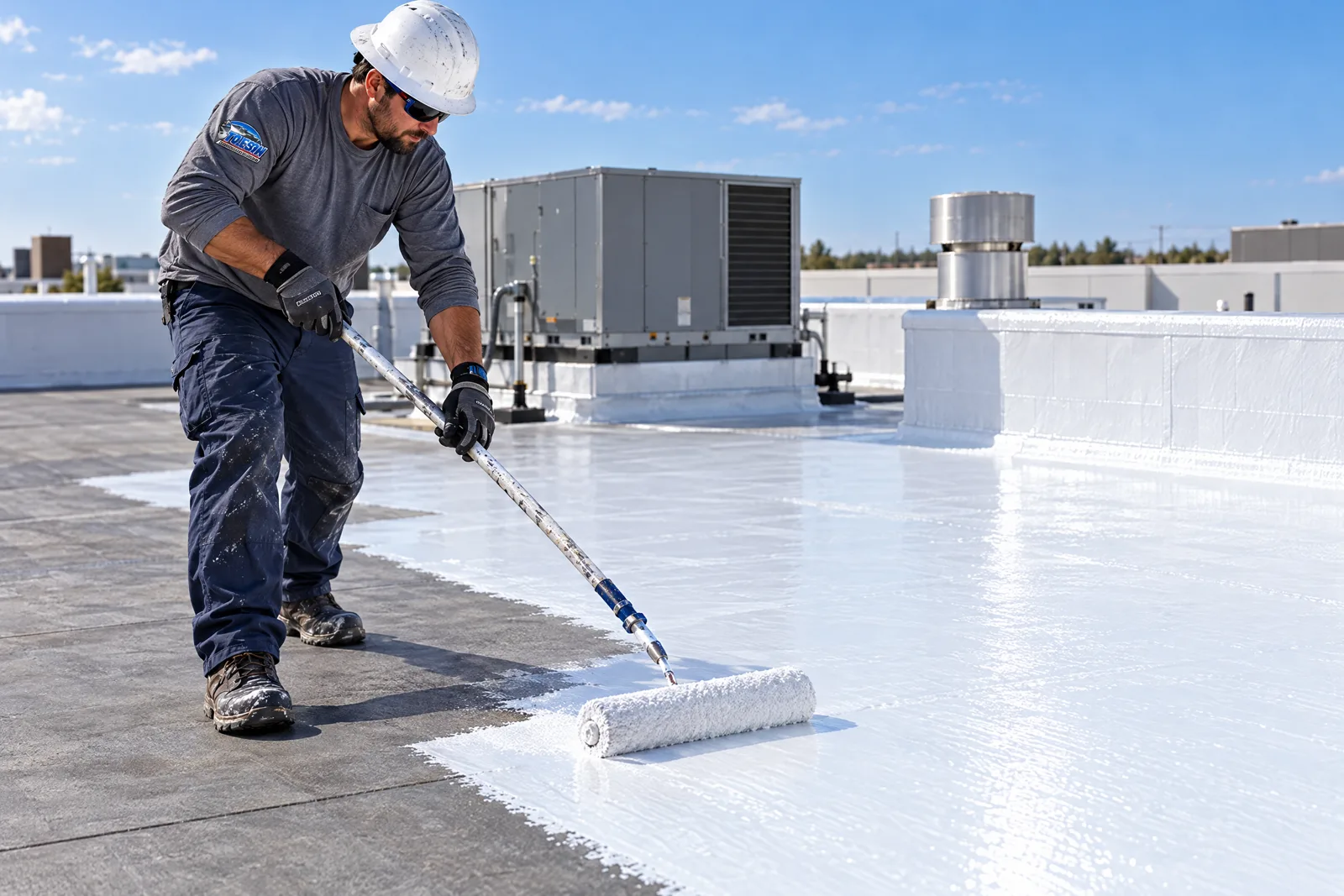
Silicone may fit a compatible low-slope roof after moisture, drainage, cleaning, and adhesion checks. It is not a shortcut over grease, wet materials, or unresolved details.
Explore silicone roof coating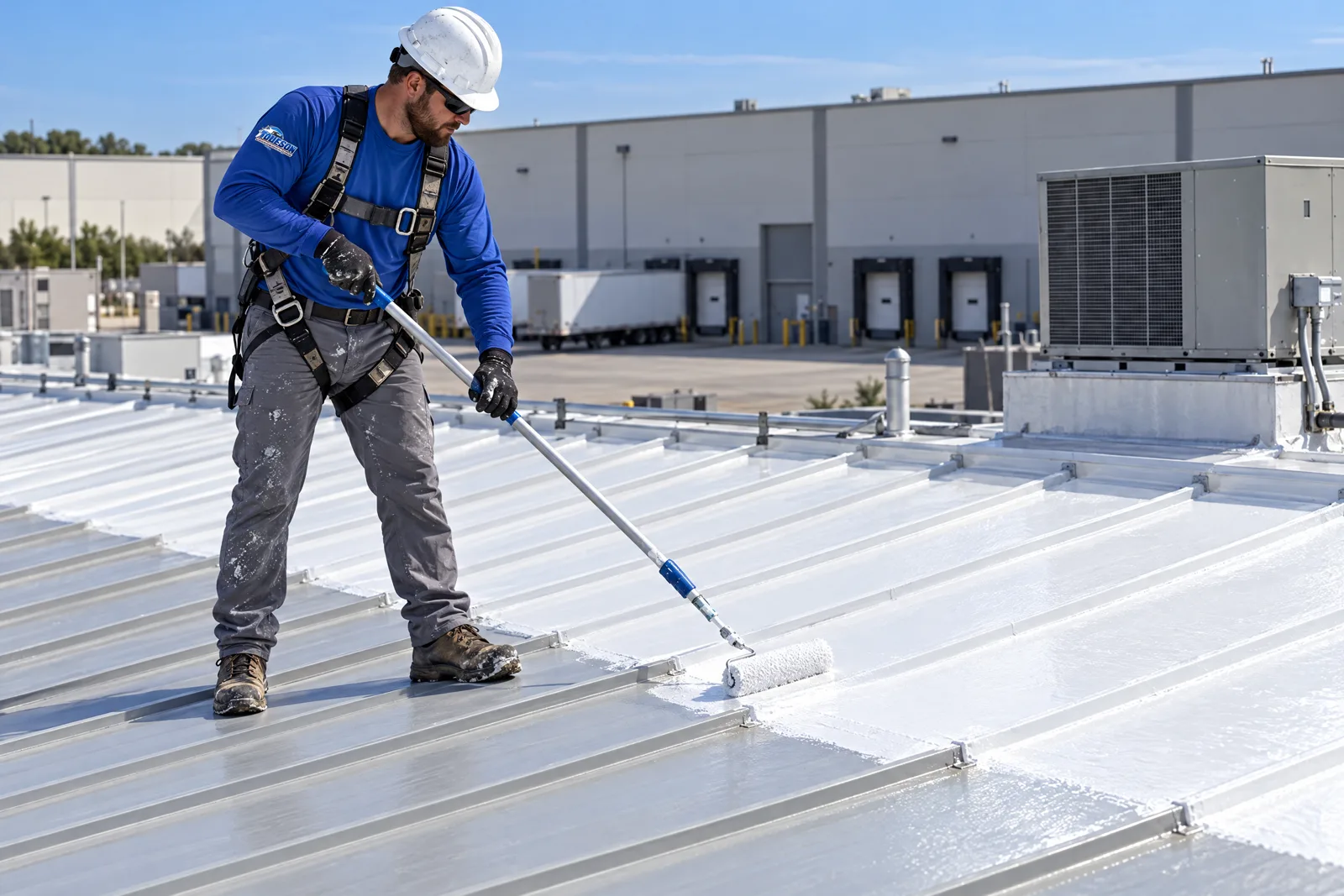
Acrylic may suit a clean roof with dependable drainage and an appropriate application window. Metal repairs, surface preparation, and compatible primer remain part of the decision.
Explore acrylic roof coatingMetal restoration starts with panel movement, corrosion, fasteners, seams, and penetrations. Coating follows repair and cleaning when the panels remain suitable to keep.
Explore metal roof coatingThe work sequence protects adhesion and keeps industrial building conditions in view from the first inspection through maintenance planning.
We inspect the membrane or panels, seams, penetrations, drains, low areas, rooftop equipment, and visible contamination. We also note air intakes, exhaust zones, access routes, and areas where operations cannot pause.
We identify loose materials, failed details, corrosion, wet areas, and drainage concerns. The roof must be worth keeping, and required repairs or material replacement come before coating.
Cleaning removes grease, oil, dirt, chalking, and loose debris without damaging the existing roof. The roof must dry fully, and the contamination source should be addressed where possible.
We treat seams and details, use primer where the selected system requires it, and check compatibility or adhesion with test areas. Failed tests require a revised preparation or product decision.
Application follows the selected product requirements and agreed controls for ventilation, air intakes, rooftop traffic, staging, and cure time. We then organize maintenance checks for drains, details, and wear.
Commercial properties near Estrella Village can also be served through the approved Tolleson-area coverage.
Plan coating around tenant handover dates and other work at the property.
Avondale roof coatingCoordinate roof access with shift-based operations and rooftop trades.
Goodyear roof coatingConnect maintenance knowledge with roof access around occupied facilities.
Litchfield Park roof coatingReview the broader commercial roof coating service area around Tolleson.
View service areasIndustrial roof coating decisions often turn on contamination, weather, ventilation, and the condition beneath the surface.
No. Being dry does not make a contaminated surface ready for coating. Oil, grease, and other residue need proper removal so the coating can bond to the roof. We also need to understand where the contamination is coming from before planning the work near an Estrella Village industrial facility.
Yes. Strong winds can reach an Estrella Village property before rain does, and blowing dust can interfere with roof work. We consider approaching storms and wind conditions, not just whether water is falling on the building. Outdoor work may need to stop before the storm arrives.
It may be possible, but ventilation conditions must be reviewed first. Identify fresh-air intakes, exhaust fans, sensitive indoor operations, and equipment that cannot be interrupted. The application method and work controls should protect those areas rather than assuming an active facility can operate unchanged.
The contamination source needs attention before coating. Repeated exhaust residue, leaks from equipment, or service-area runoff can make a clean surface dirty again. We identify the affected zone, discuss source control with the facility team, and confirm that the prepared roof can stay clean through application.
Not until suspected wet materials are addressed. A surface inspection can miss moisture in insulation or lower roof layers. Further testing may be needed, and wet materials require correction instead of being sealed beneath a new coating. The remaining roof must be sound enough to keep.
Roof access affects staging, deliveries, equipment service, and cure protection. We discuss loading docks, truck routes, shift changes, rooftop traffic, and areas that must remain available before scheduling. Temporary restrictions should be agreed with the facility manager so the coating work does not create unexpected conflicts.
Tell us about the roof, contamination, drainage, and ventilation conditions so coating suitability can be checked before work is planned.
Before You Go
Share your name and phone number and we will call about your commercial roof.
Prefer to call directly? Call Us Privacy Policy