Loose Panels And Fasteners
Loose metal panels, missing fasteners, and unsecured materials need correction before coating. We separate repairable areas from sections that may need replacement instead of sealing movement beneath a finish.
Commercial Roofing · Arizona
We coat commercial roofs in Goodyear, coordinating inspection, preparation, shifts, rooftop trades, and cure controls around active facilities.
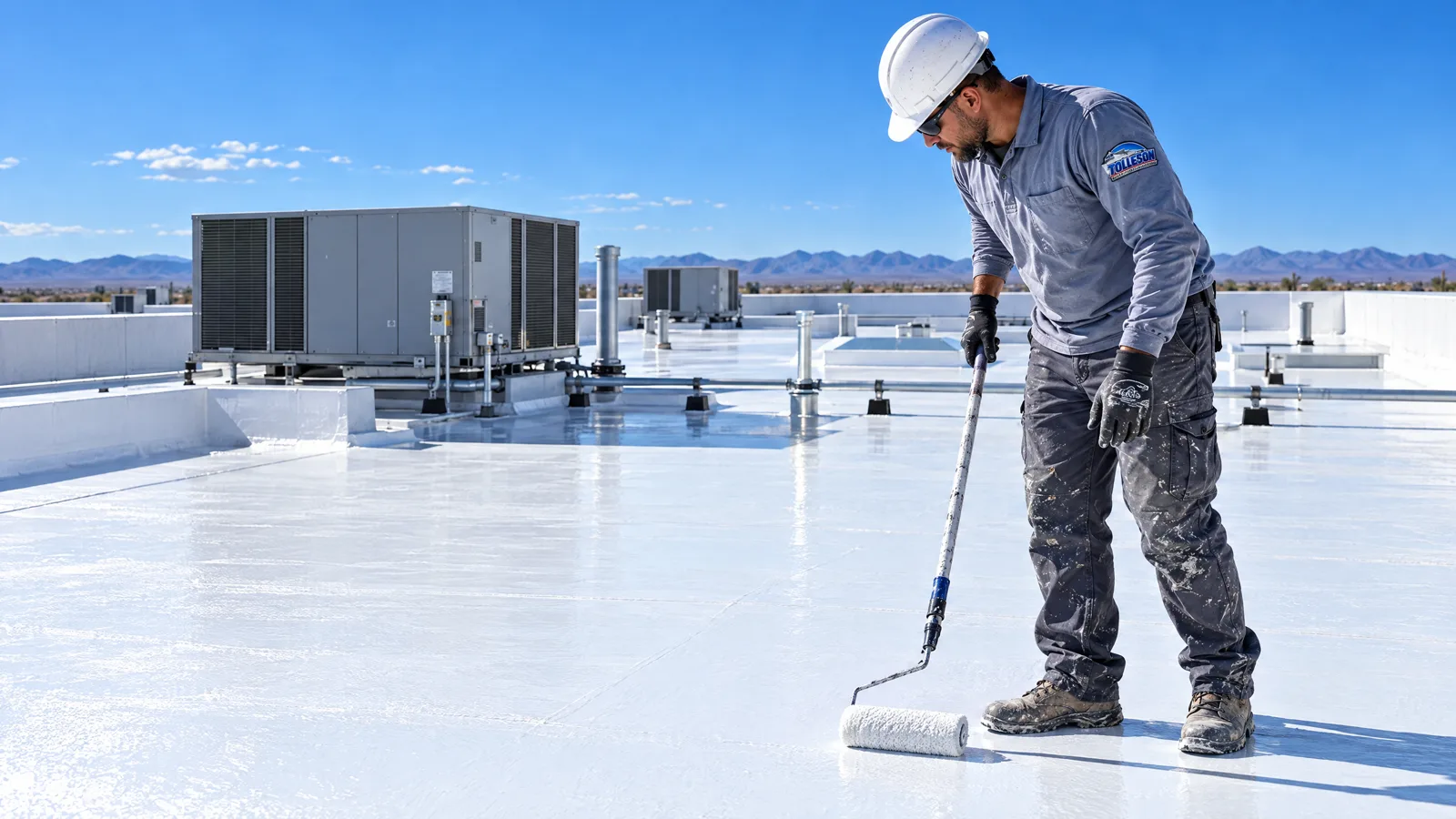
Goodyear’s advanced-manufacturing and industrial buildings may run across multiple shifts. Roof coating has to account for people, equipment, deliveries, air intakes, and other trades before material reaches the roof.
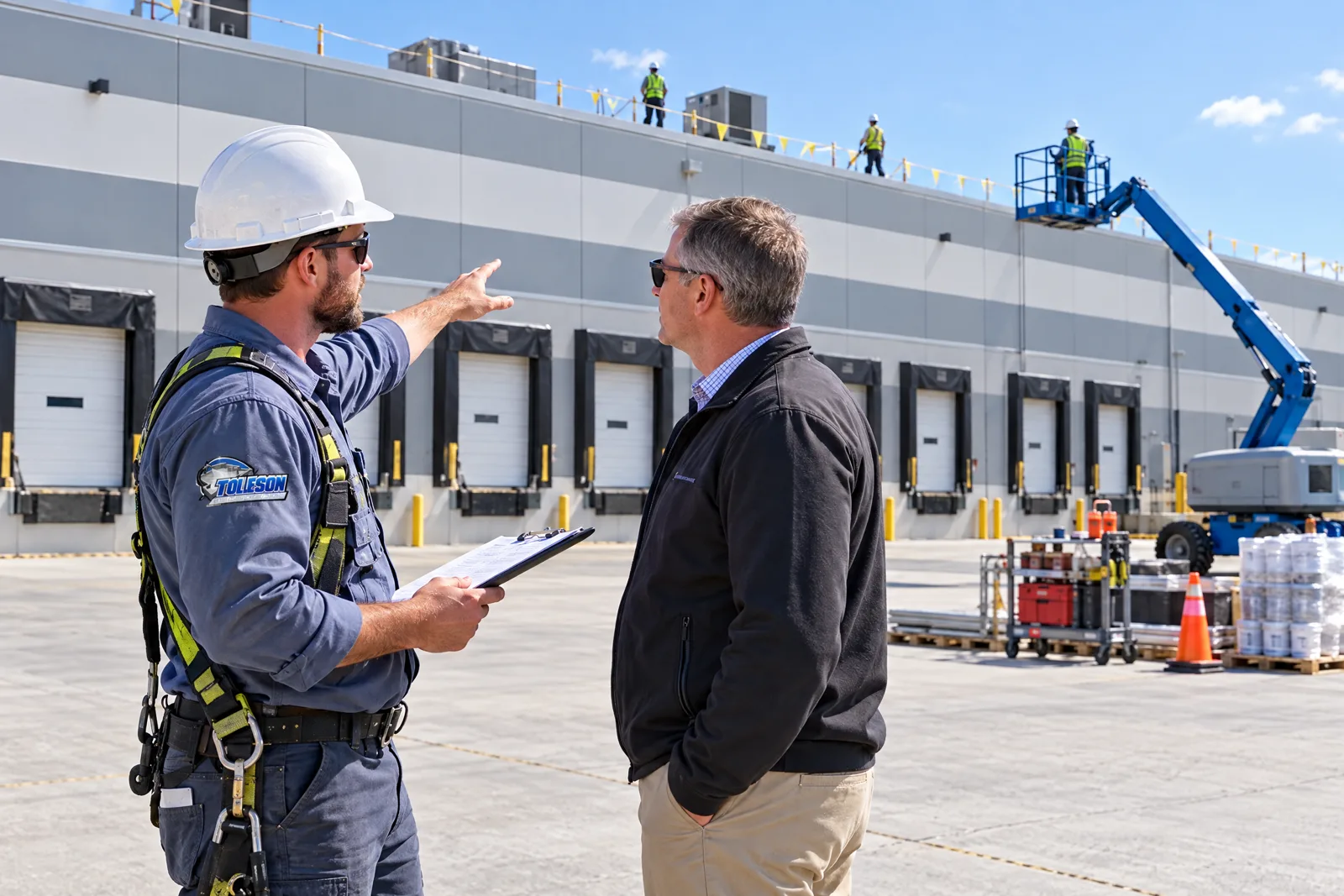
A workable sequence starts with the facility schedule. We identify when roof access is available, which equipment needs service, where materials can be staged, and which indoor operations cannot be interrupted. Shift changes, loading activity, and controlled areas all affect how roof sections are reached and protected.
The coating itself is only one part of the work. Seams, penetrations, drains, wall details, and suspect moisture need attention before application. Other contractors may need the roof during the same period, so access routes and fresh-coating cure time must be agreed on with the facility manager.
The roof condition determines whether coating can proceed and what the facility must plan around. These checks keep a shift schedule from hiding repair or preparation work.
Loose metal panels, missing fasteners, and unsecured materials need correction before coating. We separate repairable areas from sections that may need replacement instead of sealing movement beneath a finish.
A dry-looking surface does not prove the roof assembly is dry. Suspected moisture may call for further testing and removal or repair of wet materials before a coating system is selected.
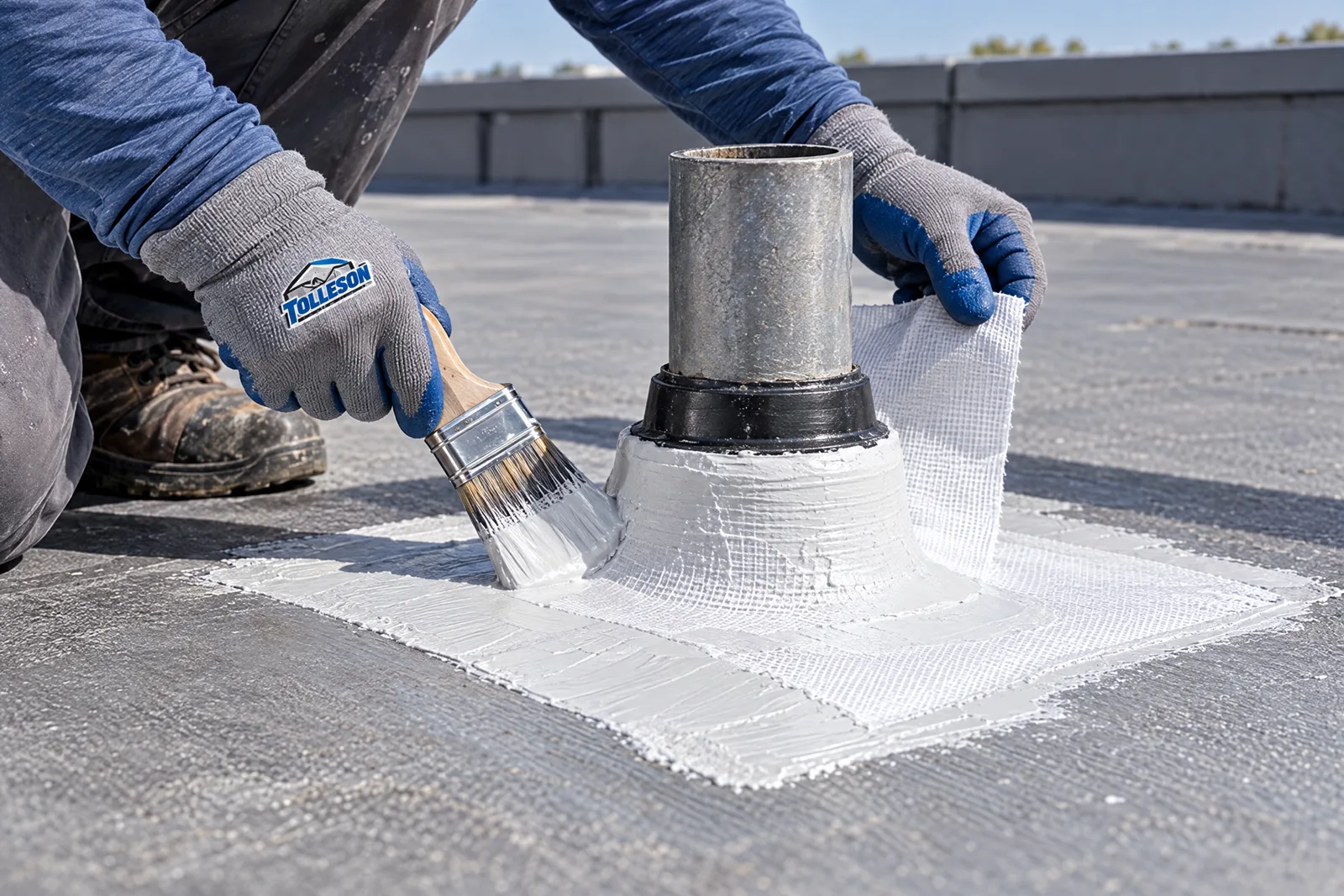
Roof movement concentrates at seams, drains, curbs, pipes, and other penetrations. Those details may need sealant, reinforcement, or repairs that differ from the coating applied across the open field.
Water at a wall is often a flashing or connection problem, not an open-roof problem. We inspect the transition and set repair boundaries before coating the nearby surface.
Dust and dried grease can prevent bonding, especially near industrial operations. The surface needs the right cleaning method and a dry condition before adhesion testing and application.
HVAC units, vents, electrical equipment, and service routes affect access and application controls. We note air intakes and equipment work so roof traffic does not cross fresh coating.
Coating makes sense when the existing assembly is worth keeping and can be prepared correctly. The benefits depend on roof condition, system compatibility, and the work required first.
When the roof is sound enough to restore, a compatible coating can protect the existing assembly without treating full removal as the default. Damaged or wet materials still need separate action.
A suitable restoration may limit demolition, debris handling, and material movement around an active facility. It is not disturbance-free, because repairs, cleaning, staging, and cure controls remain part of the job.
Section-by-section access planning can help a facility coordinate shifts, deliveries, rooftop servicing, and restricted areas. The schedule still depends on weather, preparation, roof traffic, and the selected system.
A compatible system may be renewed later rather than removed entirely. Future recoating still requires inspection, repairs, cleaning, and confirmation that the new material will bond to the existing surface.
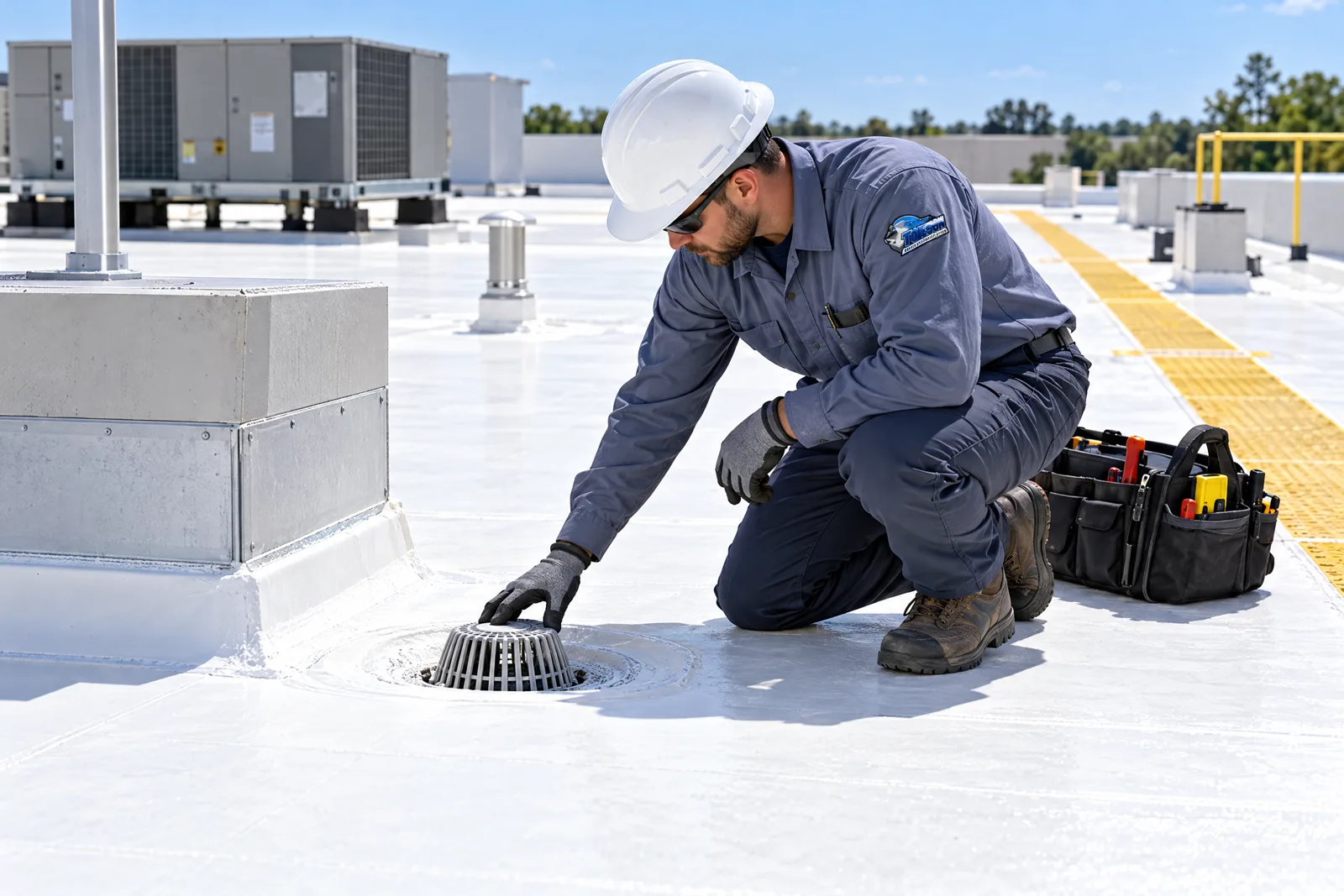
There is no single coating for every industrial roof. We match the system to the existing substrate, moisture condition, drainage, repairs, and operating controls.
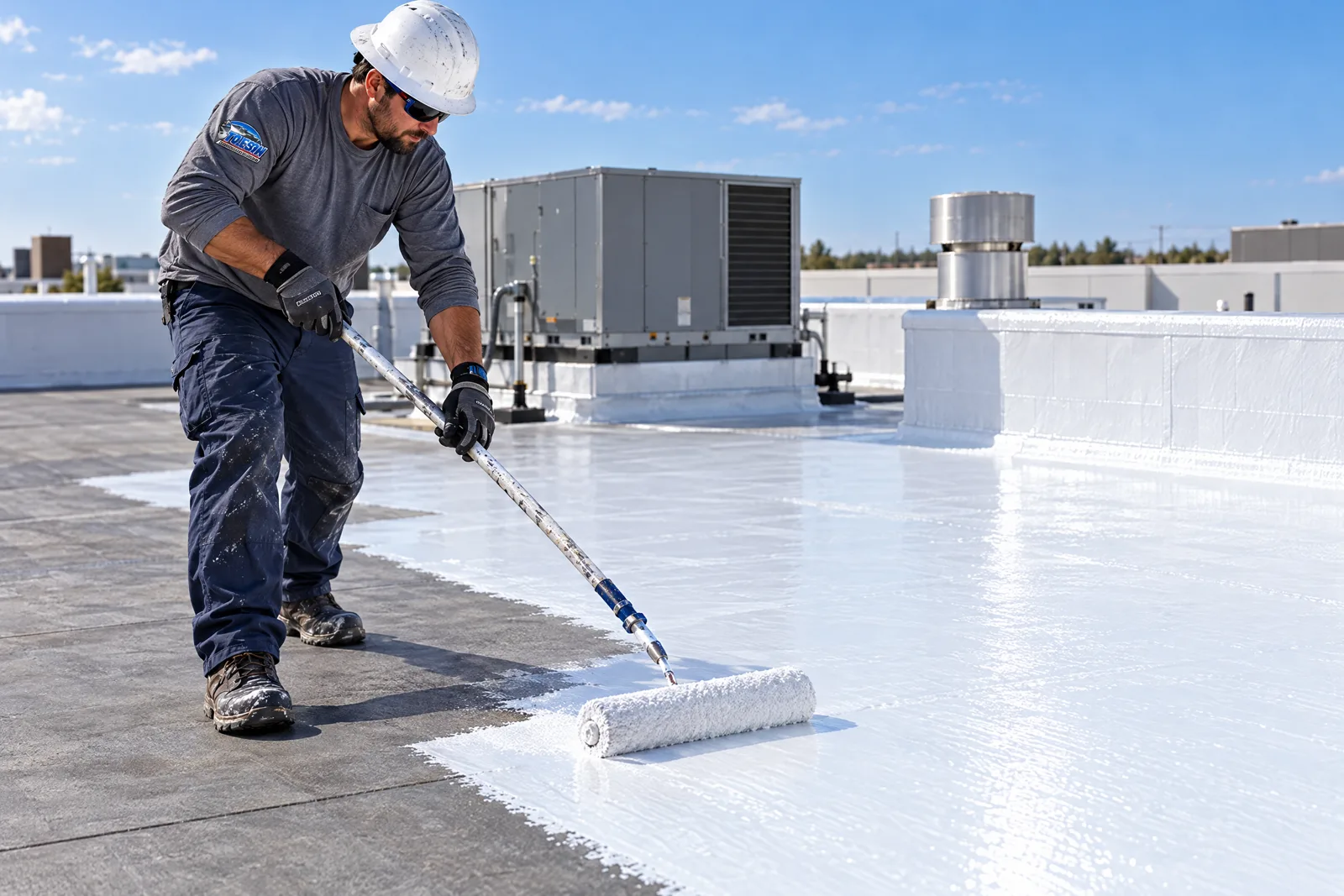
Silicone may fit a compatible low-slope roof where ponding resistance and careful seam, drain, and penetration preparation matter. The surface must be clean and dry for adhesion.
See silicone roof coating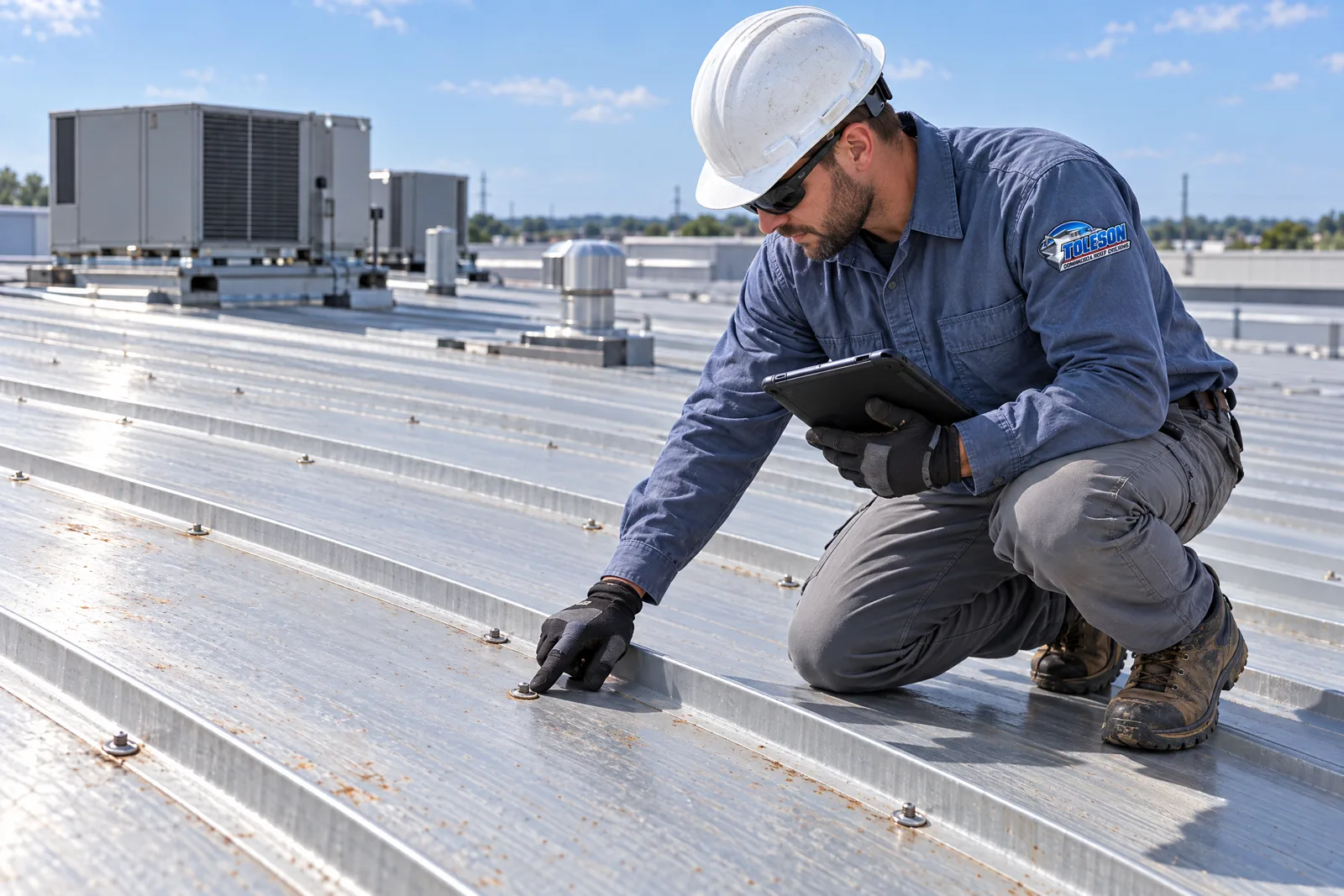
Metal restoration starts with panel movement, fasteners, corrosion, seams, and penetrations. Repairs and a compatible coating can follow when the panels are suitable to keep.
See metal roof coating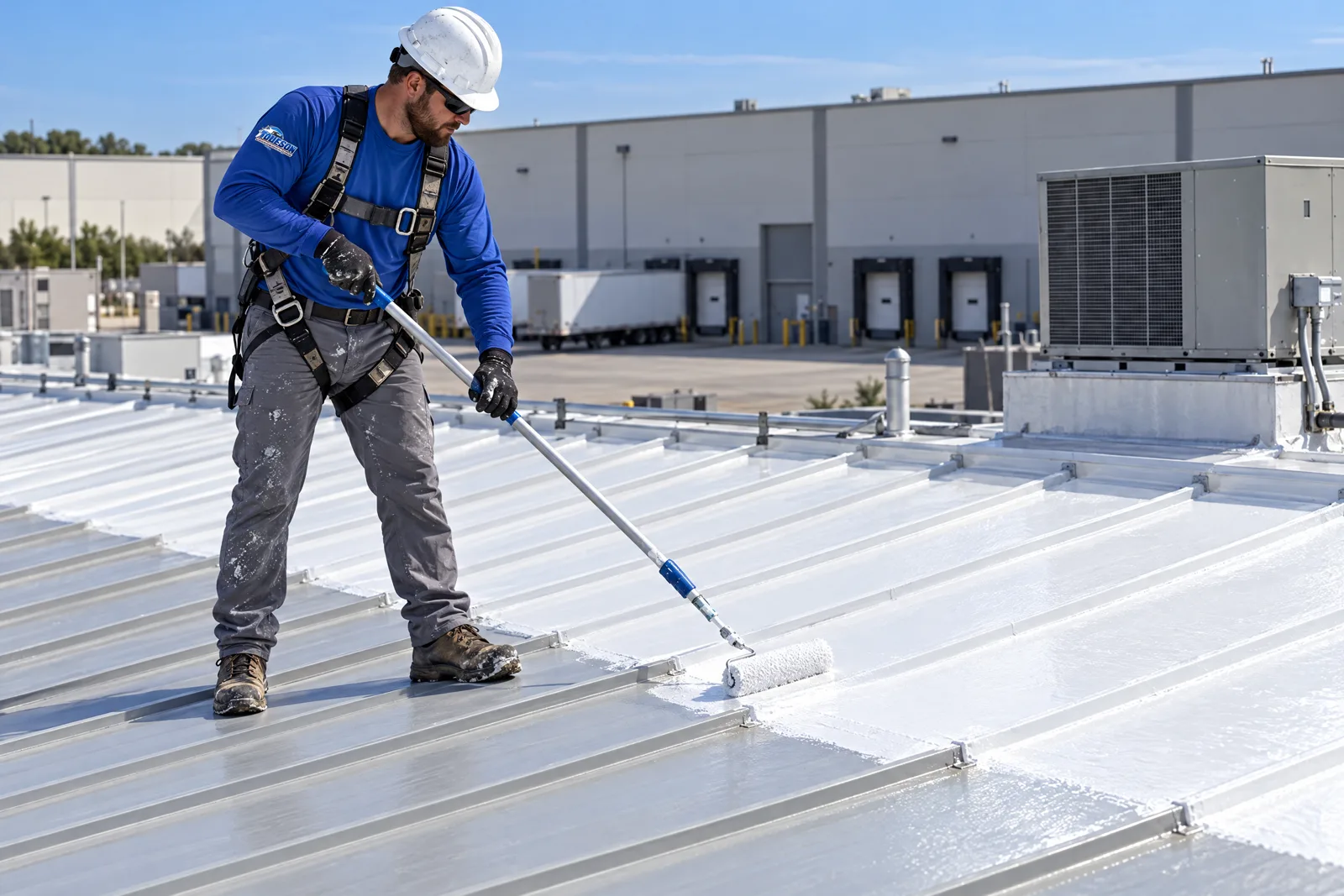
Acrylic can be considered on an approved, well-draining substrate with the required dry weather window. Existing damage, rust, and failing connections still need repair first.
See acrylic roof coating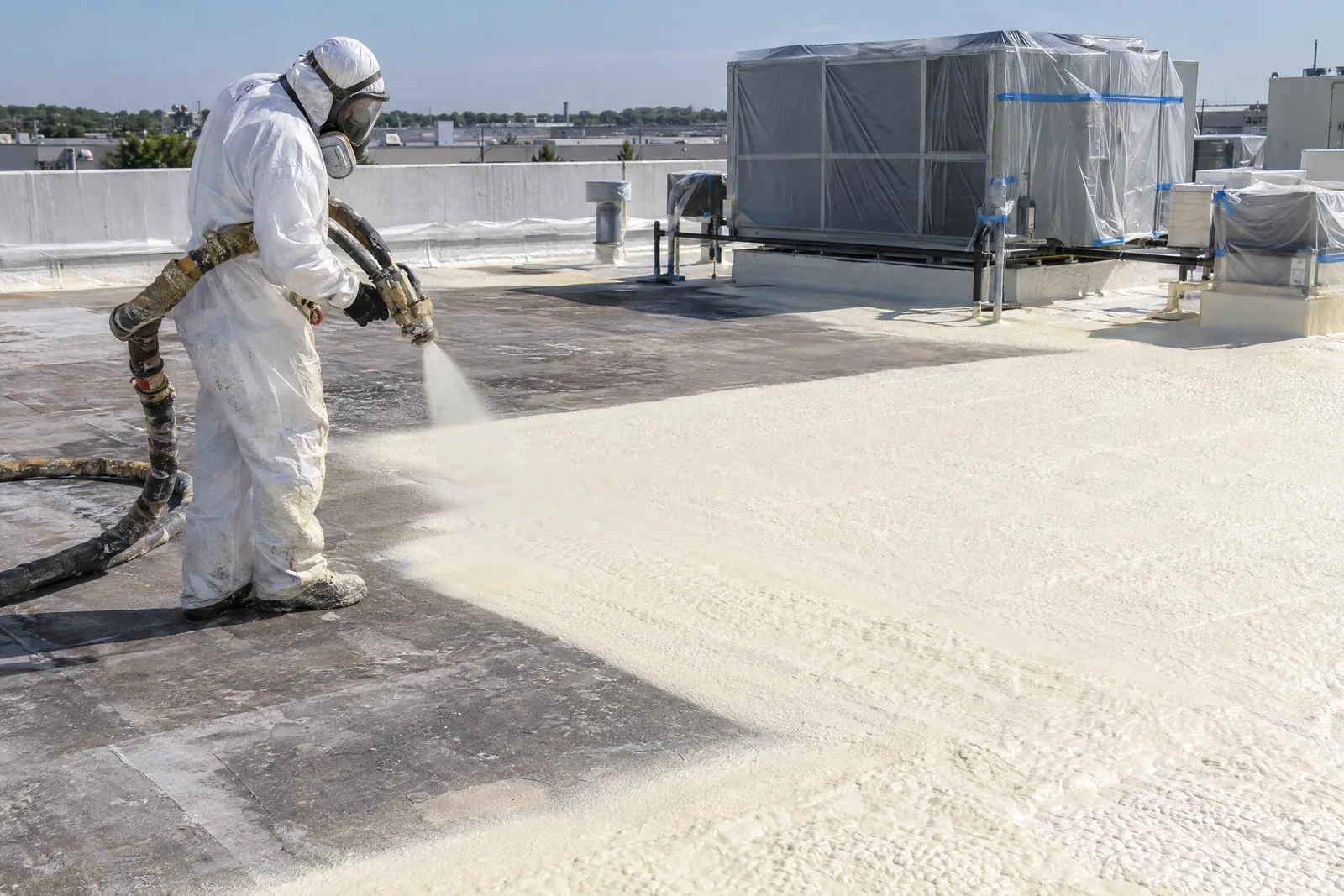
Spray foam is a different roof assembly decision. Substrate dryness, secure surfaces, HVAC controls, overspray protection, and a protective topcoat all need review.
See spray foam roofingThe work sequence keeps roof decisions, building operations, trade access, and application conditions connected from the first visit through maintenance.
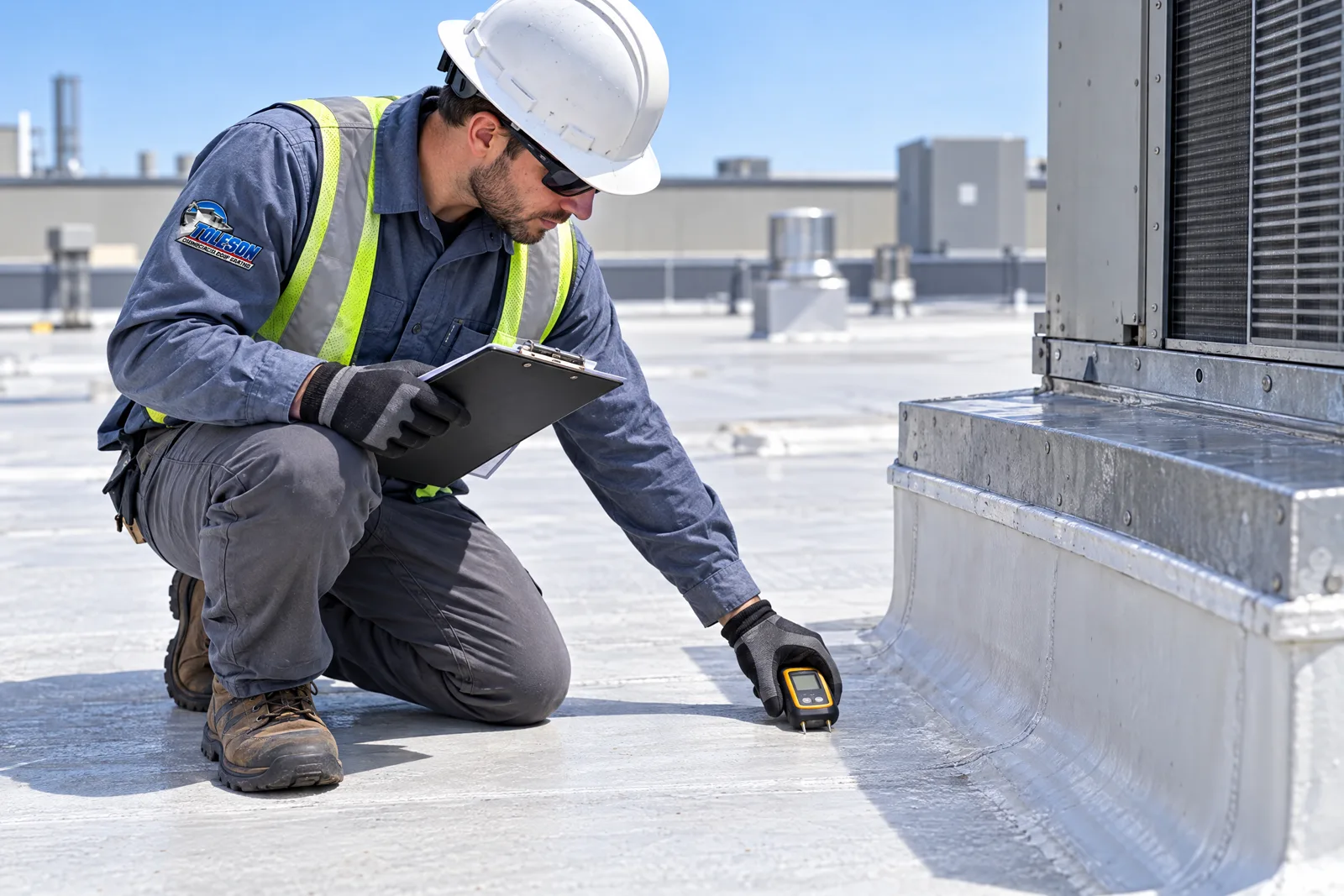
We inspect the roof surface, seams, fasteners, penetrations, drains, wall flashings, equipment areas, and visible interior symptoms. We also note access routes, shift constraints, air intakes, and other trades that need rooftop access.
Loose materials, damaged details, wet areas, contamination, and failing connections are identified before a system is chosen. A roof that cannot be made sound may need repair or replacement instead of coating.
Cleaning removes dirt and residue without damaging the existing roof. Seams and details receive the required treatment, and an adhesion check helps confirm whether preparation, primer, or another compatible system is needed.
We map staging, loading areas, equipment service, indoor sensitivities, and roof traffic with the facility contact. The plan identifies when sections are closed, when other trades can enter, and how fresh coating is protected while it cures.
The selected coating is applied to its required coverage and detail conditions. Work stops when product or weather limits require it. After cure, the owner receives maintenance expectations for drains, traffic routes, equipment areas, and new defects.
Goodyear facilities often coordinate work across the West Valley. These nearby pages address their own commercial roof conditions and operating needs.
Plan coating around tenant handovers, deliveries, and the building’s next occupancy window.
View Avondale roof coatingReview drainage between roof levels and runoff at large commercial buildings before restoration.
View Buckeye roof coatingCoordinate maintenance-manager knowledge, roof access, and occupied-facility work controls.
View Litchfield Park roof coatingAddress Phoenix industrial roof access, grease contamination, and ventilation concerns before coating.
View Estrella Village roof coatingIndustrial roof coating decisions depend on the building schedule as much as the roof surface. These answers address shifts, trades, equipment, and application controls.
Yes, a 24-hour operation does not automatically rule out roof coating. We review roof access, shift changes, ventilation, and areas that must remain available. Tell us which activities cannot stop so the schedule can be discussed without promising that every area of the property will remain unaffected.
Other contractors may be able to keep working when their access is coordinated in advance. We map where each trade will work and when equipment needs service. Fresh coating must have the required time to cure before traffic resumes, so rooftop servicing may need to move to another agreed time.
Shift changes are part of the roof-work schedule, not an afterthought. We identify lower-conflict access periods, delivery routes, staging areas, and sections that need temporary control. The final sequence depends on roof preparation, weather, product requirements, and the facility rules supplied by the facility manager.
Tell us which equipment needs regular service, which air intakes or vents are sensitive, and which units cannot be interrupted. HVAC, electrical, and process equipment affect access, application controls, and trade timing. We use those details when separating work areas and protecting fresh coating from traffic.
A loading dock may or may not need a temporary restriction, depending on where work occurs and how people and materials reach the roof. We discuss truck routes, loading times, and staging with the facility manager so any access change is known before drivers or other trades arrive.
Yes. Air temperature, roof-surface temperature, humidity, wind, and drying or curing time all matter. A nearby storm or blowing dust can affect work before rain reaches the building. We follow the selected product’s limits and pause outdoor application when conditions no longer support the required preparation or cure.
Tell us about the roof, facility schedule, rooftop trades, and operating limits. We will inspect the commercial roof before recommending coating, repair, or another direction.
Before You Go
Share your name and phone number and we will call about your commercial roof.
Prefer to call directly? Call Us Privacy Policy