Coating May Fit
- Panels remain attached and generally sound
- Fasteners can be secured or replaced
- Rust is limited or treatable
- Seams and flashings can be repaired
- The roof is clean, dry, and tight
- Adhesion testing supports the selected system
Commercial Roofing · Arizona
We coat commercial metal roofs in Tolleson after checking panel movement, fasteners, corrosion, seams, and coating readiness.
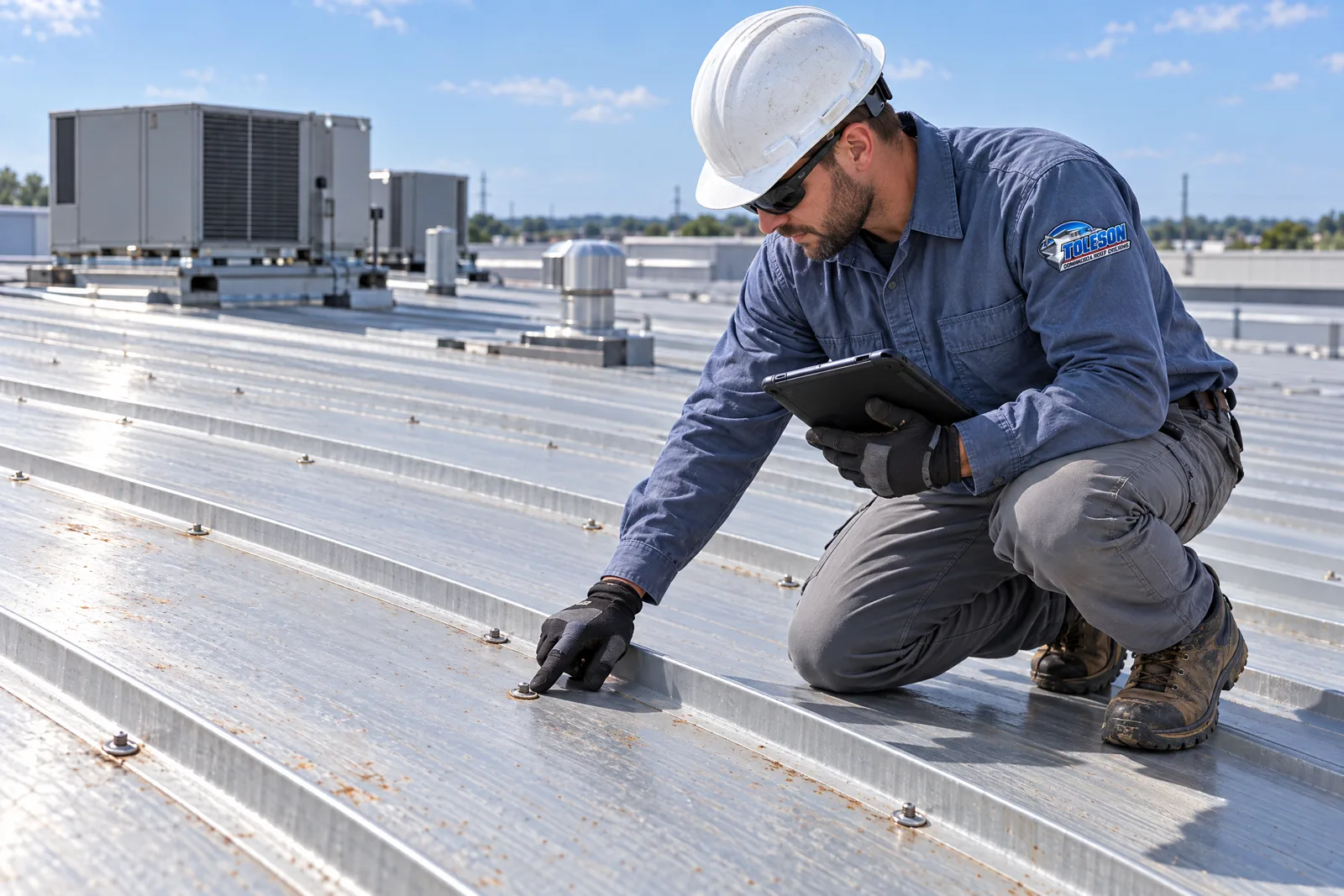
Metal roof coating can restore sound panels, but movement, corrosion, wet materials, and failing connections must be addressed before the coating is applied.
Metal roof restoration starts with the details that move, rust, or leak. We check each condition before selecting a coating and setting the repair boundary.
Repeated thermal expansion can work panels, laps, and attachments loose. We look for movement at joints, oil-canning, distorted edges, and areas where a coating would only hide an active connection problem.
Fasteners hold the panels and often carry the weather seal. Missing screws, lifted heads, worn washers, and overdriven fasteners need correction or replacement before those points are encapsulated.
Rust must be removed or treated with a corrosion-inhibiting primer before coating. We distinguish surface oxidation from metal that has lost useful thickness, because coating cannot rebuild a weakened panel.
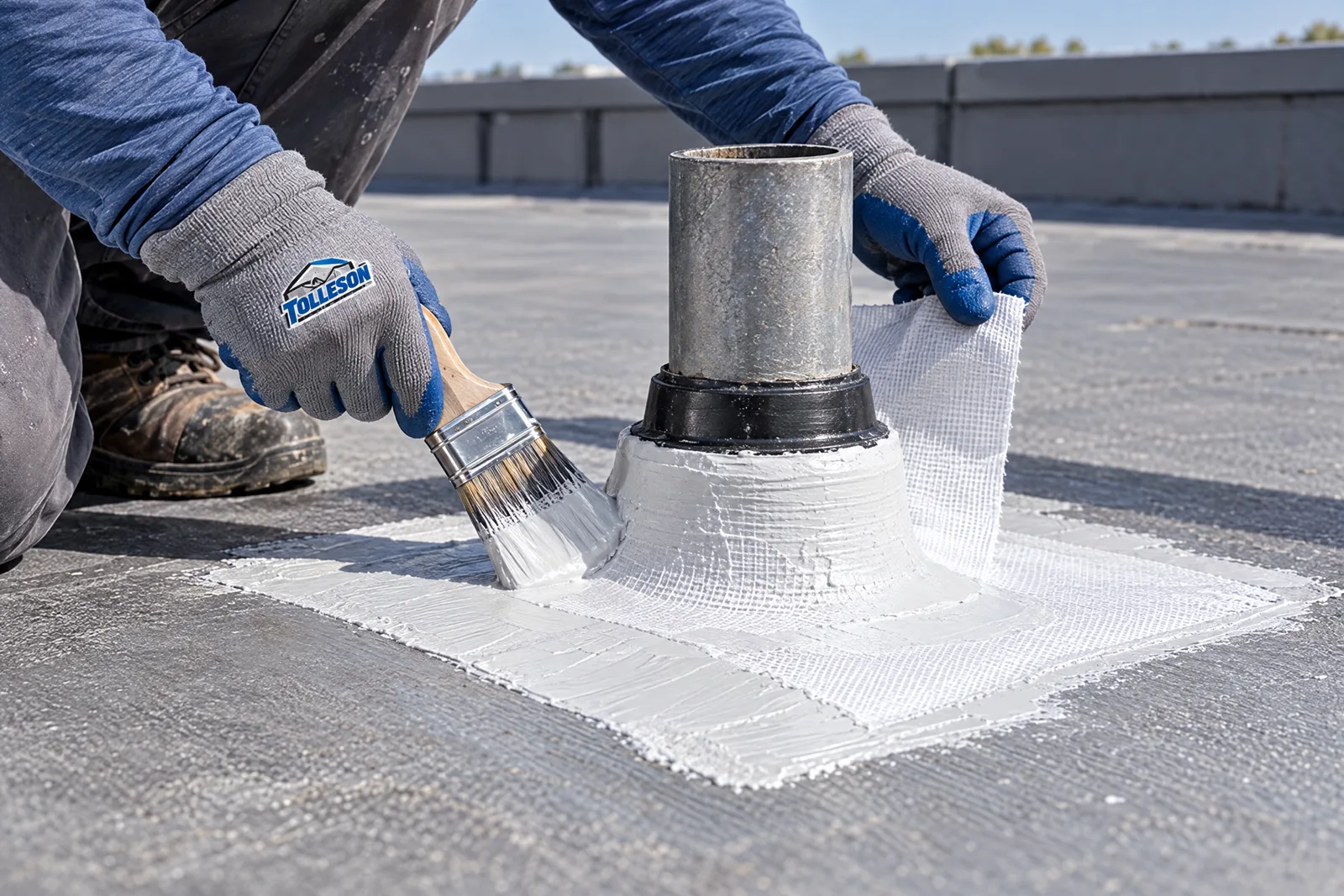
Vertical seams, end laps, ridges, and rake edges can open as panels move. The selected system may require sealant, fabric, or another detail treatment before the field coating reaches the roof surface.
Leaks often start where metal meets a wall, curb, pipe, or equipment support. Those transitions need their own repair and reinforcement plan rather than a quick pass over the surrounding panels.
Drains, downspouts, dust, oil, and old residue affect preparation. A dry-looking roof is not coating-ready until contamination is removed, runoff is understood, and the surface can bond with the selected system.
The existing metal roof determines which coating system is worth considering. We match the product to drainage, substrate condition, preparation needs, and approved compatibility.
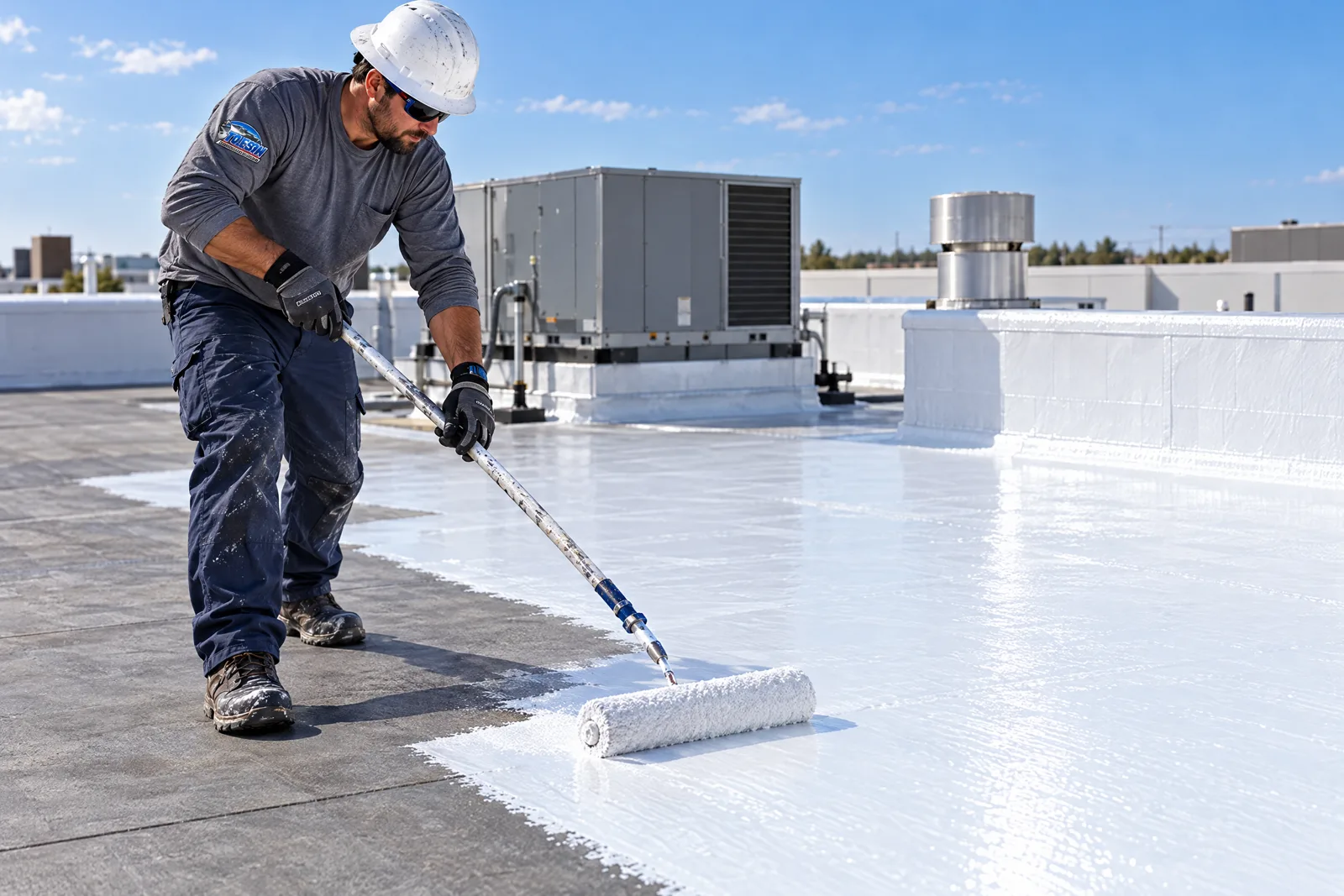
Silicone may suit a prepared metal roof where ponding resistance is important. Seams, fasteners, penetrations, and adhesion still require system-specific treatment.
See silicone roof coating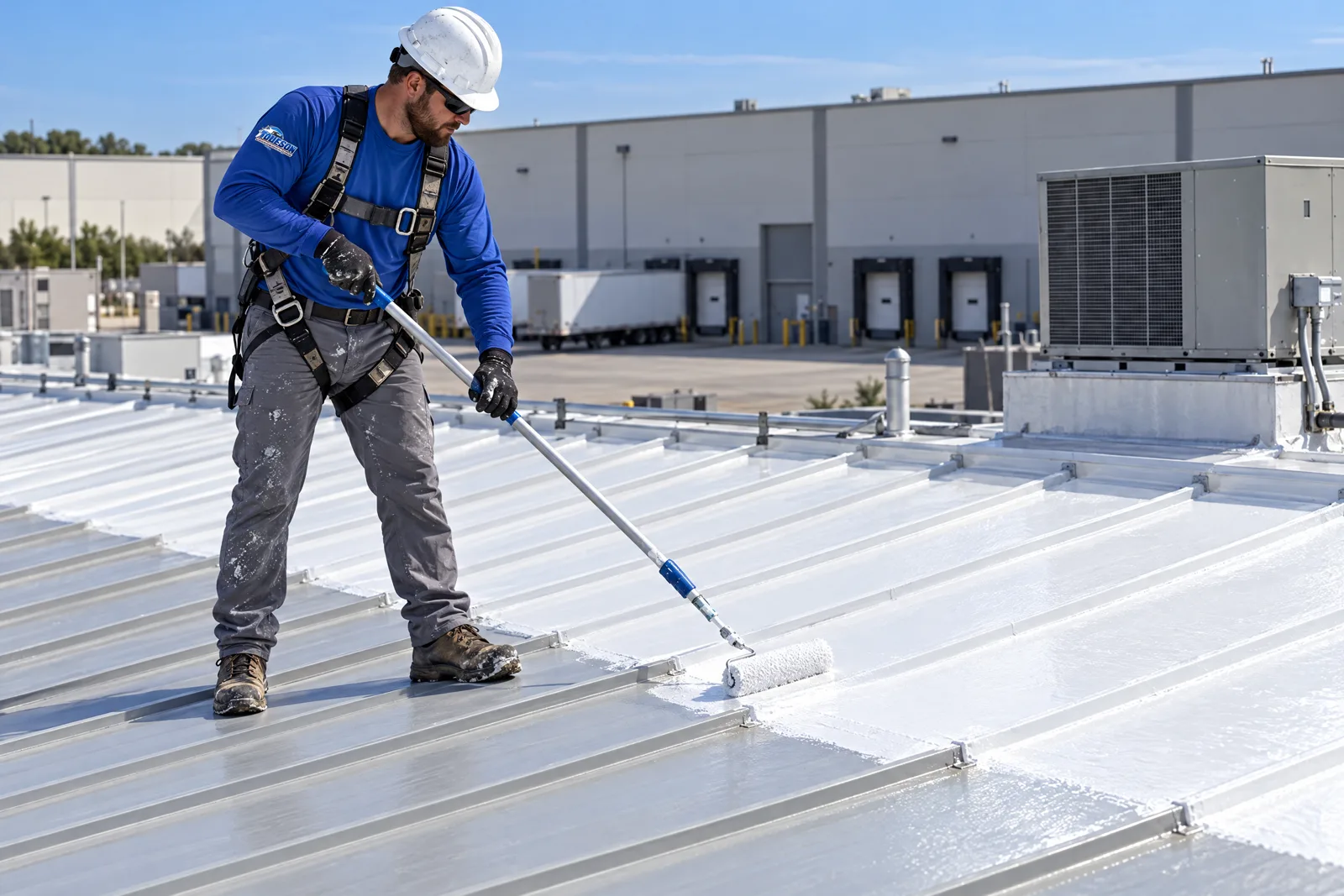
Acrylic can be considered on an approved, well-draining metal surface. Rust, panel damage, connections, and the application weather window come first.
See acrylic roof coating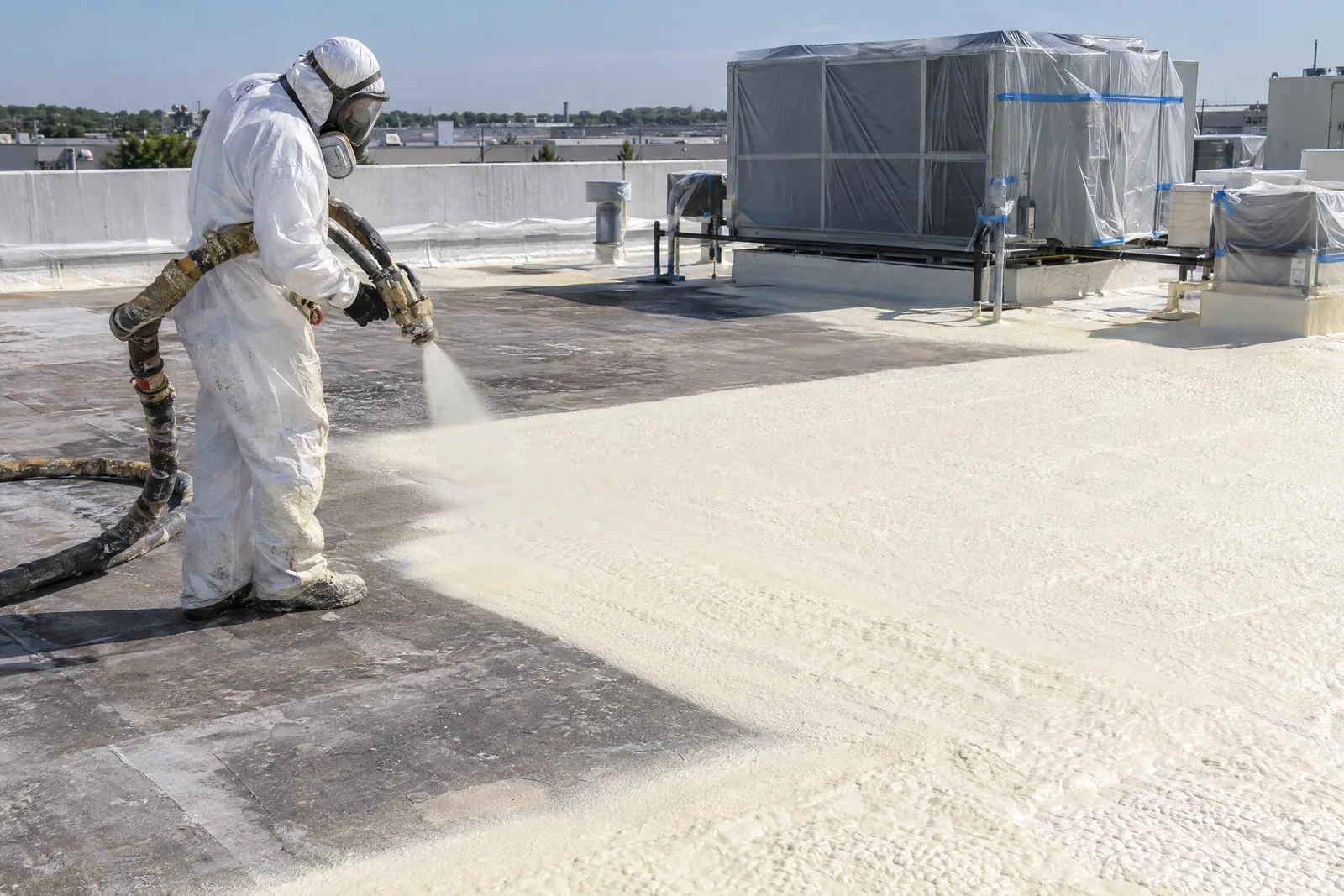
Spray foam is a different recovery approach when the roof assembly and dry substrate support it. Overspray controls, equipment, and protective topcoat planning matter.
See spray foam roofing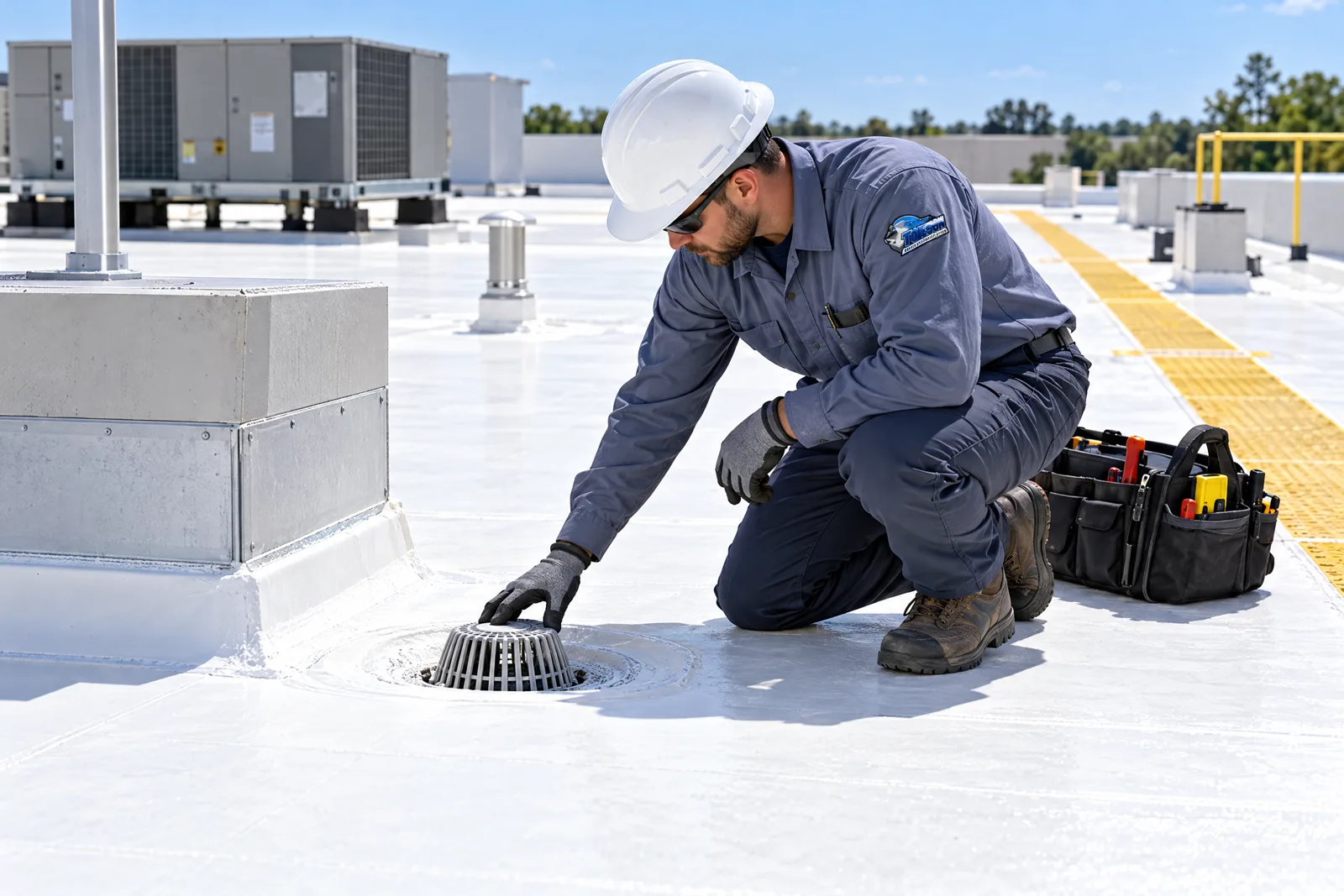
A metal-focused restoration keeps the panel system in view: repair movement, replace fasteners, treat corrosion, detail seams, then apply the approved coating.
Review metal roof restorationA suitable coating can protect usable metal roofing while keeping the repair decision tied to the roof condition, not a blanket promise about every panel.
When the panels and supporting assembly remain usable, restoration can keep that roofing in place instead of removing every section that still performs its job.
A continuous coating system can cover prepared field areas while reinforced seams, fasteners, flashings, and penetrations receive the detail work they need.
Keeping suitable metal in place can reduce the amount of roofing removed and handled around an active commercial property. Repairs and cleaning still require real work.
Some coating systems can be renewed later after the existing surface is inspected, repaired, cleaned, and confirmed compatible with the next application.
The work sequence protects the coating decision from hidden movement and failed preparation. Each step answers a specific question about the existing metal roof.
We inspect panels, fasteners, seams, laps, flashings, penetrations, drains, and visible corrosion. We also look for signs that moisture or movement extends below the surface.
Loose areas, missing fasteners, open joints, damaged panels, and weak connections are marked for repair. The roof must be secure before a coating can become the weathering layer.
The cleaning method is matched to the metal and its seams. Dirt, oil, loose rust, and old residue are removed, while repaired details receive the primer or reinforcement the system requires.
A small adhesion check helps confirm the preparation and product choice. Seams, fasteners, wall connections, curbs, and drains are treated before the open metal field is coated.
The selected coating is applied to the prepared roof according to its requirements. Coverage and wet-film thickness are checked so a uniform appearance does not substitute for the specified amount.
The roof condition may point to another approved system or a different restoration approach.
Compare silicone when ponding resistance and metal compatibility are central to the coating decision.
Compare silicone coatingReview acrylic for an approved metal roof with dependable drainage and a suitable application window.
Compare acrylic coatingConsider spray foam when the existing assembly needs a different recovery and insulation evaluation.
Compare spray foam roofingThese answers focus on the metal roof conditions that determine whether coating is ready to proceed.
Not without addressing the loose areas first. Coating is not a replacement for secure roofing. On metal roofs, loose or missing fasteners need attention. We check whether the affected materials can be properly repaired or need replacement before any coating is applied.
We inspect the flashing and connection at that wall along with the open roof surface. Loose or damaged details need repair before coating. These connections may require sealant or reinforcement that differs from the material applied across the main roof.
No. Panel movement needs to be traced to loose fasteners, open laps, damaged connections, or another roof condition before coating. We repair or replace affected components when appropriate, then confirm the metal is secure enough for preparation and application. A coating should follow the repair, not conceal movement.
Rusted fasteners are treated or replaced according to their condition and the selected system. Surface rust may need cleaning and corrosion-inhibiting primer, while a failed fastener or washer needs replacement. We also check compatibility so the replacement hardware does not create a new corrosion point.
Usually, an adhesion check is a useful part of qualifying the roof. It shows whether the prepared surface and selected coating can bond as required. If the test fails, the preparation, primer, or product choice must be revisited before the same application is used across the roof.
No. Coating can protect a repairable metal roof after corrosion is addressed, but it cannot restore panel thickness or structural strength that the metal has lost. Deep corrosion, widespread perforation, or a failing deck may require replacement or another repair approach before restoration is considered.
Tell us where the panels move, fasteners fail, or corrosion appears, and we will inspect whether commercial metal roof coating fits.
Before You Go
Share your name and phone number and we will call about your commercial roof.
Prefer to call directly? Call Us Privacy Policy