Acrylic May Fit
- Positive drainage with no persistent ponding
- Compatible metal or membrane surface
- Dry, sound substrate after repairs
- Weather window supports drying and cure
- Adhesion test supports selected system
Commercial Roofing · Arizona
Tolleson acrylic roof coating starts with drainage, metal details, and a workable dry-weather window before we coat the commercial roof.
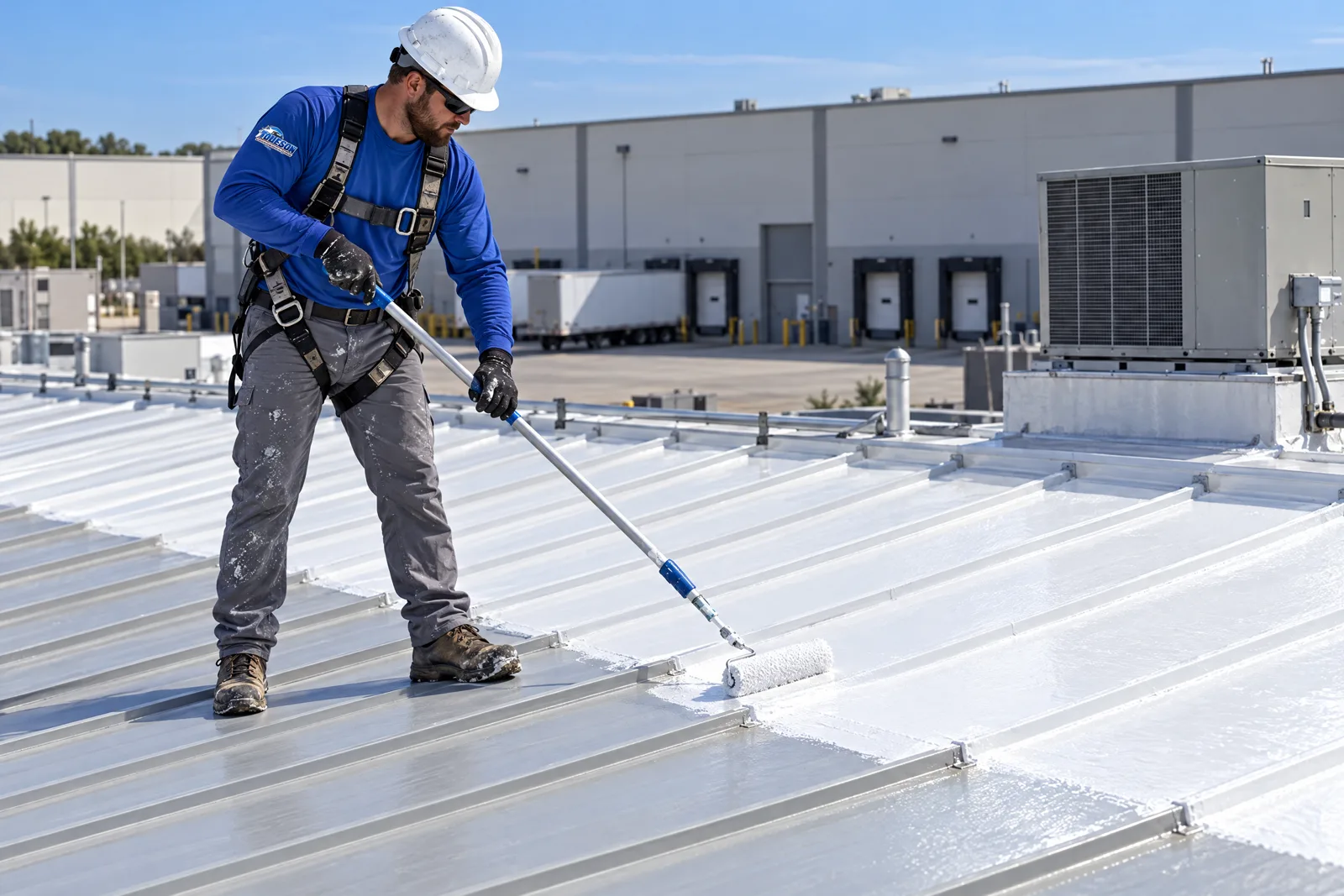
Acrylic may fit a commercial roof that drains reliably, has a sound substrate, and can be coated during conditions that support drying and adhesion.
Tolleson commercial roofs can include metal panels, membrane areas, rooftop equipment, and active loading zones. We check the conditions that determine whether acrylic can perform as intended.
Acrylic is water-based, so persistent ponding can shorten the coating’s service performance. We trace drains, valleys, gutters, and low areas after weather events, then identify drainage repairs before treating the open roof field.
A sloped commercial metal roof may suit acrylic when the product is approved for that surface and runoff is dependable. Panel laps, closures, penetrations, and transitions still need a close condition check.
Loose or missing fasteners, open seams, and failed sealant are not hidden by a field coat. We secure or repair those details first so the coating is applied over a prepared roof rather than over movement and gaps.
Rust can affect adhesion and signal deeper panel deterioration. Damaged metal may need replacement, rust treatment, or reinforcement before acrylic is considered. A coating should not conceal a roof that is no longer sound enough to keep.
Oil, grease, dust, peeling paint, and failed coating residue can interfere with bonding. We choose cleaning and preparation for the existing surface, then check whether the old layer is compatible with the selected acrylic system.
The roof must be dry, and air and surface temperatures must stay within the product’s limits. Wind, dust, HVAC intakes, deliveries, and rooftop access also affect when a coating area can be applied and protected.
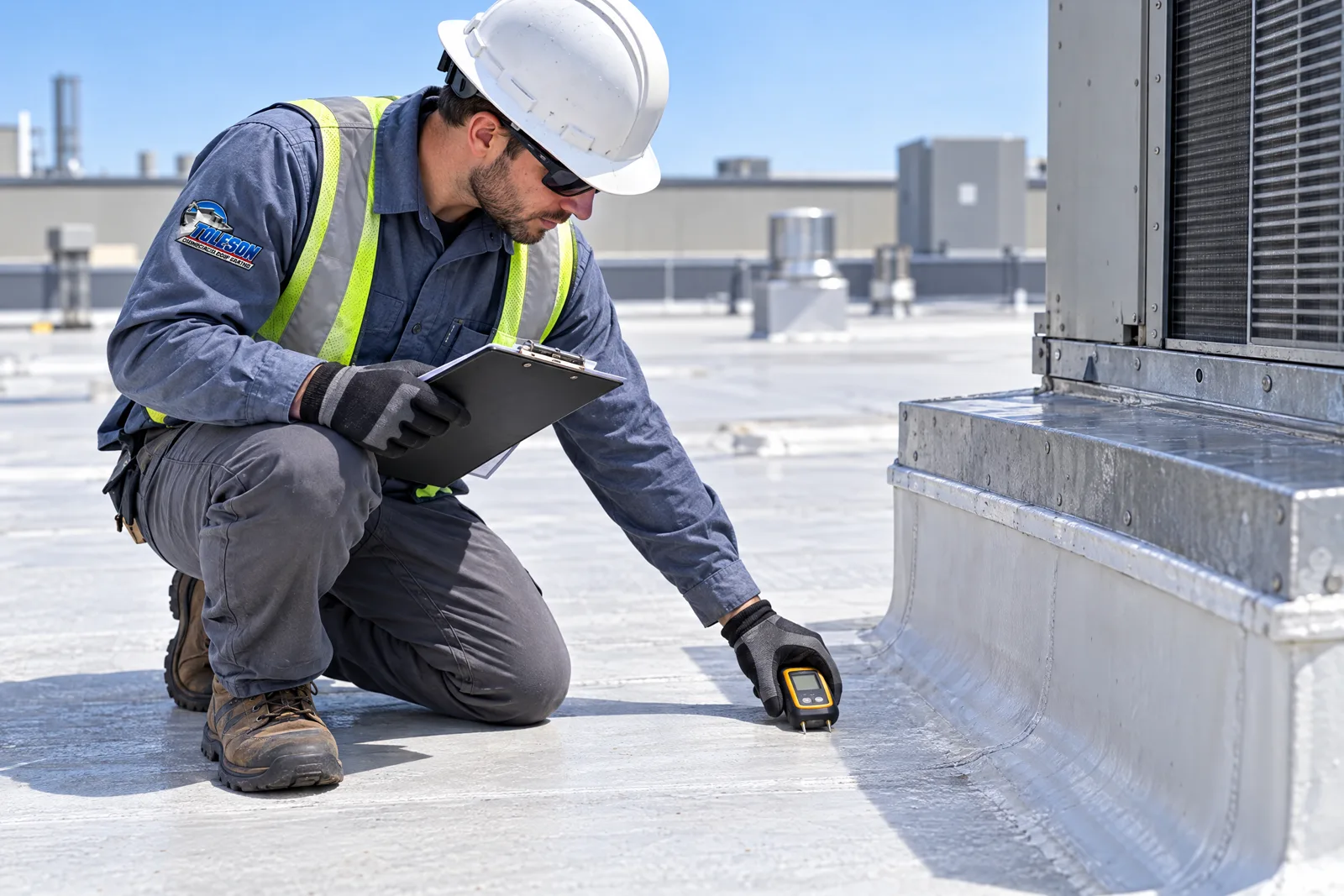
Acrylic is one system choice, not a default for every commercial roof. The existing substrate, drainage, moisture, and repair needs determine which service deserves the next look.
Acrylic suits compatible, well-drained metal or membrane surfaces when air, roof temperature, and drying time meet product limits. It forms an adhered water-based membrane after preparation.
Acrylic roof coating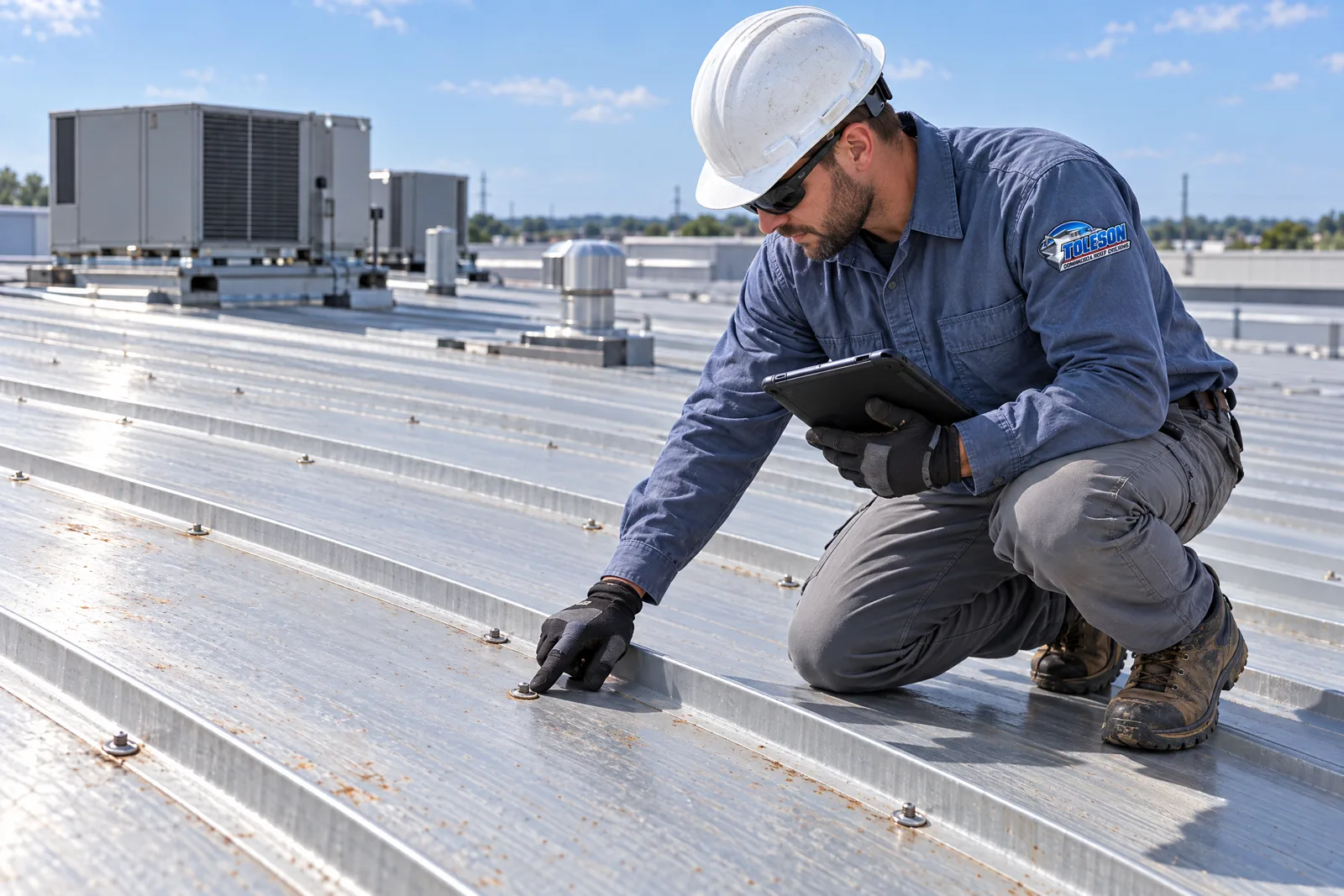
Metal roof coating remains the better starting point when corrosion, panel movement, or fastener repairs drive the scope. Inspect panels and connections before choosing acrylic.
Metal roof coating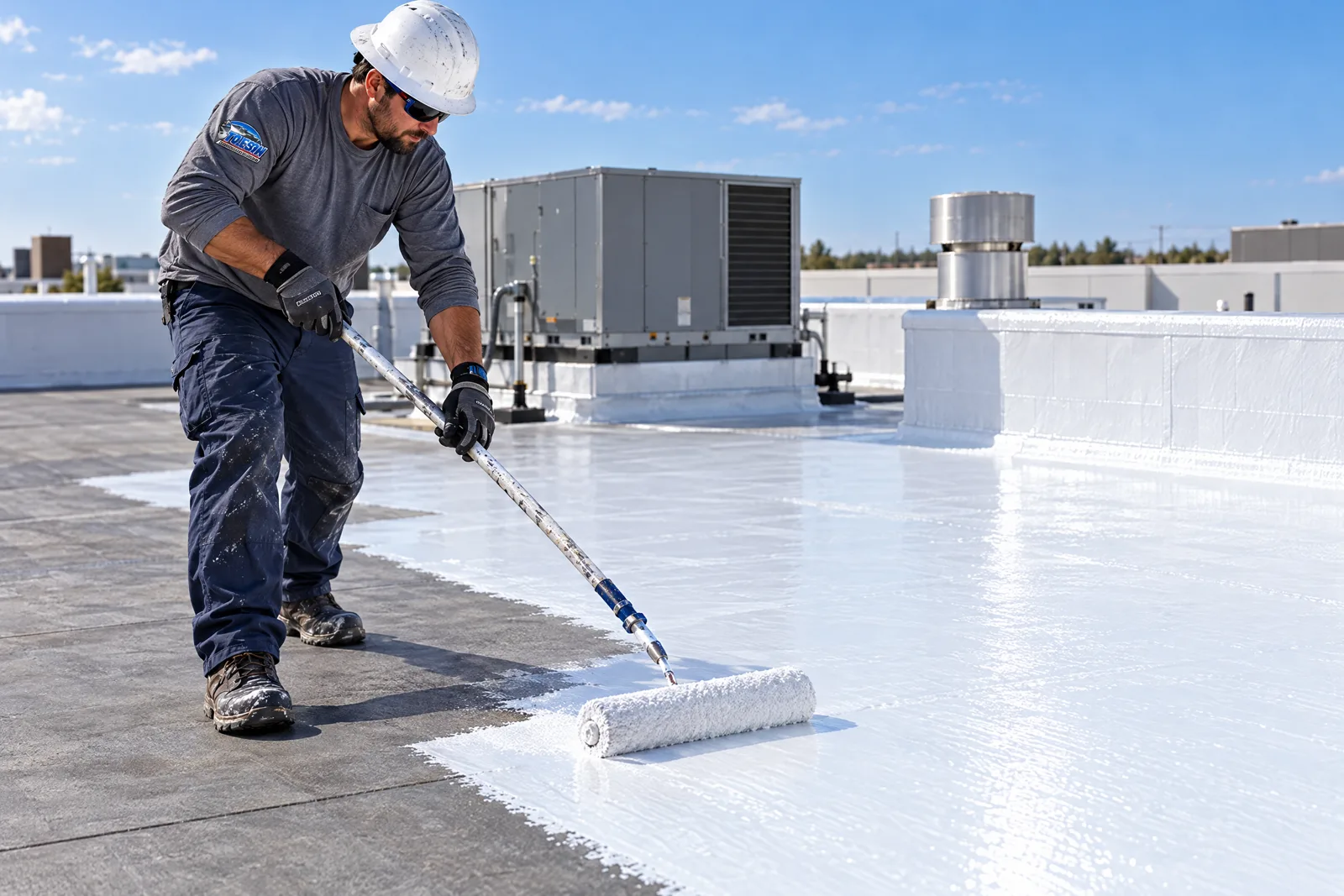
Silicone may fit low-slope areas where standing water remains a concern, subject to moisture, substrate, and compatibility checks. Compare it when drainage cannot be corrected.
Silicone roof coating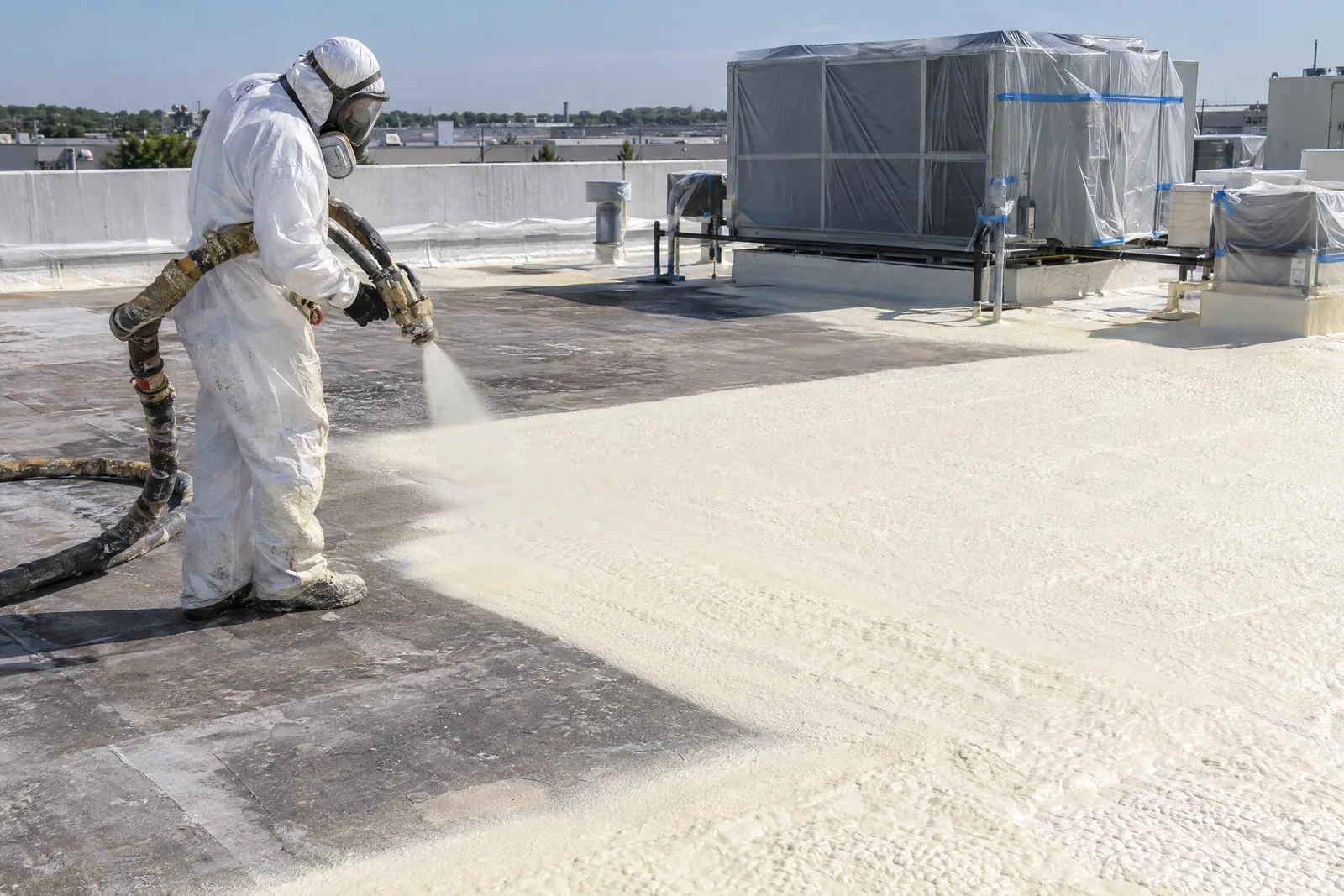
Spray foam roofing addresses insulation and detail questions differently. Consider it when substrate and HVAC controls call for a foam assembly, not a simple acrylic recoat.
Spray foam roofingWhen the roof is a sound candidate, acrylic coating can preserve usable roofing while giving the owner a clearer maintenance surface and a defined application plan.
A suitable coating can restore protection across a roof that is still worth keeping, instead of removing sound areas simply because isolated details need repair. The inspection still separates coating-ready sections from replacement concerns.
When most of the assembly can remain, there may be less demolition, debris handling, and disruption around an active Tolleson commercial property. Preparation and repairs remain part of the work.
A white acrylic surface can reflect more solar energy than a weathered dark roof surface. Indoor conditions still depend on insulation, cooling equipment, ventilation, and how the building operates.
A compatible acrylic system may provide a surface that can be maintained or recoated later. Future work still requires checking thickness, damage, contamination, and whether the new material will bond.
Acrylic application starts with roof condition and ends with coverage checks. The selected product’s instructions control temperature, preparation, drying, and application rates.
We inspect panels, seams, fasteners, drains, flashing, penetrations, low areas, existing coatings, and signs of moisture or corrosion. The findings identify what can be coated, what needs repair, and whether acrylic is appropriate.
Loose materials, damaged metal, failed seams, rust, and drainage defects receive the required attention before field coating. We remove contamination and protect adjacent surfaces, equipment, air intakes, and traffic areas.
We use test areas or adhesion checks when the existing roof or coating creates uncertainty. A failed test changes the preparation, primer, or system decision rather than being ignored beneath the full application.
A dry roof, suitable air and surface temperatures, manageable wind, and enough drying time are all required. We schedule around the selected product’s limits, overnight conditions, dust, rain risk, and building operations.
The old roof disappearing from view does not prove the specified thickness. We check application coverage against the selected system, keep traffic and other trades off curing areas, and note maintenance-sensitive details.
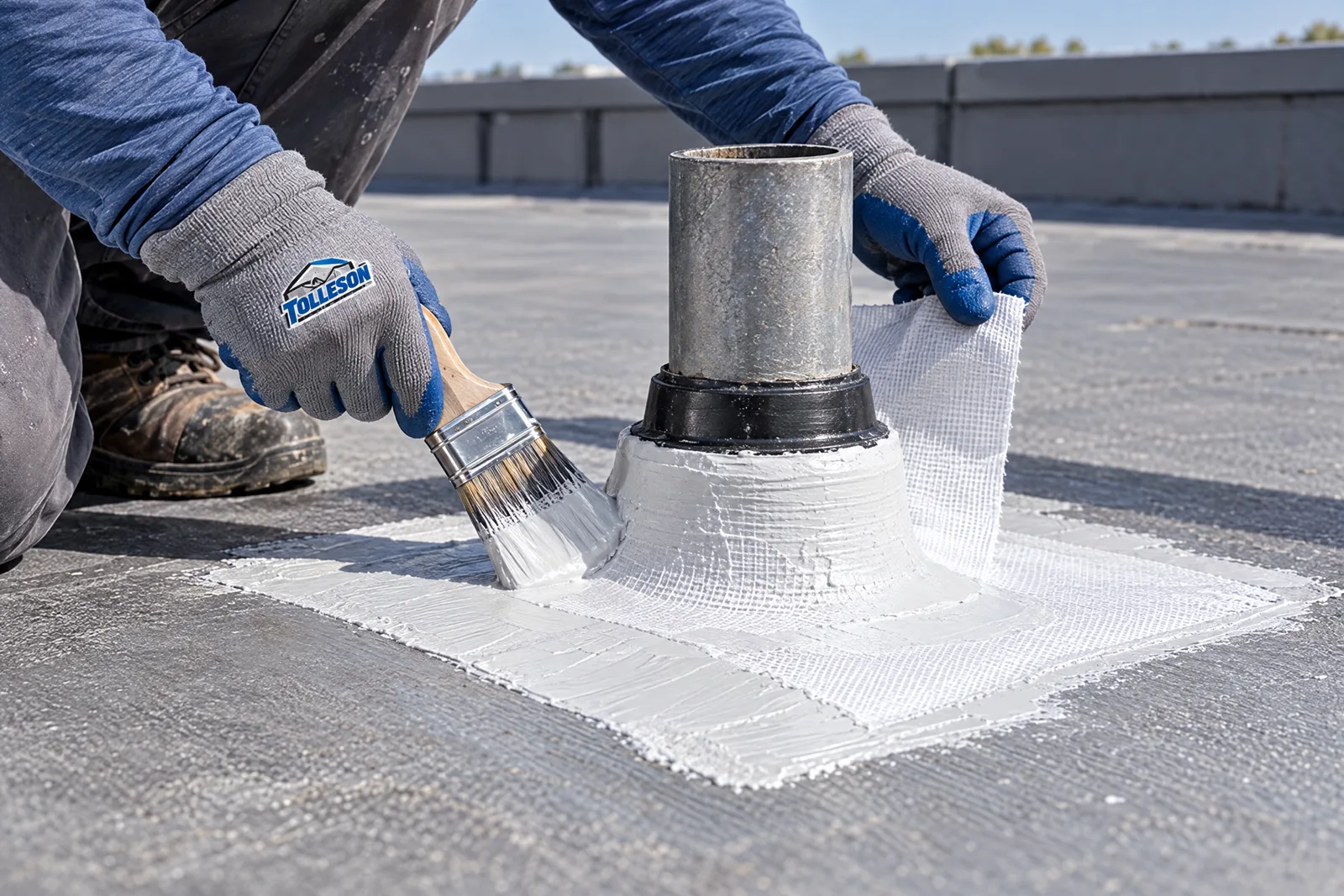
Acrylic is most useful when its limits match the roof. Compare the related service that addresses the condition driving your decision.
Start with metal-specific repair decisions when rust, fasteners, seams, or panel movement lead the inspection.
Compare metal roof coatingCompare silicone when low-slope drainage and standing-water exposure make acrylic a less direct fit.
Compare silicone roof coatingReview spray foam when substrate, insulation, curbs, and overspray controls require a different assembly.
Compare spray foam roofing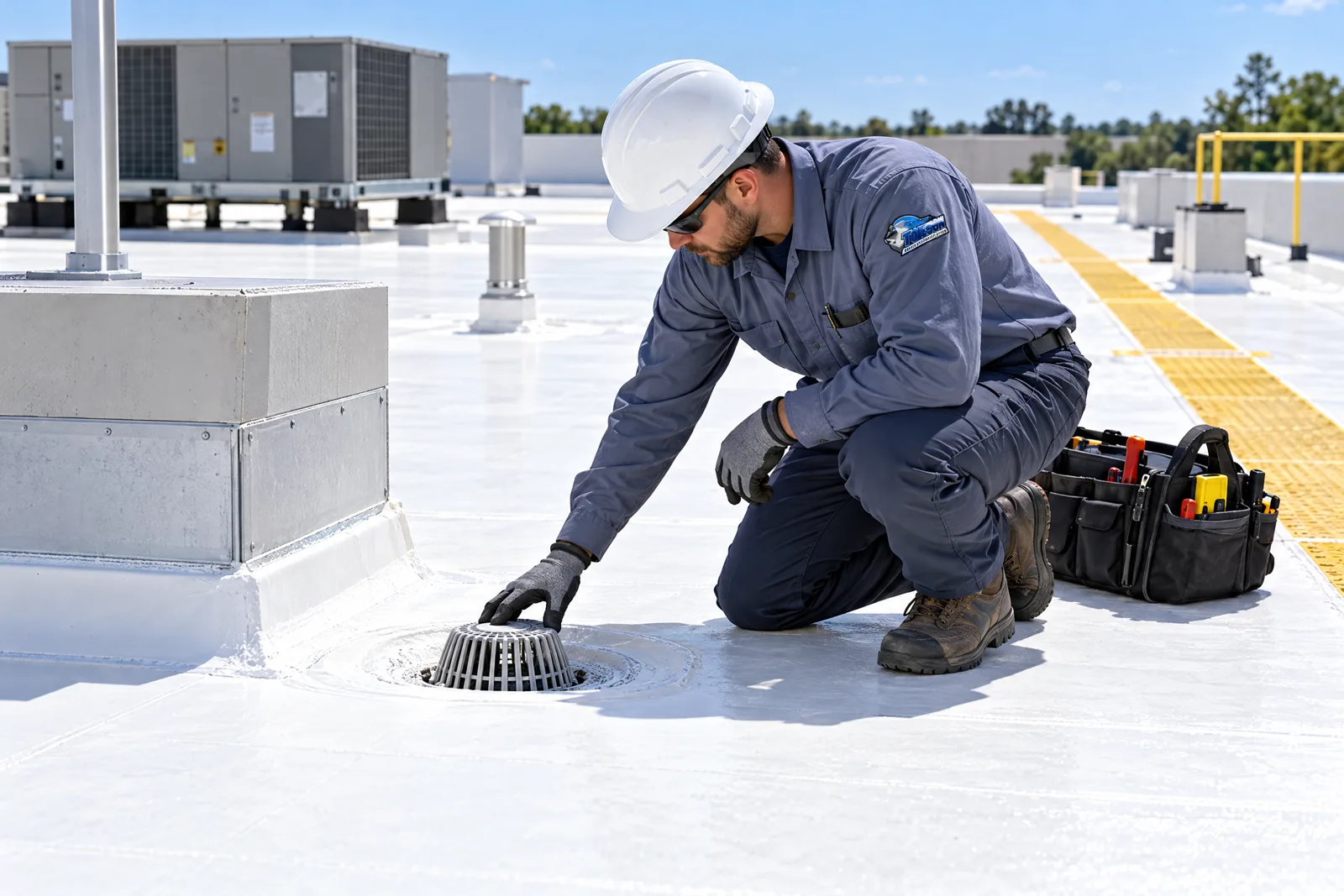
These answers focus on the drainage, weather, preparation, and coverage decisions that affect acrylic work on a commercial roof.
Yes, when the selected product is approved for the metal surface and the roof drains properly. Rust, damaged panels, loose fasteners, and failing connections still need attention. We inspect those conditions before deciding whether acrylic is a suitable system for that roof section.
No. A uniform appearance does not confirm the required coating thickness. We follow the selected system’s application requirements and check coverage during the work. A thin layer can hide the old roof while still falling short of the specified amount needed for the planned coating system.
Persistent ponding can accelerate deterioration of a water-based acrylic coating. We check whether drains, valleys, gutters, and low areas move water away as intended. If standing water remains, drainage work or another coating approach may need to come before acrylic application.
Acrylic needs a dry roof and a forecast that supports drying before moisture reaches the fresh coating. Air and roof-surface temperatures, overnight lows, humidity, wind, dust, and the selected product’s limits all matter. A sunny morning alone is not enough to confirm the application window.
Not until the roof is made suitable for coating. Loose panels and fasteners need to be secured, and damaged or badly corroded metal may need repair or replacement. Rusted areas may require cleaning and an approved primer. Acrylic should not be used to conceal unstable roofing.
We identify the existing coating, remove dirt and loose material, and check whether the new acrylic can bond to that surface. Test areas or adhesion checks can show whether added cleaning or primer is needed. If compatibility is not established, we do not assume a new coat will hold.
Tell us about the roof, drainage, metal details, and timing so the estimate starts with the conditions that affect acrylic work.
Before You Go
Share your name and phone number and we will call about your commercial roof.
Prefer to call directly? Call Us Privacy Policy