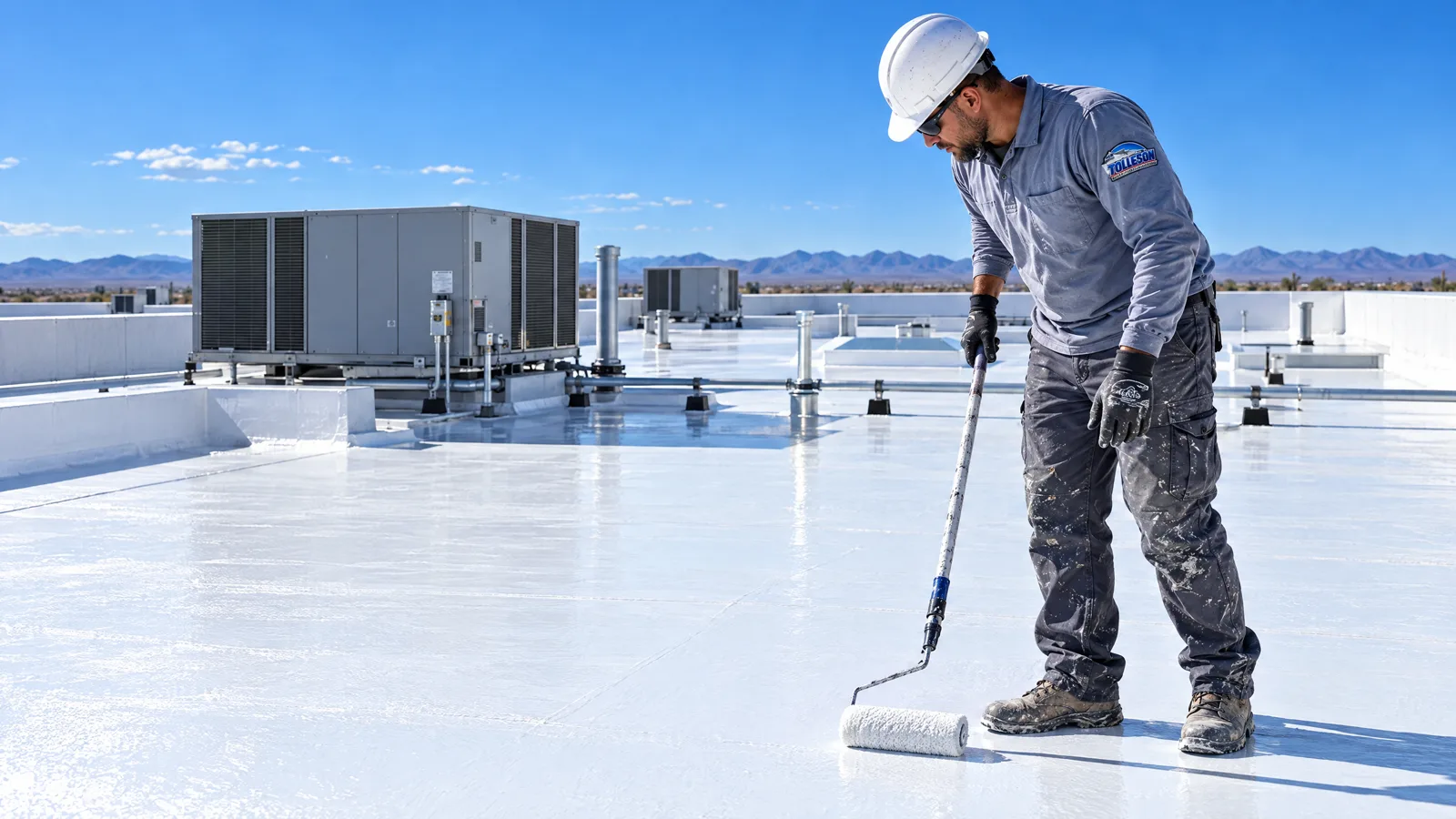
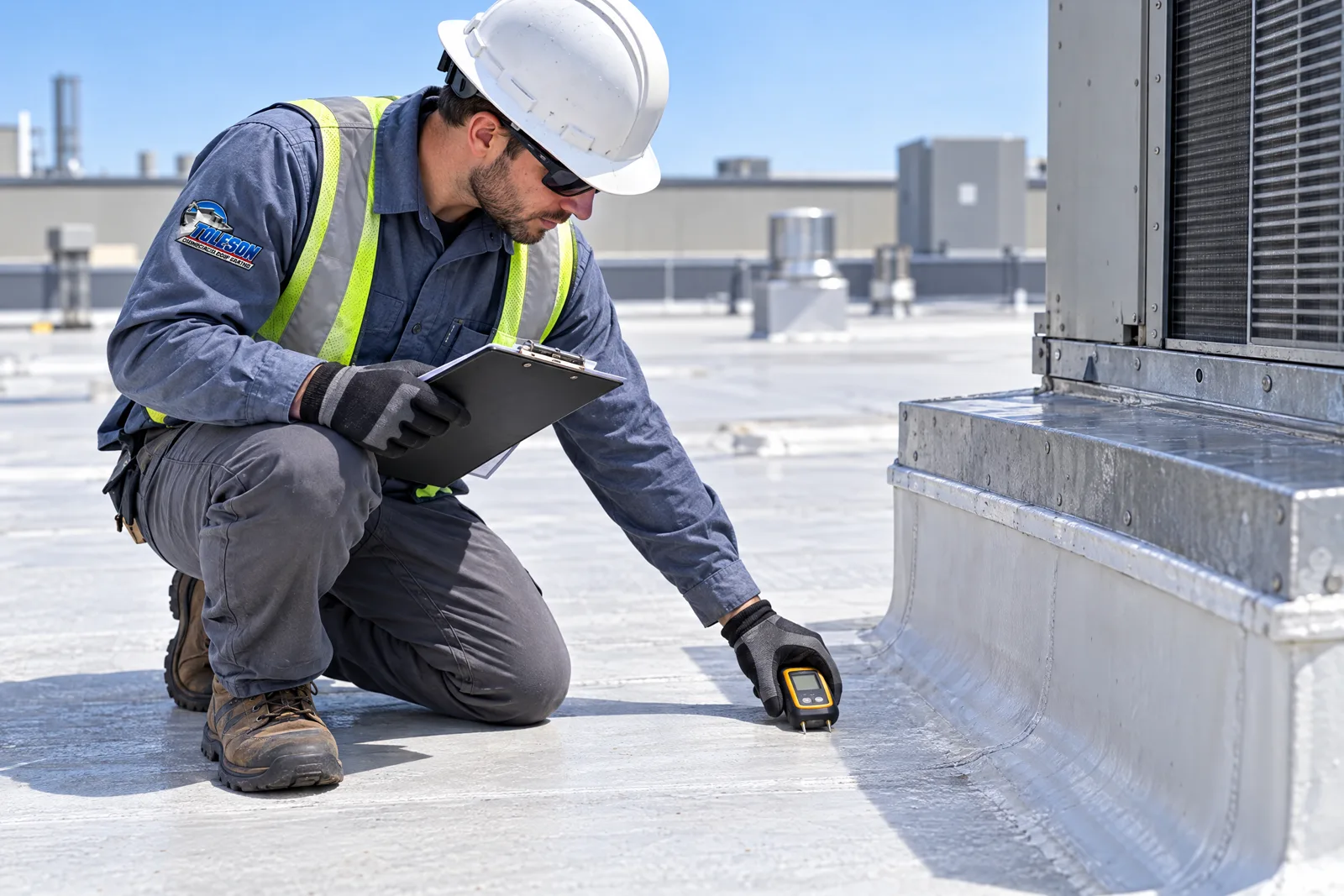
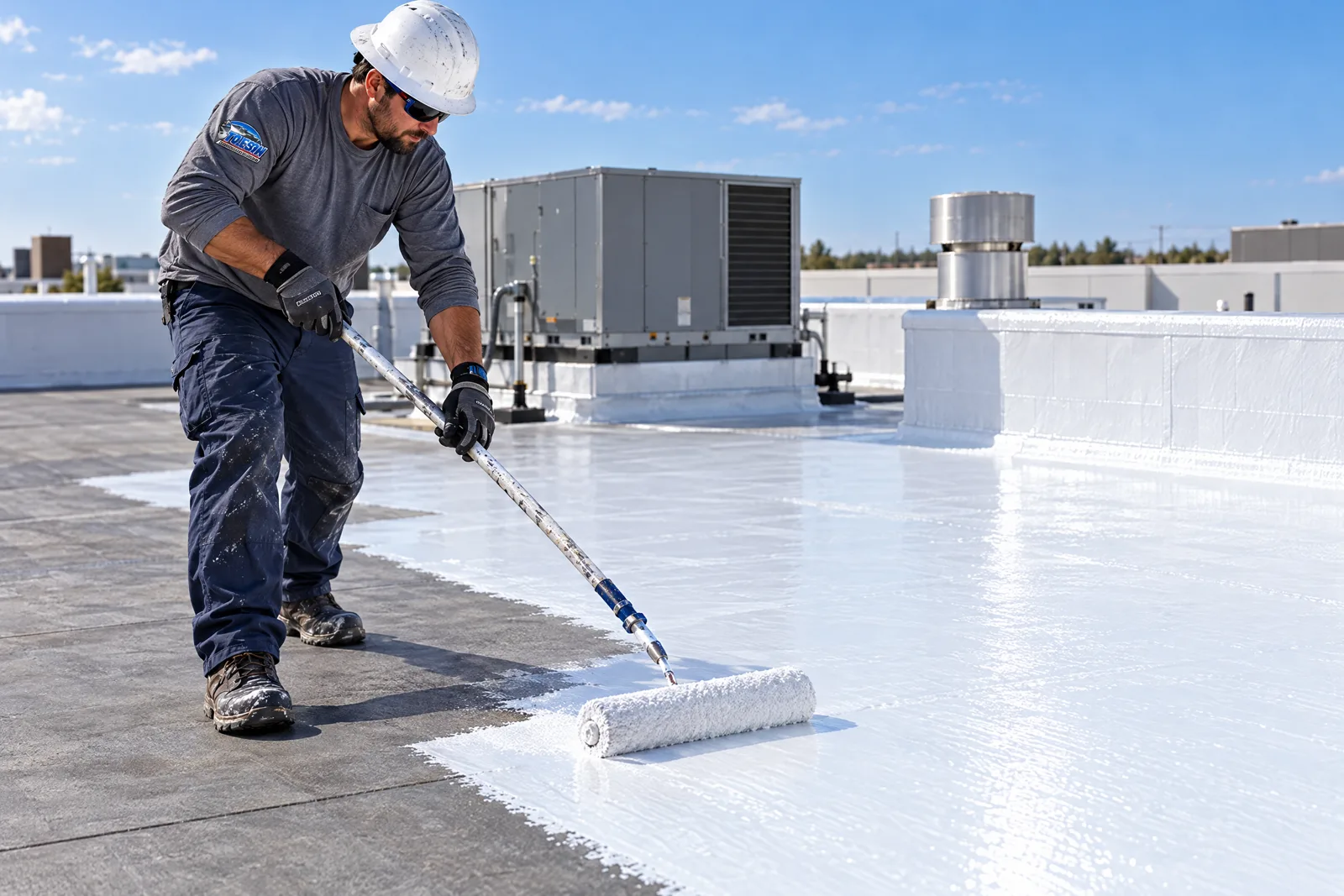
Upper roofs affect lower roofsDrains need clear pathsWet materials need repairInspect before selecting a system
Drainage Between Roof Levels
On a large commercial building, coating decisions follow the water path from the highest roof to the final drain or discharge point.
An upper roof that drains onto a lower roof can concentrate water at one edge, drain transition, scupper, or wall connection. We trace that route before coating. The lower section must be able to receive the discharge without creating recurring ponding, erosion, or a wet detail that a new finish would only hide.
Buckeye's Permit Center says permits are required for re-roofs within city limits and that current council-approved building codes apply. That does not determine every coating scope. We flag the roof work for the property team to verify with the city before scheduling, especially when drainage components, roof levels, or structural details will change.
Roof Conditions That Affect Coating
A large roof is a connected assembly. These conditions help determine whether coating can protect sound areas or whether repair, testing, or replacement comes first.
Upper-Roof Discharge
A downspout, scupper, or open edge can send concentrated flow onto the roof below. We check the receiving surface, protection at the discharge point, and the route to the next drain before treating either roof level as coating-ready.
Blocked Or Slow Drains
Debris, damaged strainers, restricted leaders, and poor flow paths can leave water standing after rain. Cleaning a drain is not the same as correcting drainage design, so the roof and its outlet connections need to be considered together.
Ponding At Low Areas
Repeated ponding may point to deflection, surface irregularities, damaged insulation, or an undersized drainage path. Coating can protect a suitable surface, but it does not create structural slope or remove water trapped inside the roof assembly.
Wall And Drain Details
Flashing, parapets, drain sumps, penetrations, and transitions carry the risk at the edges of each roof plane. Loose or open details need the selected system's repair treatment before broad field application begins.
Wet Or Damaged Materials
A dry-looking surface can conceal wet insulation or damaged layers. Suspect areas may need further testing and removal or repair. We do not use a coating to seal known moisture beneath a connected roof system.
Active Equipment And Access
Large commercial roofs often carry HVAC units, service routes, loading activity, or several trades. We identify access points and protected areas so fresh coating, drains, and lower-level discharge paths are not damaged during ongoing operations.
Benefits of Coating Your Roof
When the existing roof is sound enough to keep, coating can support a controlled restoration instead of treating every roof level as a tear-off project.
Keep Sound Roof Areas In Place
A suitable restoration may leave usable roofing in service while repairs address isolated failures. That can reduce the amount of material removed from a large connected building, provided wet or unsound areas are handled first.
Protect Prepared Transitions
A selected coating system can carry across properly prepared field areas and compatible details. Drain edges, wall lines, penetrations, and upper-to-lower transitions still receive their required repair and reinforcement rather than being covered casually.
Coordinate Work By Roof Level
Restoration can be staged around the roof map, equipment access, and building activity. Separating upper discharge work from lower receiving areas helps the property team understand which routes must stay protected during application and cure.
Create A Maintainable Surface
A coating does not replace maintenance, but a suitable system gives future inspections a defined surface to monitor. Drains, flashing, wear areas, and service paths can then be checked as part of the building's roof care routine.
Commercial Roof Coating Options for Buckeye
The best system depends on the existing substrate, drainage behavior, moisture findings, and preparation the roof can support.
Silicone Roof Coating
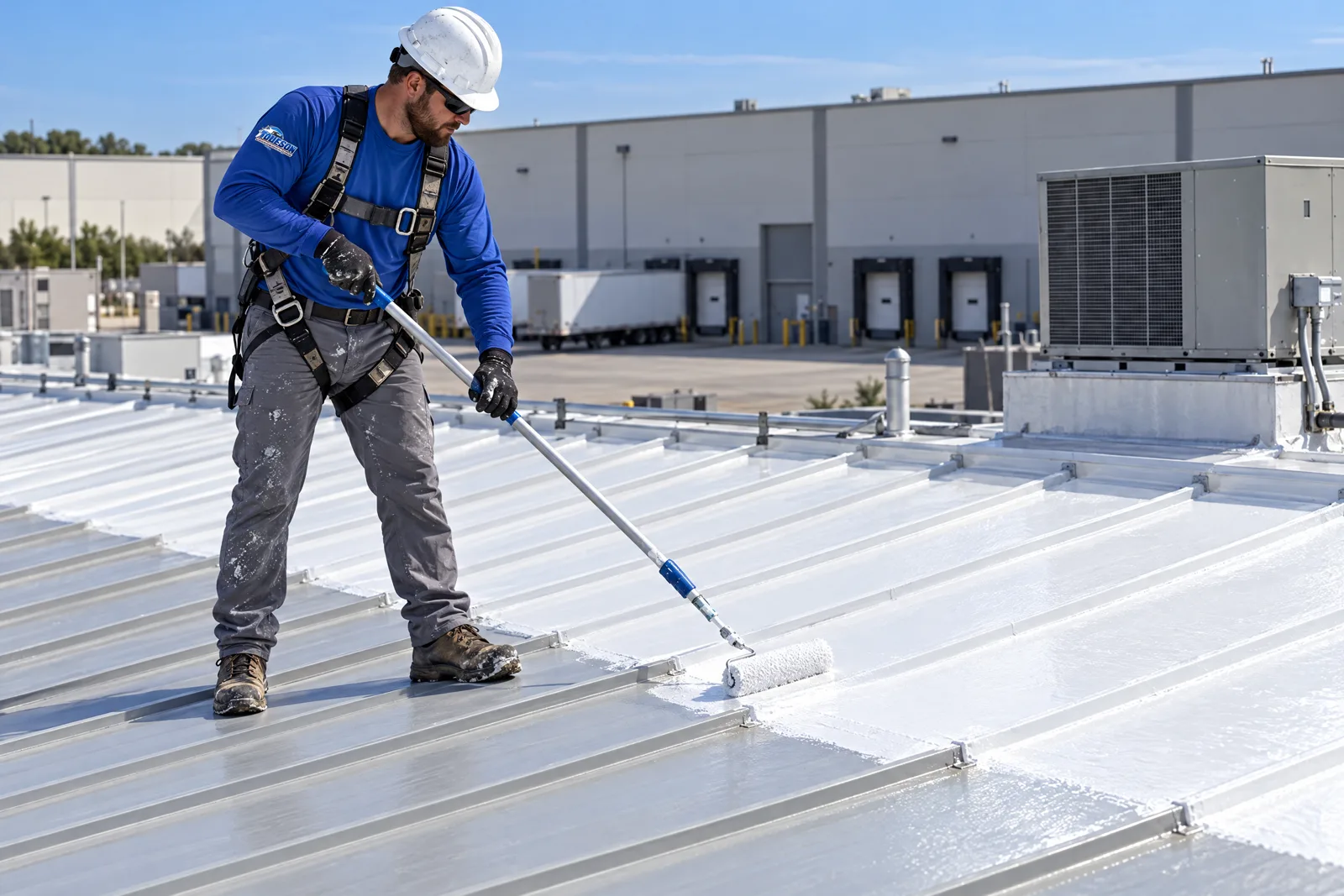
Silicone may suit compatible low-slope areas where ponding resistance matters, but moisture, seams, existing repairs, and lower-roof discharge still need inspection.
Acrylic can be considered where water drains dependably and the product is approved for the roof. Surface condition, weather windows, and detail preparation matter.
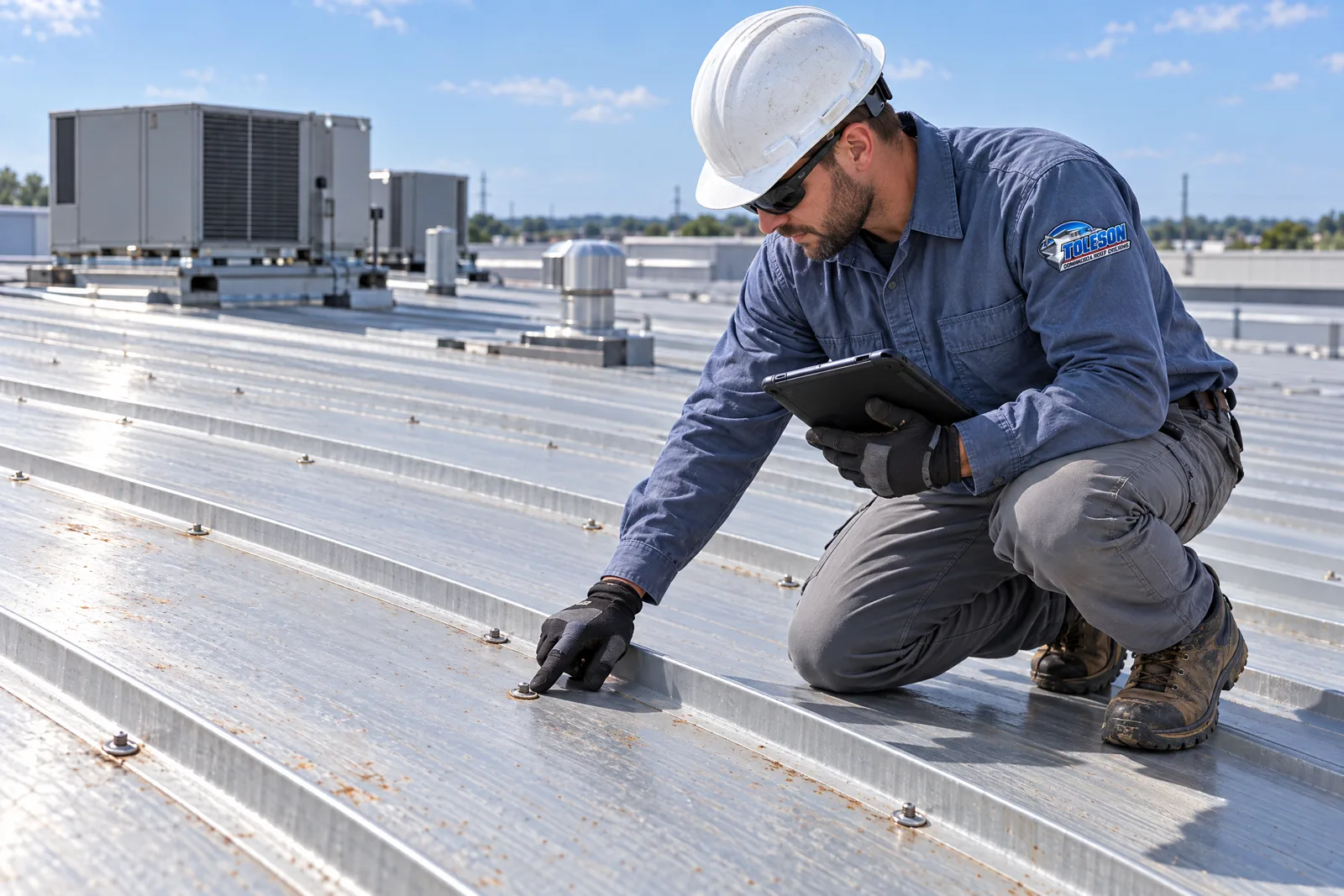
Metal restoration starts with panels, fasteners, seams, corrosion, and penetrations. Runoff from upper metal sections must not damage the receiving roof below.
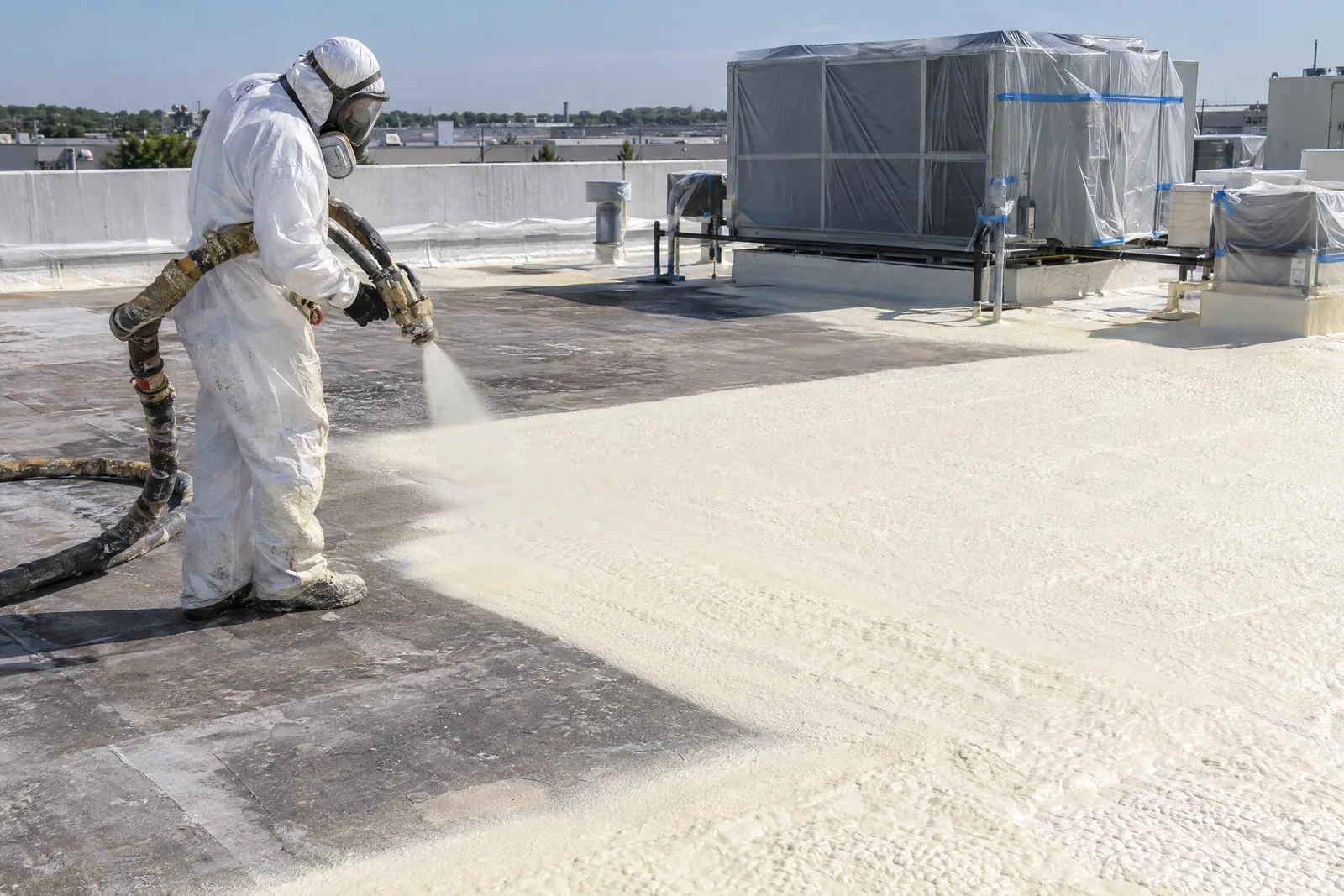
Spray foam may change slope and insulation decisions, but substrate dryness, overspray controls, equipment, and the protective topcoat must be addressed before application.
The work sequence follows the roof's condition and water movement, not just the size of the open field area.
01
Inspect Your Roof
We map roof levels, drains, scuppers, downspouts, wall lines, penetrations, equipment, and visible low areas. We also ask where water collects and where leaks appear inside the building.
02
Trace The Runoff
We follow discharge from the upper roof to the lower receiving surface and onward to its drain or edge. The review looks for concentrated flow, blocked outlets, damaged transitions, and details that need a different repair treatment.
03
Separate Repair Areas
Loose materials, open seams, damaged flashing, wet sections, contaminated surfaces, and failing connections are identified before coating. The roof may need repairs, testing, or removal in selected areas before a system can be applied.
04
Prepare And Test
We clean the compatible surface, prepare seams and transitions, use primer where the system requires it, and check adhesion or other specified conditions. Cleaning must remove residue without opening seams or damaging sound roofing.
05
Coat And Maintain The Route
The selected coating is applied at the required coverage and thickness, with attention to drains, details, and access controls. Afterward, the property team should keep drains clear and monitor wear, equipment routes, and new water patterns.
Nearby Commercial Roof Coating Areas
Buckeye properties can also connect with nearby location pages when the building sits near a municipal boundary.
Avondale Roof Coating
For commercial roofs being prepared around a tenant handover or occupancy change.
Answers for property teams managing drainage, roof levels, restoration scope, and ongoing commercial operations.
Roof Condition And Cost
Our Upper Roof Drains Onto a Lower Roof. Does That Matter?
Yes. We inspect the discharge point, receiving surface, drain path, and lower-roof details together. Water should not be directed onto an unprotected or unsuitable coated area. If the route concentrates flow or creates ponding, the drainage or repair work must be addressed before restoration proceeds.
This is especially important when several roof levels, scuppers, or downspouts serve one large building.
Does Keeping the Existing Roof Reduce Waste?
It can when most of the existing roof remains suitable for restoration. Keeping sound roofing in service can avoid removing the entire assembly and may reduce debris handling. Wet insulation, damaged materials, and areas that cannot support the system still need appropriate removal or repair before coating.
The inspection determines whether restoration is responsible for the connected roof areas.
Coating Choice And Details
Does Ponding Water Rule Out Coating On A Large Commercial Roof?
No, but recurring ponding must be understood before a coating is selected. We look for blocked drains, low areas, deflection, damaged insulation, and discharge from another roof level. A coating may protect a suitable roof after repairs, but it does not correct structural movement or trapped moisture.
Can A Coating Repair A Clogged Or Undersized Drain?
No. A coating can be detailed around a properly prepared drain connection, but it cannot clear a blockage or make an undersized outlet carry more water. The drain body, strainer, leader, scupper, and receiving path need review. Any required drainage work should be coordinated before field coating.
Work And Maintenance
How Should Roof Levels Be Inspected Before Coating?
Inspect the upper roof first, then trace every discharge to the lower roof and its final outlet. Check seams, wall lines, penetrations, flashing, drains, scuppers, low areas, and signs of moisture at each level. The inspection should also identify equipment routes and areas that cannot be exposed to fresh coating.
Can Coating Work Continue While Loading Areas Remain Active?
Possibly, if access, staging, delivery routes, and cure protection can be coordinated with the facility manager. Fresh coating needs the required time before traffic or equipment servicing reaches it. We identify loading and roof-access conflicts early so a work sequence can be discussed without promising that every operation remains unaffected.
Get A Free Estimate For Your Buckeye Commercial Roof
Tell us where roof levels, drains, and recurring water meet so we can inspect the building and discuss a suitable coating scope.