Moisture checked before coatingPonding resistance depends on systemDetails prepared before field coatingMaintenance continues after application
Is Silicone Roof Coating A Fit?
Silicone can restore a commercial roof that remains dry, attached, and repairable. Wet materials, failing structure, or unknown compatibility change the recommendation.
A Stronger Candidate
Existing membrane is dry, attached, and structurally sound.
Moisture investigation finds no wet insulation beneath the coating.
Seams, drains, curbs, and penetrations can be repaired.
Ponding conditions call for a system rated for them.
Adhesion testing supports the selected silicone product.
Repair Or Test First
Wet insulation or saturated roof layers remain.
Loose materials, open seams, or damaged flashing need repair.
Oil, grease, dust, or residue blocks adhesion.
Deck movement, sagging, or widespread failure affects roof integrity.
Existing coating chemistry is unknown or incompatible.
Roof Conditions That Affect Silicone Coating
The roof condition determines whether silicone belongs on the roof, after repair, or not at all. These checks keep wet materials and hidden defects from being sealed under a new finish.
Wet Insulation
A dry-looking surface does not prove that insulation or lower roofing layers are dry. Suspected moisture needs further investigation, because coating over wet materials can trap the problem and leave the roof condition unresolved.
Standing Water
Silicone generally handles standing-water exposure better than many coating types, but ponding still deserves a drainage check. Drains, scuppers, slopes, and low areas must be understood before a system is selected.
Dust And Contamination
Dust, oil, grease, leaves, and cleaner residue interfere with adhesion. The surface needs the cleaning method required for the existing roof, followed by enough drying time before primer or silicone is applied.
Seams And Penetrations
Leaks often begin where roof sections move or change direction. Seams, fasteners, wall flashings, drains, curbs, and pipe penetrations need their own repair or sealant treatment before the broad roof area is coated.
Old Coating Chemistry
An existing silicone layer does not make every new silicone product compatible. We identify what is already on the roof and use adhesion testing and approved preparation before choosing repair materials or a future recoat.
Service Traffic
HVAC technicians and other trades still need roof access after application. Maintenance routes, equipment areas, and sharp or dragging loads should be addressed so repeated traffic does not damage the coating.
Commercial Roof Coating Options for Tolleson
Silicone is one option among approved commercial systems. The existing substrate, drainage, moisture findings, and repair scope determine which service deserves the next step.
Silicone Roof Coating
For dry, sound commercial roofs where moisture resistance, ponding exposure, and a compatible restoration system matter.
A suitable silicone restoration keeps the decision tied to the roof you have. The qualified benefits come from preserving usable roofing, preparing details, and maintaining the finished surface.
Keep Usable Roofing In Place
When the existing roof is sound and dry, coating can preserve much of the assembly instead of removing it. That may reduce tear-off, disposal, and material work compared with rebuilding a roof that is still a candidate for restoration.
Handle Ponding Exposure
Silicone resists degradation from standing-water exposure better than coatings that are not designed for ponding. Drainage still matters, and water that remains on the roof should trigger a condition check rather than a blanket material recommendation.
Protect Details And Seams
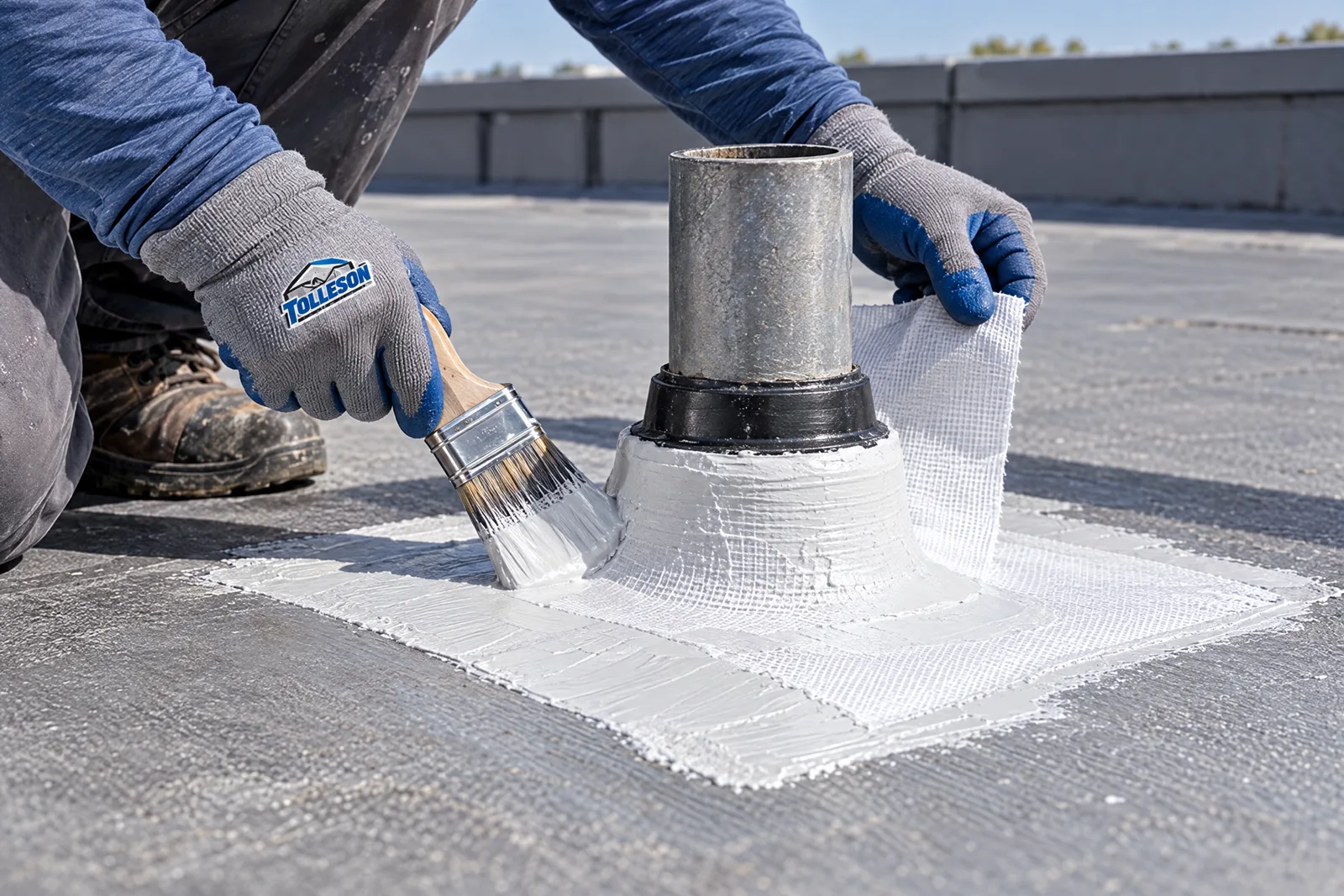
The coating works with properly prepared sealants and reinforcement at seams, drains, curbs, and penetrations. Treating those movement points gives the roof a defined repair boundary instead of relying on a field coat to bridge every defect.
Create A Maintenance Path
A compatible silicone surface can be inspected, repaired with approved materials, and considered for later recoating while the roof remains in good condition. Semiannual checks help find seam openings, wear, and traffic damage before they spread.
How Silicone Roof Coating Work Runs
The work moves from moisture and condition findings to preparation, detail treatment, application, and care. Each step protects the next one.
01
Inspect Your Roof
We inspect the membrane, seams, drains, penetrations, curbs, low areas, and visible repairs. Suspected wet insulation or hidden moisture changes the work sequence, so the surface appearance alone cannot decide whether silicone is suitable.
02
Separate Wet Or Damaged Areas
The roof is checked for wet materials, loose sections, failing details, contamination, and defects that coating cannot correct. Repair, removal, or further testing is identified before a silicone application is treated as the roof-wide answer.
03
Clean And Test Adhesion
The selected cleaning method removes dust, oils, residue, and debris without damaging the existing roof. After drying, an adhesion test helps determine whether the product bonds directly or needs an approved primer and different preparation.
04
Prepare Roof Details
Seams, fasteners, wall flashings, drains, curbs, and penetrations receive the repair, sealant, or reinforcement required by the selected system. A field coat is not used to hide an open connection or unresolved leak source.
05
Apply And Maintain Silicone
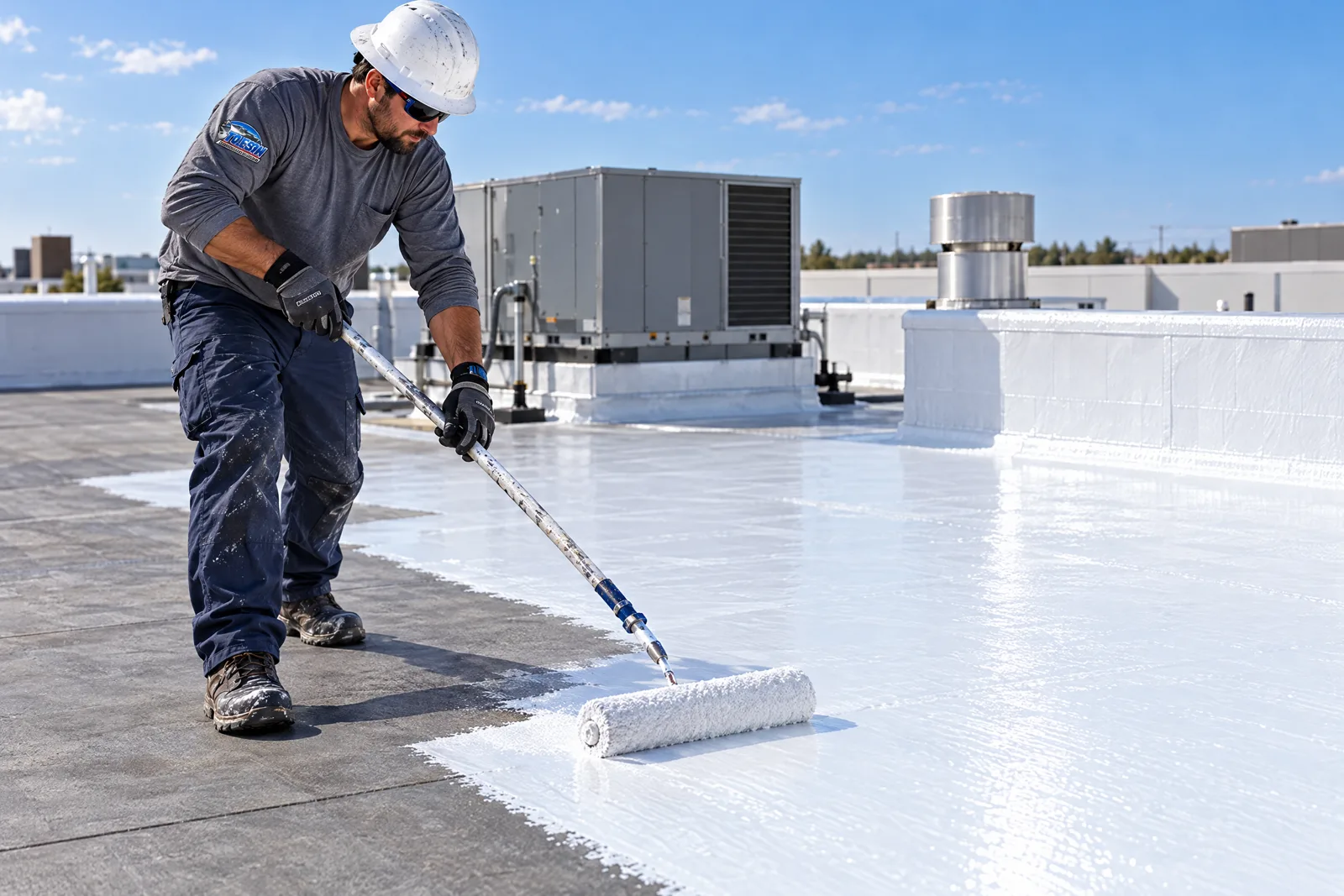
Silicone is applied to the prepared roof at the selected system’s required coverage and thickness, with weather and cure conditions respected. Later inspections include drains, seams, equipment routes, coating wear, and compatible repair materials.
Related Commercial Roofing Services
A silicone decision can lead to another system when the roof condition or substrate calls for it.
Compare All Tolleson Services
See the approved commercial coating systems and the roof conditions each one addresses.
These answers address wet materials, system choice, preparation, and the maintenance work that follows a silicone coating.
Roof Condition And Cost
Is Silicone Always Better Than Acrylic?
No. Silicone has strong resistance to standing water, but it is not the right coating for every commercial roof. Acrylic may fit when drainage is dependable and the substrate is compatible.
We inspect the existing roof, its moisture findings, and its repair needs before choosing between silicone and acrylic. The material follows the roof condition, not the other way around.
Does Silicone Need Humid Air or a Wet Roof to Cure?
Silicone may cure by reacting with moisture in the air, but the roof surface still needs to be dry during application. Humid air and standing water are different conditions.
Water on the roof can interfere with adhesion. We do not apply silicone over a wet surface simply because the coating is moisture-cured.
Can Silicone Coating Go Over Wet Insulation?
No. Wet insulation or saturated lower layers need to be identified and addressed before a silicone coating is applied. A dry top surface does not prove that the roof assembly is dry.
Further testing may be needed where moisture is suspected. Coating should follow a finding that the remaining roof is suitable for restoration.
Coating Choice And Details
Does Ponding Water Make Silicone The Right System?
It can make silicone worth considering, but ponding alone does not decide the system. Silicone generally resists standing-water exposure, while drains, scuppers, low areas, and the roof assembly still need inspection.
If water reflects a drainage defect, the defect remains part of the work. A coating is not a substitute for correcting a failing roof structure or unresolved water path.
What Preparation Does An Older Silicone Roof Need?
An older silicone roof needs identification of the existing coating, cleaning, condition checks, and adhesion testing before repair or recoating. Prior silicone does not make every new product bond automatically.
Seams, penetrations, drains, and traffic-worn areas may need compatible sealant or reinforcement. The selected manufacturer’s preparation requirements control the application sequence.
How Is A Silicone-Coated Roof Maintained After Application?
Plan inspections twice a year and additional checks after severe weather or rooftop work. Look at drains, flashing, seams, coating wear, equipment areas, and regular service routes.
Repair small openings or traffic damage with materials approved for the existing silicone. Technicians should avoid dragging equipment and should use defined access routes where the roof requires them.
Work And Maintenance
Can A Different Coating Be Applied Over Existing Silicone?
Not without a compatibility check. A different coating may fail to bond to existing silicone even after cleaning, so the roof needs identification, preparation, and adhesion testing before a change is considered.
When the roof remains in good condition, a compatible silicone recoat may be an option. The repair material must match the existing system and the manufacturer’s requirements.
Get A Free Estimate For Your Silicone Roof
Tell us about the commercial building, roof condition, wet areas, and access needs so coating suitability can be checked before work begins.