Recurring Leaks And Stains
Interior stains identify a symptom, not the complete repair. We trace the likely roof area, compare it with leak history, and check whether one detail is failing or the wider roof needs restoration before coating.
Commercial Roofing · Arizona
We coat commercial roofs in Litchfield Park and coordinate inspection, preparation, and roof access around occupied facilities.
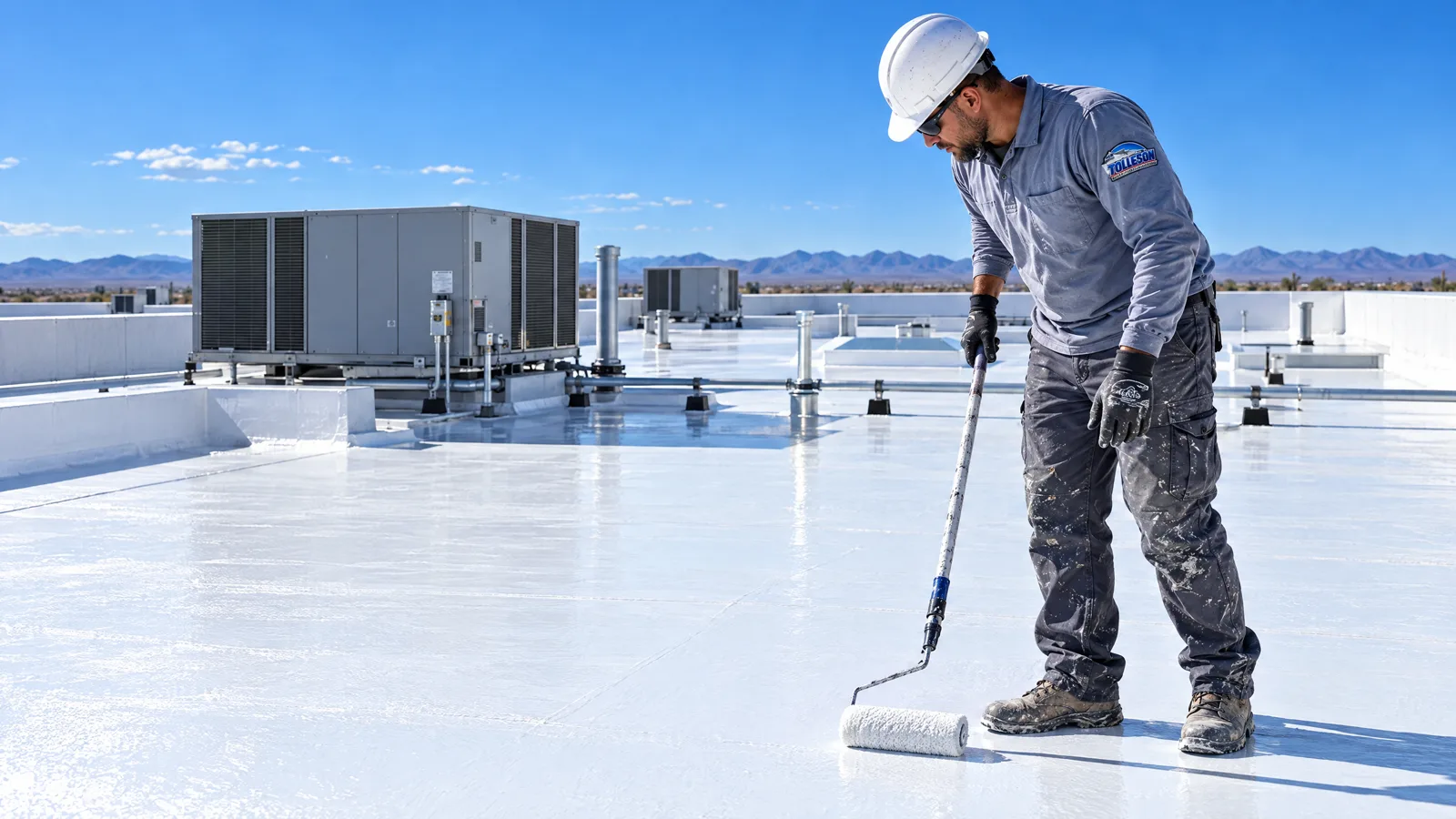
A maintenance manager can connect roof history with the access rules that keep an occupied facility working.
The person who knows the building often knows where recurring leaks appear, which repairs were tried, and which rooftop units need regular access. Bring that maintenance history to the inspection so the roof condition and the facility schedule are considered together. Ownership or property management should remain involved in decisions about repairs, coating, and work areas.
Litchfield Park’s official permit portal says many commercial improvement projects require permits before work begins, while some minor maintenance may be exempt. Confirm the actual roof scope with the City before scheduling. That check belongs beside the access plan, not after materials, equipment routes, tenant activity, or delivery windows have already been set.
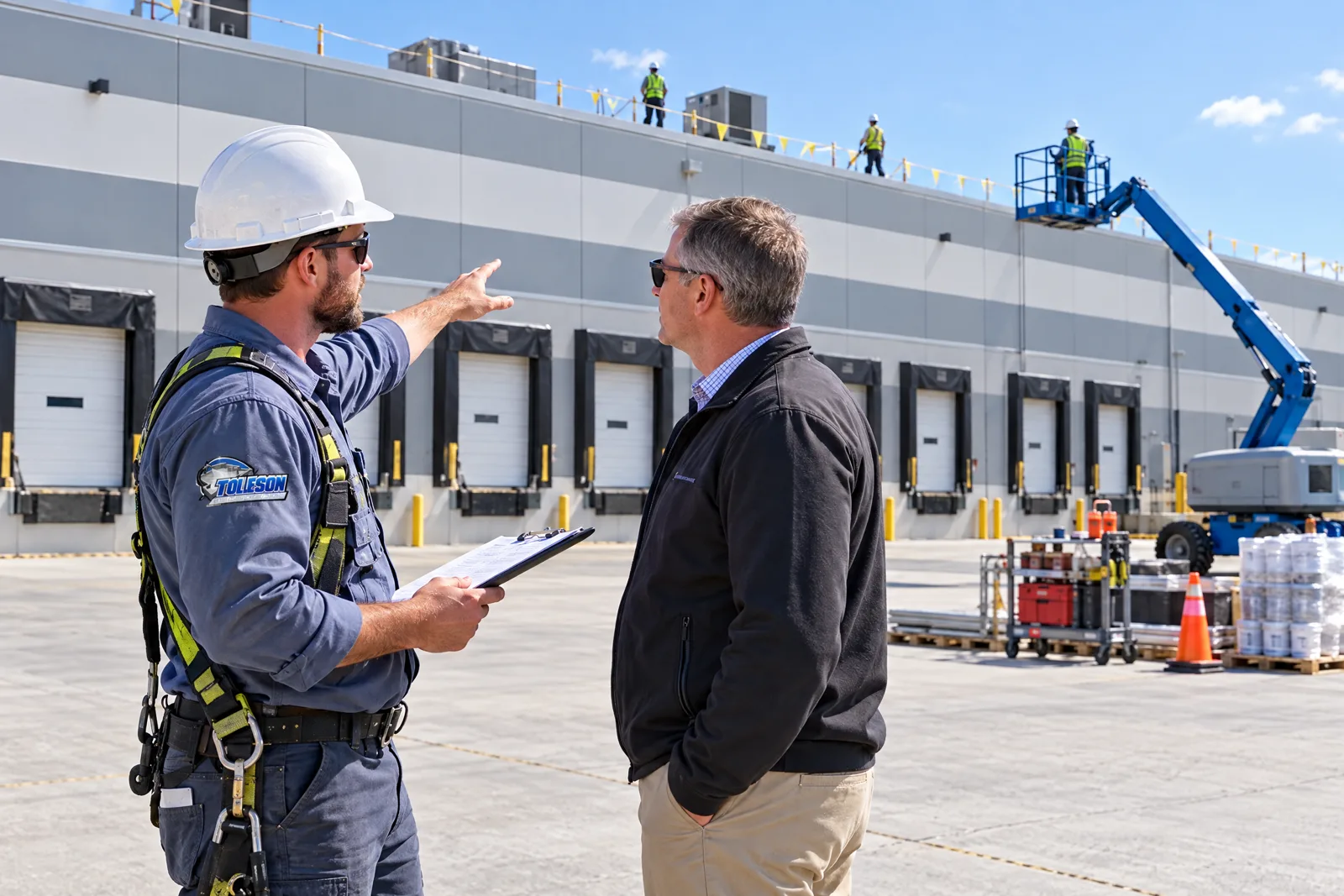
A roof coating decision starts with the existing assembly, its details, and the conditions that could make coating premature.
Interior stains identify a symptom, not the complete repair. We trace the likely roof area, compare it with leak history, and check whether one detail is failing or the wider roof needs restoration before coating.
Loose panels, open seams, and missing fasteners must be secured before a coating can protect the roof. Metal movement and connection problems are repair questions first, especially along equipment routes and roof edges.
Wall transitions, curbs, vents, and pipe penetrations need their own inspection. Damaged flashing or open connections may require sealant, reinforcement, or replacement before the main roof field is coated.
Water that remains after rain can point to drainage, slope, or substrate concerns. We check drains, outlets, roof levels, and discharge paths before choosing a system that must live with the existing water conditions.
A dry-looking surface can hide wet insulation or other roofing layers. Where moisture is suspected, additional testing may be needed. Wet materials should be addressed before they are sealed beneath a new coating.
Previous repairs can change adhesion and product compatibility. We identify what is already on the roof, clean the surface, and use the required preparation or primer before recommending a new coating layer.
Coating can make sense when the existing roof is worth keeping and the preparation matches the selected system.
A suitable restoration can leave sound portions of the existing roof in place instead of removing the entire assembly. That decision depends on moisture, attachment, damage, and whether repairs can make the roof coating-ready.
When most of the roof remains serviceable, coating may reduce tear-off and the debris handling around an occupied facility. Surface preparation and repairs still create work, so access controls remain part of the plan.
The work sequence can account for HVAC service routes, roof hatches, delivery paths, and areas that must stay available. A maintenance-manager handoff helps separate essential access from traffic that can wait for curing.
A selected coating gives the facility team a defined surface to inspect around drains, flashings, seams, and equipment areas. Future repairs still need compatible materials and preparation, not an untested patch.
The right coating depends on the roof material, drainage, existing layers, repairs, and access conditions at the commercial building.
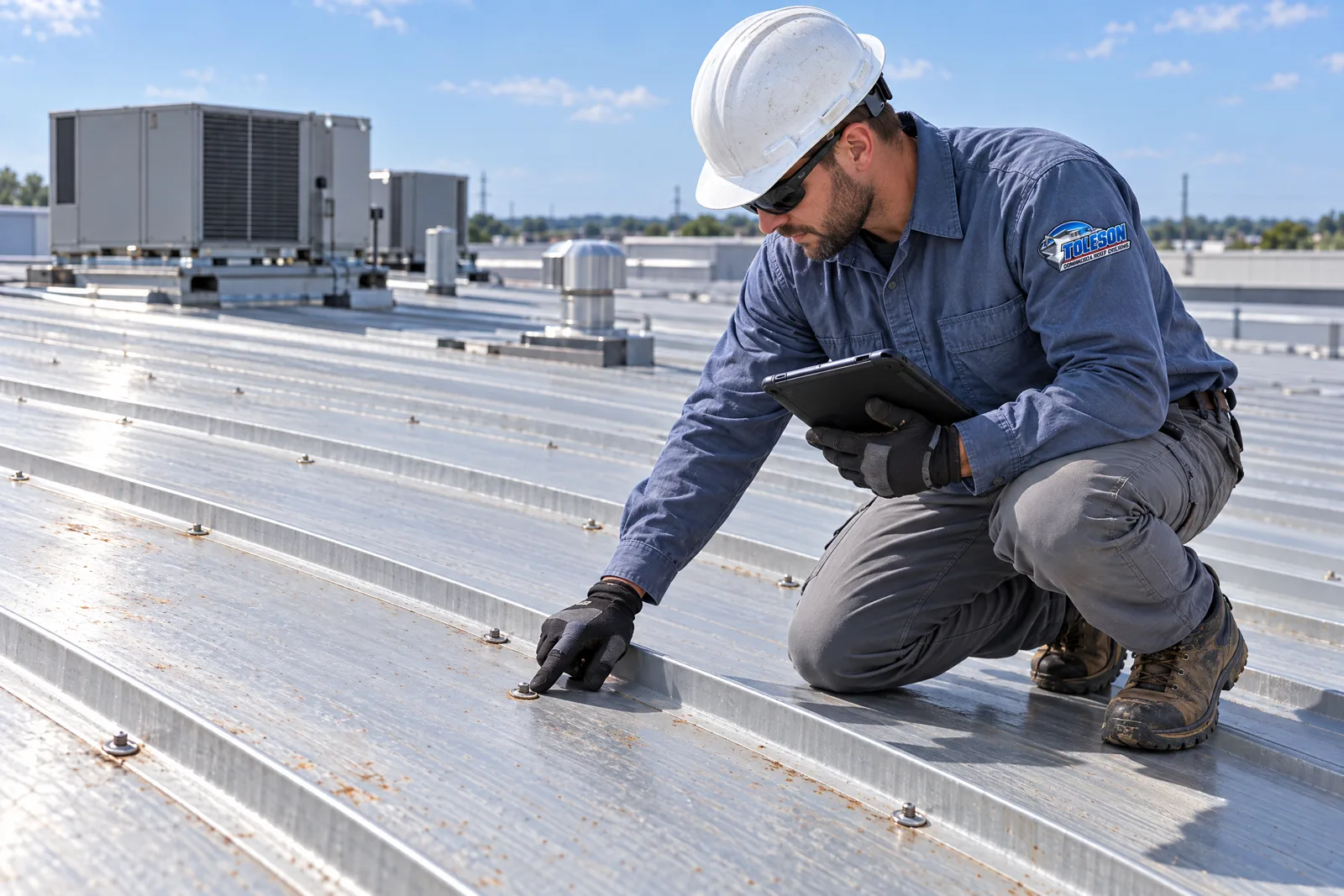
Metal restoration starts with corrosion, panel movement, fasteners, seams, and penetrations. Secure the roof first, then match preparation and coating to the existing metal and its repair history.
Explore metal roof coating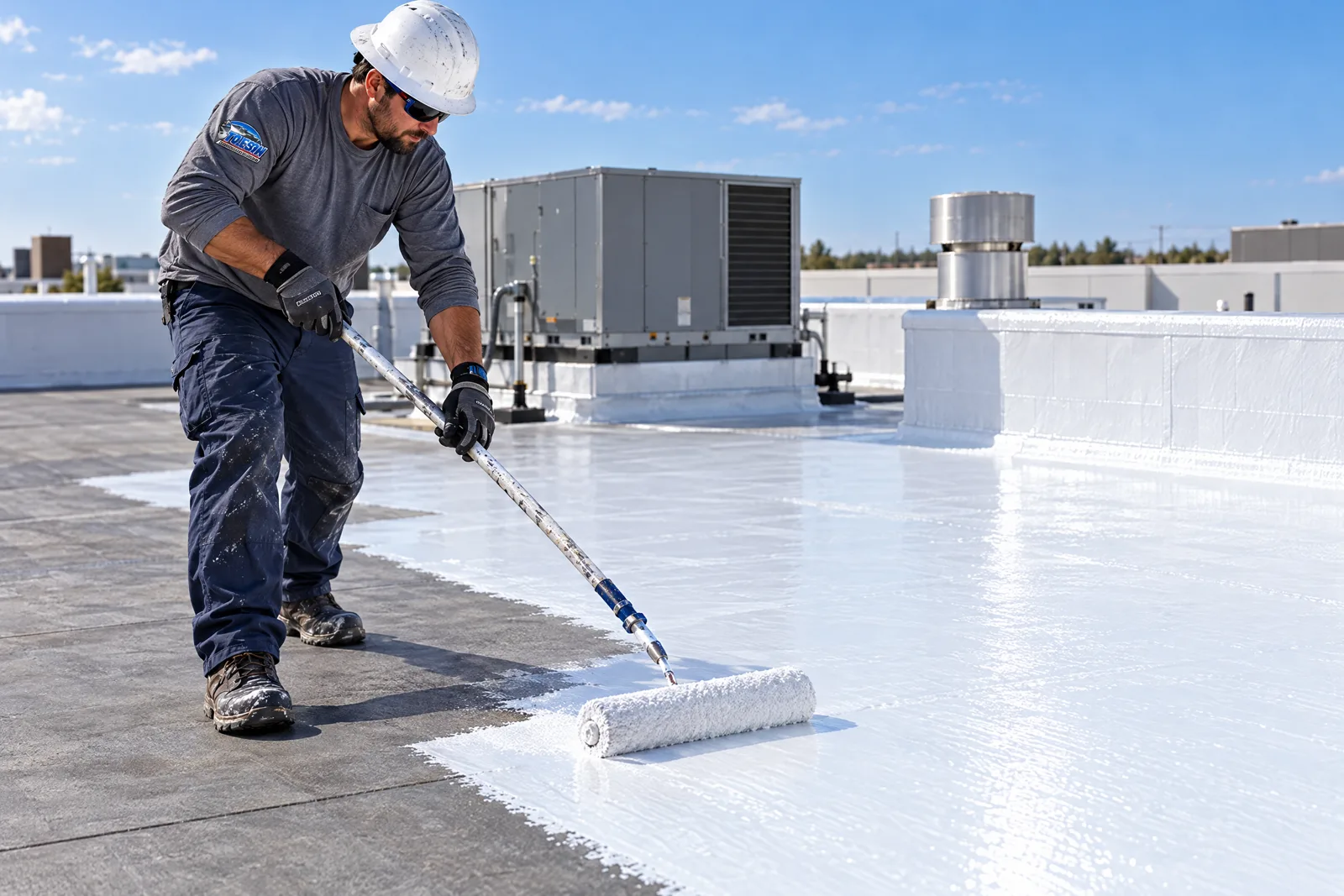
Silicone may suit a compatible low-slope roof where ponding and moisture need careful review. The surface must be clean and dry for application, with adhesion, seams, and details prepared first.
Explore silicone roof coating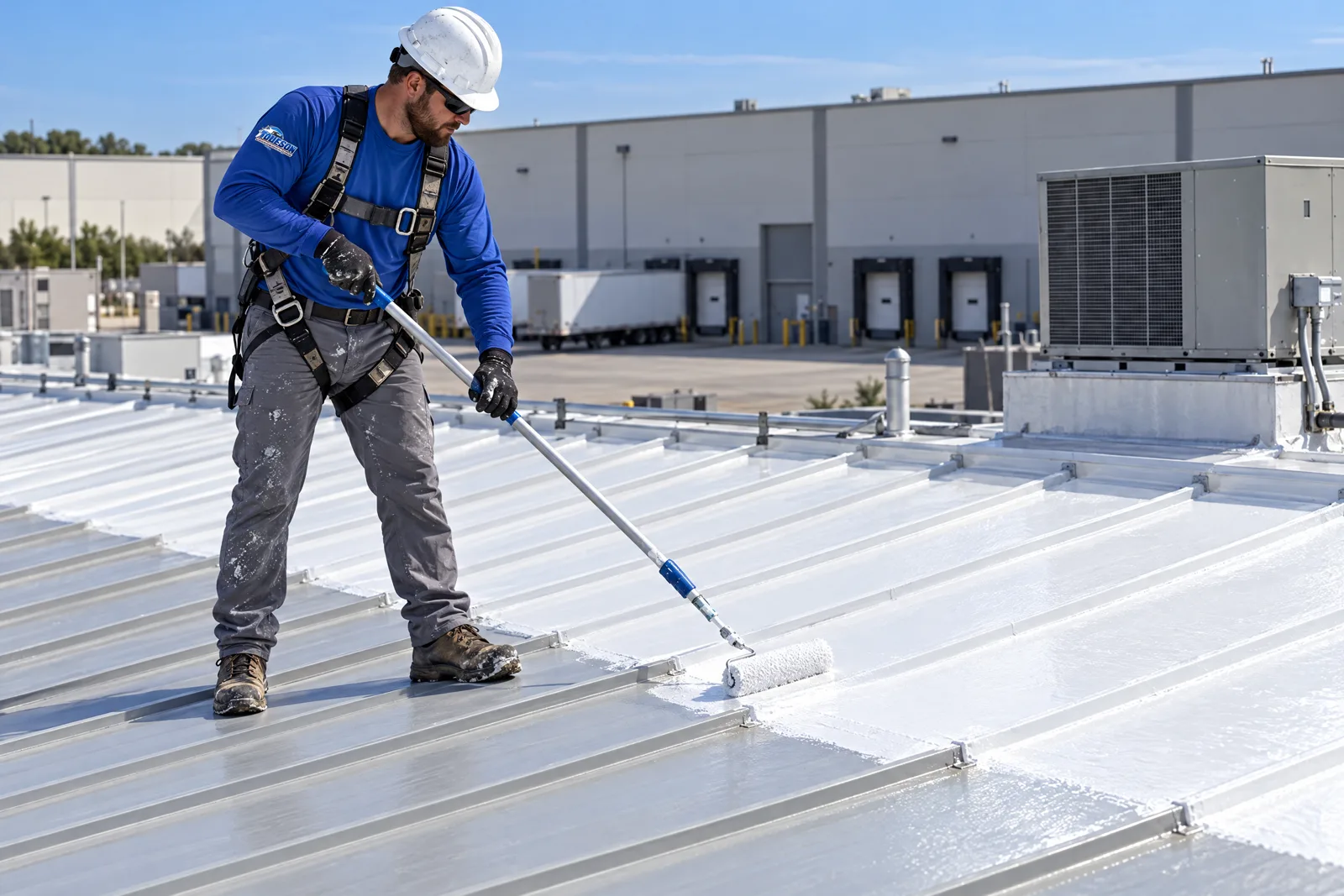
Acrylic can be considered where the roof drains properly and the existing surface accepts the system. Product approval, dry conditions, detail work, and any required primer guide the application decision.
Explore acrylic roof coatingThe work sequence connects roof findings with facility access, repair boundaries, preparation, application, and future maintenance.
We inspect the roof surface, seams, flashings, drains, penetrations, equipment areas, and visible repair history. A maintenance manager can identify recurring leaks and access needs while the owner or property manager stays part of the decision.
We map roof hatches, ladders, HVAC routes, loading areas, air intakes, and restricted zones with the facility contact. We also verify the local permit question before the schedule is built around tenant activity or deliveries.
Loose materials, damaged seams, wet areas, contamination, and failed details are addressed within the agreed scope. Cleaning, adhesion checks, and primer selection follow the existing roof and the selected coating system.
We stage materials and work areas around the building’s operating needs. Air intakes, rooftop equipment, loading docks, and roof traffic are considered, and fresh coating is kept clear until the system has the required time to cure.
The facility contact should retain the selected system, repaired details, equipment routes, drain locations, and areas that need routine observation. Plan inspections after severe weather or rooftop work, and use compatible materials for later repairs.
Litchfield Park facilities can be evaluated alongside nearby approved service areas when a property portfolio crosses municipal boundaries.
Coordinate roof work with tenant handover dates and other trades at an Avondale commercial property.
View Avondale roof coatingPlan access around shifts, rooftop trades, and the operating requirements of a Goodyear facility.
View Goodyear roof coatingReview drainage between roof levels and large commercial building areas in Buckeye.
View Buckeye roof coatingThese answers address maintenance handoff, occupied-building access, coating suitability, and what happens after the roof is restored.
Yes, that can be helpful. Someone familiar with the facility can point out recurring leaks, previous repairs, and equipment that needs regular roof access. We can discuss those concerns with the maintenance manager while keeping the owner or property manager involved in decisions about repairs, preparation, and coating.
Yes, when most of the existing roof can remain in place. Less tear-off can mean less debris handling and less disruption around an occupied facility. Repairs and surface preparation still take work, so coating is not disturbance-free. The inspection must confirm that the roof is sound enough to keep.
Bring recurring leak locations, interior stain dates, repair records, roof access rules, and a list of equipment that needs service on the roof. Note tenant restrictions, delivery windows, and areas that cannot be blocked. These details help connect visible roof conditions with the way the facility actually operates.
We identify service routes, roof hatches, curbs, air intakes, and equipment that cannot be interrupted before work is scheduled. The facility contact can separate essential access from routine traffic. Fresh coating needs its required cure time, so equipment servicing and other trades may need a different access window.
It can be possible, depending on the roof layout, application method, ventilation, access routes, and activities that must continue indoors. Tell us about exposed products, temperature-controlled areas, sensitive operations, and loading schedules. We use those constraints to discuss work zones without promising that every part of the facility remains unaffected.
Several repairs do not automatically rule out coating, but they make material identification and adhesion more important. We inspect the patched areas, check whether the layers are secure, and determine whether the roof needs more repair, compatible primer, testing, or a different system before coating the broader surface.
Share the commercial property and its access requirements for a roof coating estimate.
Before You Go
Share your name and phone number and we will call about your commercial roof.
Prefer to call directly? Call Us Privacy Policy