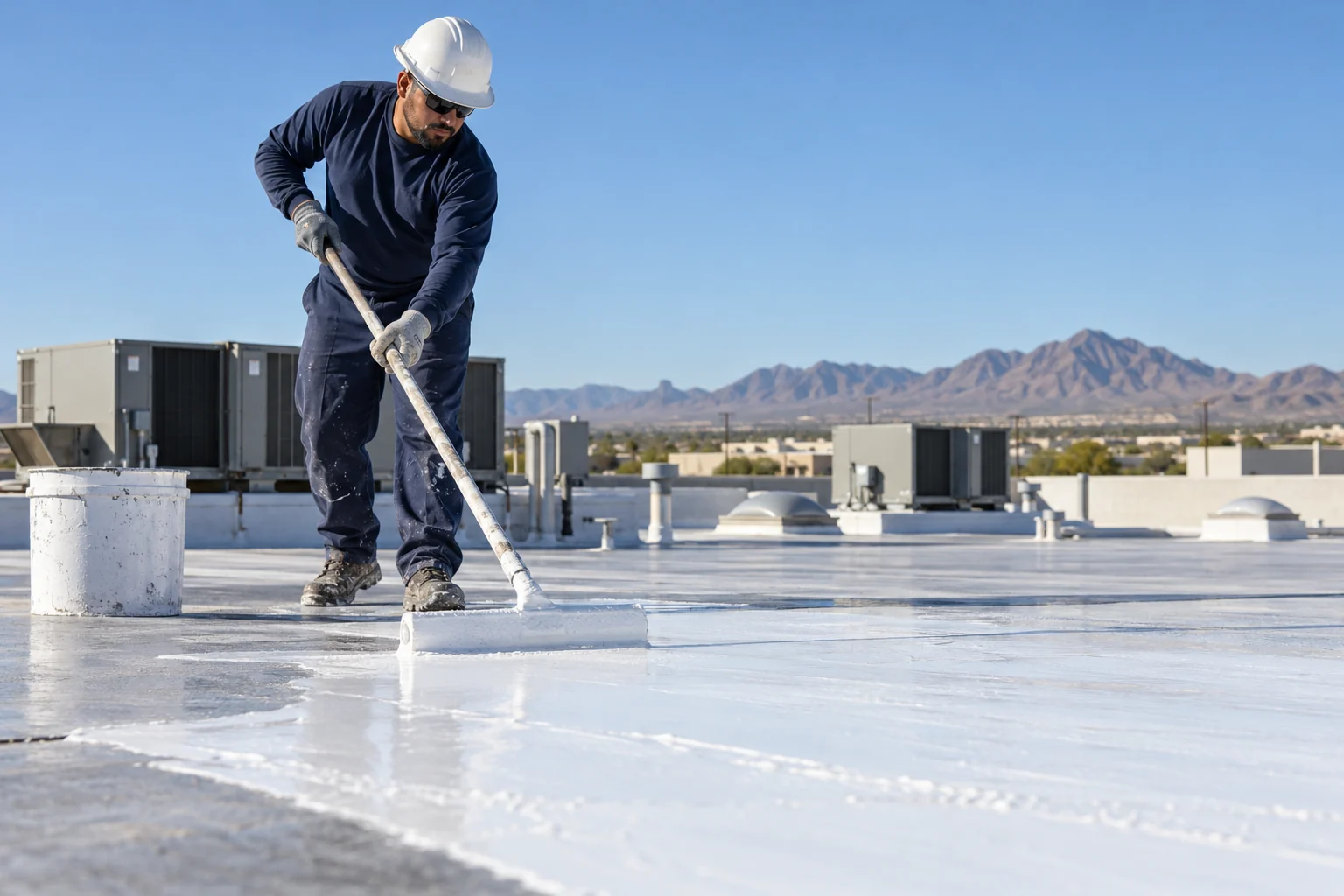
When Silicone Is Worth Considering
Some silicone roof coating systems are designed to resist ponding water, subject to their individual specifications. That property does not make drainage irrelevant. Standing water still deserves investigation, and coating does not create slope or repair a blocked drainage route.
The roof must provide a stable, suitable substrate. Previously coated areas, asphaltic surfaces and single-ply membranes may need different preparation or primers. A product described as compatible with several substrates still has detailed conditions for each one.
Deal With Hidden Moisture And Open Details
A dry-looking surface can conceal moisture below. Where inspection indicates a concern, further evaluation can help identify affected roofing and insulation. Wet materials are addressed before coating; a new film should not be used to hide an unresolved moisture problem.
The work also includes the details that interrupt the roof surface. Seams, pipe penetrations, curbs and drain transitions need compatible repairs and reinforcement where the selected system requires them. Those details should be considered before the field coating begins.
Benefits of Coating Your Roof
Silicone restoration may retain a serviceable roof and reduce the tear-off required by complete replacement. Less removal can mean less disruption to an occupied building and less discarded roofing material. Potential cost savings depend on the repairs and preparation needed. A future recoat may be possible, but it must be compatible with the existing silicone and supported by the condition of the roof.
Evaluate More Than The Open Roof Area
A roof with a large unobstructed surface may still contain complicated details at its perimeter and around equipment. Those changes in material and shape need to be included in the restoration plan. An inspection should establish whether the existing details can be repaired or need to be reconstructed before the coating reaches them.
The new system also needs a defined connection to retained roofing at the limits of the work. If only one roof section is being restored, the transition to an adjacent section matters. A coating should not simply end at an arbitrary line without considering how that connection will function.
What If The Roof Has Several Previous Repairs?
Previous patches may be made from different materials, even when they are close together. Some may remain after suitable preparation; others may need removal. The condition and compatibility of each retained surface affect the result. More layers are not automatically better when the bond between them is uncertain.
Share known repair history, but do not remove patches to identify them yourself. The practical question is what provides a sound substrate for the selected system. A roof can still be a restoration candidate with a repair history, provided those conditions can be resolved.
Does A Reflective Finish Guarantee Lower Bills?
No fixed energy saving can be established from coating color alone. Building insulation, equipment operation, roof characteristics and occupancy all influence energy use. If heat is part of the concern, it can be included in the assessment without turning a general coating benefit into a guaranteed reduction in operating costs.
The coating service should first be justified by roof suitability and the intended restoration work. A promising surface characteristic does not outweigh moisture, attachment or compatibility problems that prevent the assembly from supporting the system.
How Is A Later Repair Handled?
After silicone restoration, future repairs and recoating need to be compatible with the installed surface. The roof should not be treated as a blank substrate that will accept any patching compound. Equipment additions, damage or changes at a penetration may require specific preparation and materials.
Routine observation from safe access points can help identify changed conditions, but it does not replace a roof inspection when a problem appears. Report a new leak, damaged area or altered detail so the appropriate work can be considered before an unsuitable temporary product complicates the repair.
What If Only One Section Holds Water?
That area deserves its own assessment. Different sections may have different drainage and substrate conditions even when they share a building. The selected system and any corrective work need to address those differences. A broad recommendation based on the best-looking section should not substitute for evaluating the area where the concern actually occurs.
Plan Access After Application
Rooftop equipment still needs service after restoration. Discuss regular access routes and appropriate walkway protection when the work is planned. A coating is not a general-purpose walking surface, and traffic requirements should be addressed as part of the roof system.
Use the estimate calculator to explore a budget, then request evaluation of the existing roof. The inspection establishes whether silicone is a suitable option and what needs attention before application.