Start With Drainage
Drainage is a practical part of choosing an acrylic system. Roof areas that retain water require assessment against the specific product requirements. Changing coating chemistry alone is not a repair for an obstructed drain or a low area that needs construction work.
Explain where water remains after rain and whether the pattern has changed. That information helps distinguish a maintenance issue from a condition that needs further investigation. The roof’s slope, outlets and transitions all influence the work required.
Surface Preparation And Application
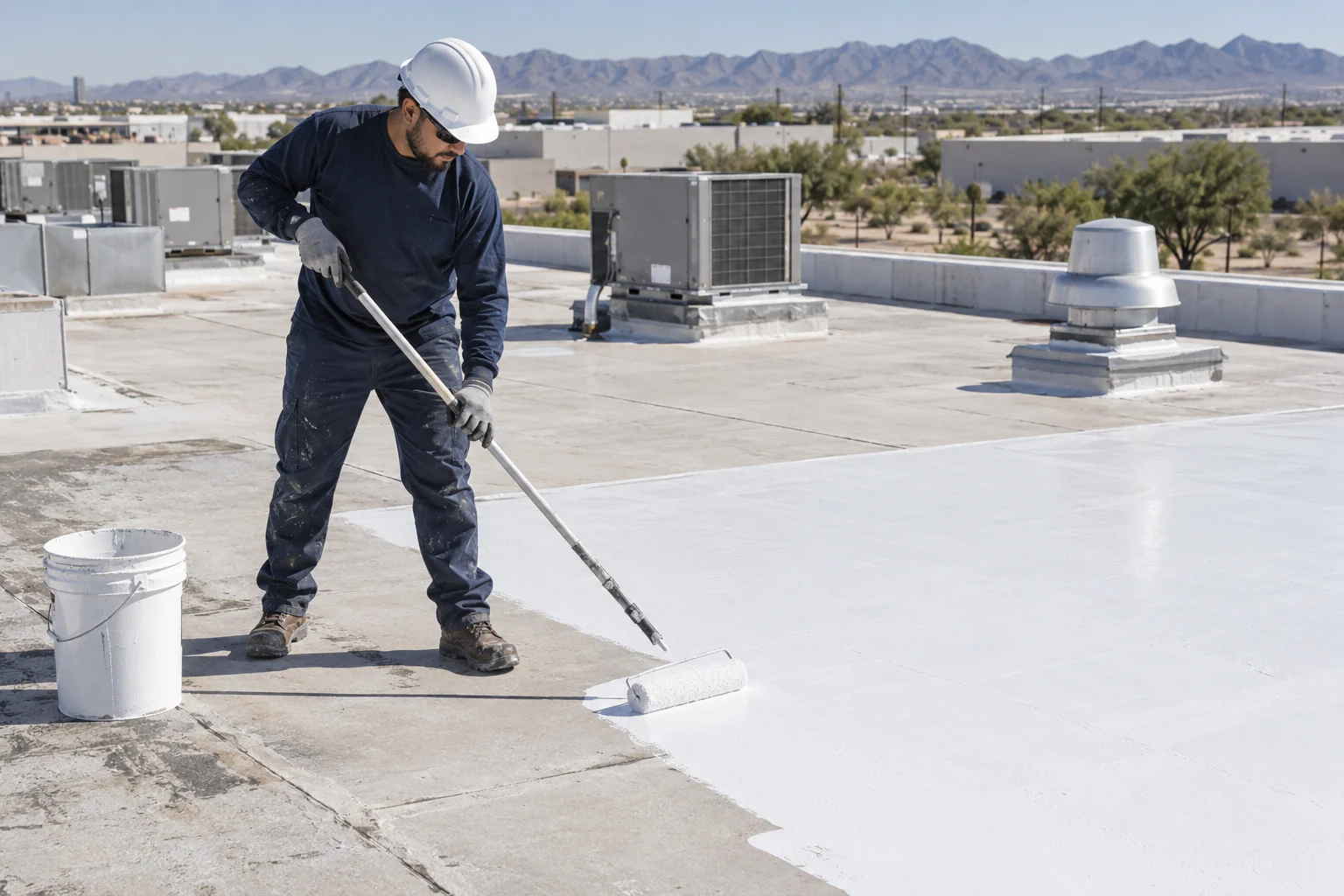
Old coatings, dirt and repairs affect adhesion. Preparation needs to suit both the existing roof and the acrylic system being installed. Primer, reinforcement and application thickness are system-specific decisions rather than optional additions.
Application timing matters. The surface must meet the product’s moisture and temperature requirements, and the work needs an appropriate drying window. A building’s roof temperature and conditions can differ from the general air forecast, so scheduling cannot be based only on the calendar.
Benefits of Coating Your Roof
When the underlying assembly remains serviceable, acrylic restoration can reduce the removal associated with a replacement project. It can preserve usable roofing, produce less tear-off waste and reduce interruption to the property. A suitable roof may also support later maintenance recoats. The actual financial benefit depends on its condition and the scope of repairs; no coating makes wet or unstable materials suitable by itself.
Which Existing Roofs Can Receive Acrylic?
Suitability is specific to the coating system and substrate. A product may be approved for one surface with a particular primer and preparation while a different surface requires another approach. The inspection should identify what is exposed now, including older coatings and repair materials, rather than relying only on the original roof type.
Acrylic is therefore not a universal treatment for every low-slope roof. If the retained surface cannot support the chosen system, the work must change. That may mean additional preparation, replacement of affected material or consideration of another roofing approach.
What Does Surface Preparation Accomplish?
Preparation creates the conditions needed for the new material to bond. Dirt, loose coating and incompatible residue can interrupt that bond. Cleaning is not simply a cosmetic step before making the roof look new; it is part of establishing whether the system can adhere to the surface beneath it.
The prepared roof also needs to be allowed to reach the condition required for application. A schedule that ignores moisture or drying requirements can undermine otherwise appropriate material selection. Each stage should be ready before the next proceeds.
Why Are Detail Repairs Separate From The Topcoat?
A seam or penetration has a different shape and movement pattern from the open roof field. The restoration system may require reinforcement or other compatible treatment at those locations. Applying the broad coating alone is not a substitute for completing that detail work.
A useful inspection identifies these conditions before material application begins. It also checks whether an existing patch provides a suitable base or merely hides a defect. The final roof should have continuous, appropriate connections rather than a new finish interrupted by unresolved weak areas.
How Does Recoating Differ From First-Time Restoration?
A maintenance recoat starts with the condition of the existing coating and the roof below it. The earlier surface may remain suitable, but damage, contamination or poor adhesion can change the preparation needed. Recoating should follow that assessment rather than a date alone.
If the roof has been altered since the earlier work, new penetrations and repair materials deserve attention. The renewal needs to work with the current assembly. It cannot assume that the roof is unchanged simply because the main surface still appears similar.
Plan A Realistic Budget
The calculator is useful for exploring a roof-area-based planning range. It does not measure detail density, identify moisture or determine how much old coating must be removed. Those factors can change the actual project scope. Begin with the best available area estimate, then use inspection to establish the work that the roof requires.
Can Application Start Immediately After Cleaning?
Readiness depends on the selected system’s surface and moisture requirements. Cleaning is one preparation stage, not confirmation that coating can begin immediately. The roof needs to meet the application conditions before the next step proceeds, including any required drying and primer preparation.
Inspect Your Roof
We consider the existing material, drainage, adhesion and detail repairs before selecting the restoration approach. If the roof does not support an acrylic system, that limitation matters more than the appeal of a new white surface. Begin with your approximate roof area and known concerns to explore a coating budget for the property.