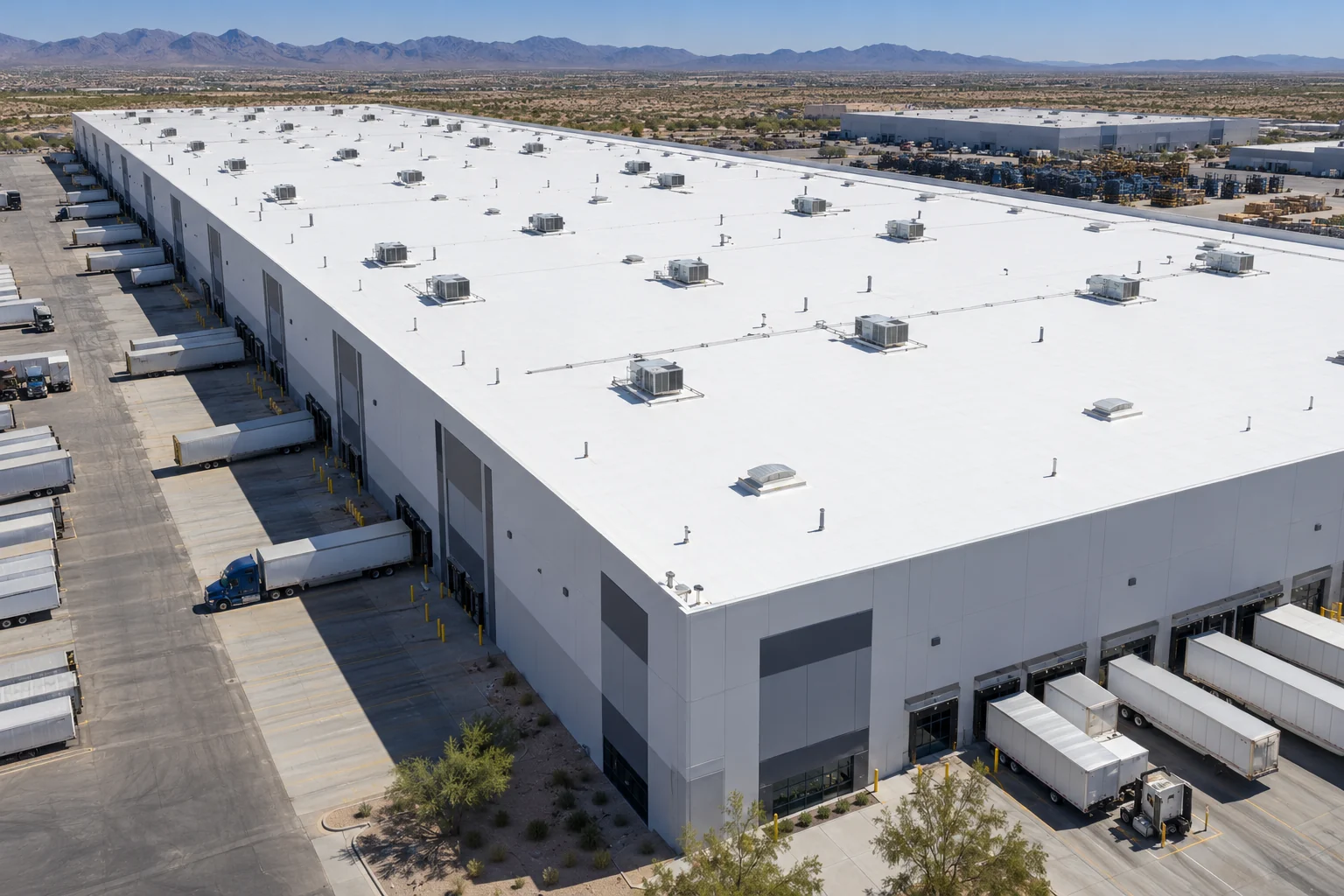
Inspect Your Roof
Identify the roof material and the condition of the surface, penetrations, seams and drainage. Investigate moisture or adhesion concerns where needed. The inspection establishes whether restoration is suitable and what must be repaired.
Prepare The Surface
Remove unsuitable residue and complete required repairs. Preparation is selected for the existing substrate and coating system. Wet or unsound areas require corrective work before they can support a new finish.
Complete The Details
Treat seams, curbs, pipes and drainage transitions with compatible system materials. These areas should be addressed before broad coating application rather than left as incidental finishing work.
Apply And Maintain
Apply the selected coating under suitable conditions and to its specified coverage. Plan ongoing access and inspection afterward. A restored roof still needs maintenance and prompt attention to damage.
Evaluate The Whole Assembly
The inspection should distinguish the visible surface from the material below it. Where moisture or attachment is uncertain, further evaluation may be needed. A coating needs a suitable base; a dry-looking finish does not establish that every retained layer is sound.
Different roof sections may have different conditions. Identify additions, earlier repairs or known leaks where possible. The preparation and work boundaries can then reflect the actual roof rather than a uniform assumption based on total area.
Coordinate The Application
The selected system’s surface and weather requirements guide when application can proceed. Cleaning is not automatically the final preparation step, and the roof must be ready before the next stage begins.
Tell us about equipment access and nearby activity so the work can be organized appropriately. After restoration, continued maintenance and compatible repairs remain important. New penetrations or unrelated patching products can change the system that was installed.